From Additive Formulation Design to Multi-Layer Coextrusion Process Control: What Are the Core Control Points That Affect Key Properties of Functional PE Films?
1. Additive Formulation Design: The Molecular Foundation of Functionality
Functional PE films achieve their specialized properties through carefully designed additive packages and resin modifications. The selection, concentration, and dispersion of additives are the primary determinants of film functionality.
Additive Types and Their Functions
- Antistatic Agents: Reduce surface resistivity and prevent static charge accumulation. Common types include glycerol monostearate (GMS), ethoxylated amines, and carbon black for permanent antistatic properties. Target surface resistivity ranges from 10⁹–10¹² Ω/sq for standard antistatic applications and 10⁶–10⁹ Ω/sq for conductive grades.
- Barrier-Enhancing Additives: Improve gas and moisture barrier properties. Nanoclays (montmorillonite) and nano-silica create tortuous paths for gas molecules, reducing oxygen transmission rate (OTR) by 30–60% at optimal loadings of 3–8%.
- Optical Clarifiers: Reduce haze and improve transparency. Dibenzylidene sorbitol (DBS) and related compounds promote the formation of smaller crystallites, reducing haze from 15–20% to 8–12% at typical loadings of 0.1–0.3%.
- UV Stabilizers: HALS (Hindered Amine Light Stabilizers) and UV absorbers (benzotriazoles, benzophenones) protect against photo-degradation. Typical loading ranges from 0.2–1.5% depending on exposure severity.
Critical Additive Dispersion Control
- Dispersion Uniformity: Additives must be uniformly dispersed at the molecular or nano-scale to achieve consistent performance. Poor dispersion leads to property variability and surface defects.
- Masterbatch Quality: The use of high-quality masterbatches with carrier resins matched to the base PE ensures better compatibility and dispersion.
- Melt Compounding Conditions: Extruder screw design, residence time, and mixing intensity must be optimized to achieve homogenous additive distribution without causing thermal degradation.
2. Multi-Layer Coextrusion Structure Design
Multi-layer coextrusion enables the integration of diverse functional layers into a single film structure, allowing each layer to serve a specific purpose.
Layer Structure Design Principles
- Functional Layer: Contains active additives to impart specific properties (antistatic, barrier, adhesion). Typically 1–15% of total thickness.
- Core Layer: Provides mechanical strength and cost efficiency. Usually LDPE/LLDPE blends comprising 70–90% of total thickness.
- Sealant Layer: Enables heat-sealing performance. Often uses mPE or EVA-rich formulations for low-temperature sealability.
Interlayer Adhesion Control
- Interfacial Bonding: Differences in melt viscosity and chemical compatibility between layers can cause delamination. Tie layers (adhesive resins) are often required between incompatible materials.
- Temperature Profile: Each layer requires an optimized melt temperature to ensure good interlayer bonding without thermal degradation of sensitive additives.
- Viscosity Matching: Melt flow rates (MI) of adjacent layers should be within a factor of 2–3 to maintain stable coextrusion flow.
3. Blown Film Extrusion Process Control
The transformation of compounded resins into film requires precise control of extrusion parameters to preserve and optimize functional properties.
Extrusion Temperature Profile
- Optimal Range: Barrel temperatures typically range from 160°C to 220°C depending on resin type and additive sensitivity.
- Additive Stability: Excessive temperatures can cause thermal degradation of heat-sensitive additives such as antistatic agents and some clarifiers.
Blow-Up Ratio (BUR) and Its Impact on Properties
- Barrier Properties: Higher BUR increases orientation, which can reduce OTR by up to 20–30% at optimal levels.
- Optical Properties: BUR of 2.5–4.0 generally reduces haze by promoting smoother surface morphology.
- Antistatic Performance: Molecular orientation can affect the migration of antistatic agents. Higher BUR may enhance surface availability but can also alter surface morphology.
Cooling Rate and Crystallinity Control
- Frost Line Height: Lower frost line (faster cooling) produces smaller crystallites, improving optical clarity (lower haze, higher gloss).
- Barrier Performance: Slower cooling allows more crystallization, which can improve barrier properties but may reduce clarity.
- Additive Migration: Cooling rate affects the surface migration of migratory additives (e.g., slip agents, antistatic agents), influencing surface functionality.
Film Thickness Uniformity
- Automatic Gauge Control (AGC): Maintains thickness tolerance within ±5% for consistent functional performance.
- Impact on Properties: Thickness variations lead to inconsistent barrier properties, variable antistatic performance, and irregular optical properties across the film width.
4. Parameter Comparison: Impact on Key Functional Properties
The following table summarizes the relationship between control parameters and resulting functional PE film properties, based on industry standards and operational experience at Zhejiang Feifan New Material Technology Co., Ltd.
| Property |
Affected By |
Optimal Range / Target |
Effect of Increasing Parameter |
| Oxygen Transmission Rate (OTR) |
Nanoclay loading, BUR, crystallinity |
1,000–3,000 cc/m²/day (barrier grade) |
Higher nanoclay → lower OTR; higher BUR → lower OTR |
| Surface Resistivity (Antistatic) |
Antistatic agent concentration, migration rate |
10⁹–10¹² Ω/sq (antistatic); 10⁶–10⁹ Ω/sq (conductive) |
Higher concentration → lower resistivity |
| Haze (Optical Clarity) |
Clarifier loading, cooling rate, BUR |
< 10% (high clarity); 8–15% (standard) |
Higher clarifier → lower haze; faster cooling → lower haze |
| Gloss |
Cooling rate, surface smoothness |
> 85% (high gloss) |
Faster cooling → higher gloss |
| Tensile Strength (MD) |
TUR, resin MI, LLDPE content |
≥ 25 MPa |
Higher TUR → higher MD strength |
| Film Thickness Uniformity |
AGC system, die design, cooling air distribution |
±5% tolerance |
Improves with advanced AGC and precise die control |
| Functional Additive Retention |
Extrusion temperature, residence time |
≥ 95% additive activity retention |
Higher temperature → lower retention |
5. Common Functional PE Film Grades and Their Property Targets
The following table provides typical performance targets for common functional PE film grades used in various industries.
| Functional Type |
Key Additives |
OTR (cc/m²/day) |
Surface Resistivity (Ω/sq) |
Haze (%) |
Typical Application |
| Barrier Film |
Nanoclay, EVOH (coextruded) |
500–2,000 |
> 10¹³ |
8–12 |
Food packaging, pharmaceutical |
| Antistatic Film |
GMS, ethoxylated amines, carbon black |
5,000–10,000 |
10⁹–10¹² |
10–18 |
Electronics packaging, cleanroom |
| High-Clarity Film |
DBS clarifier, low-MI resin |
8,000–12,000 |
> 10¹³ |
4–8 |
Premium packaging, display |
| UV-Resistant Film |
HALS, benzotriazole UV absorbers |
6,000–10,000 |
> 10¹³ |
10–15 |
Outdoor packaging, agricultural |
| Antimicrobial Film |
Silver-based or organic biocides |
5,000–8,000 |
> 10¹³ |
12–18 |
Medical, hygiene, food contact |
6. Quality Assurance at Zhejiang Feifan New Material Technology Co., Ltd.
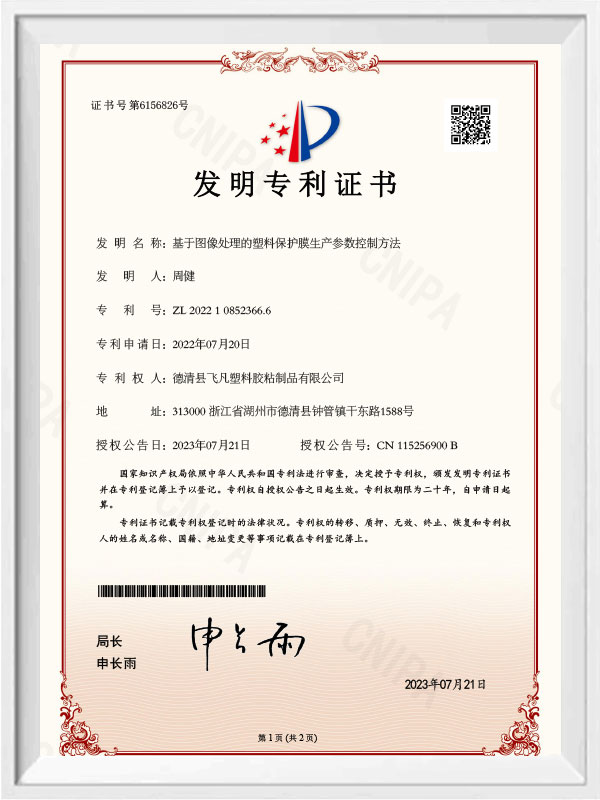
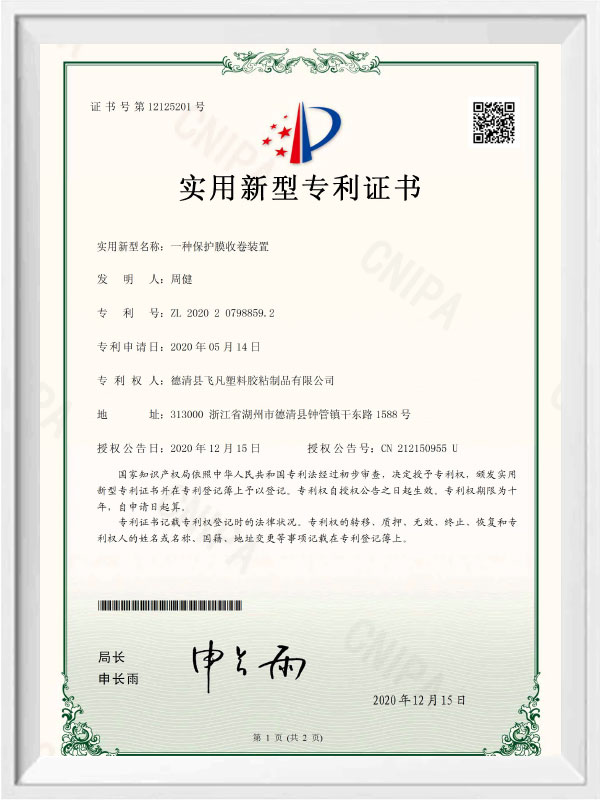
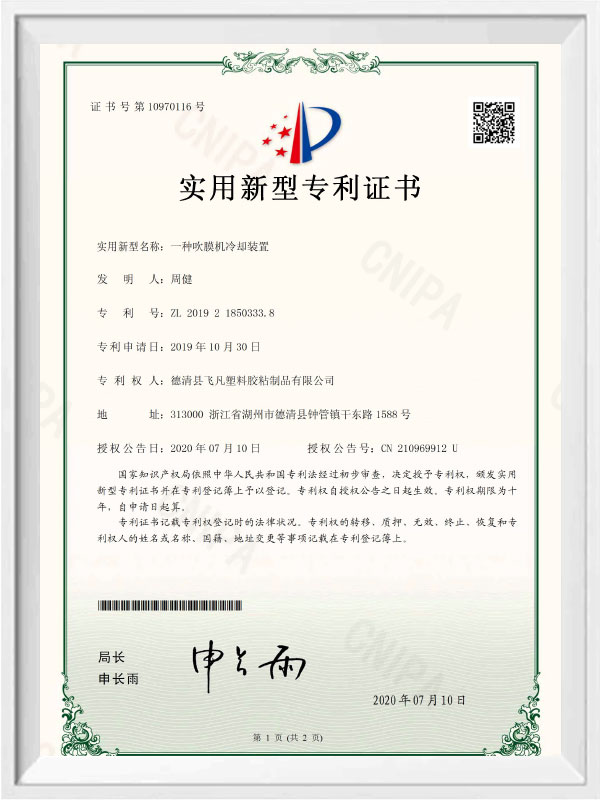
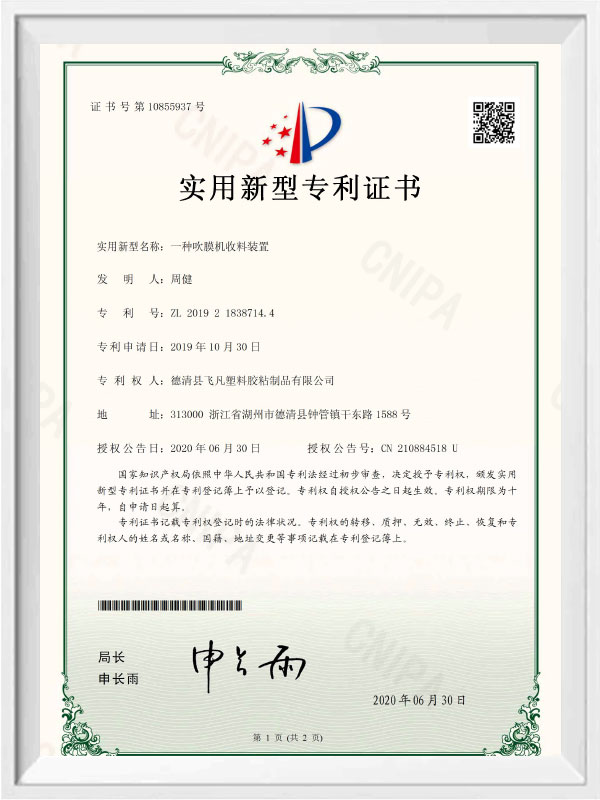
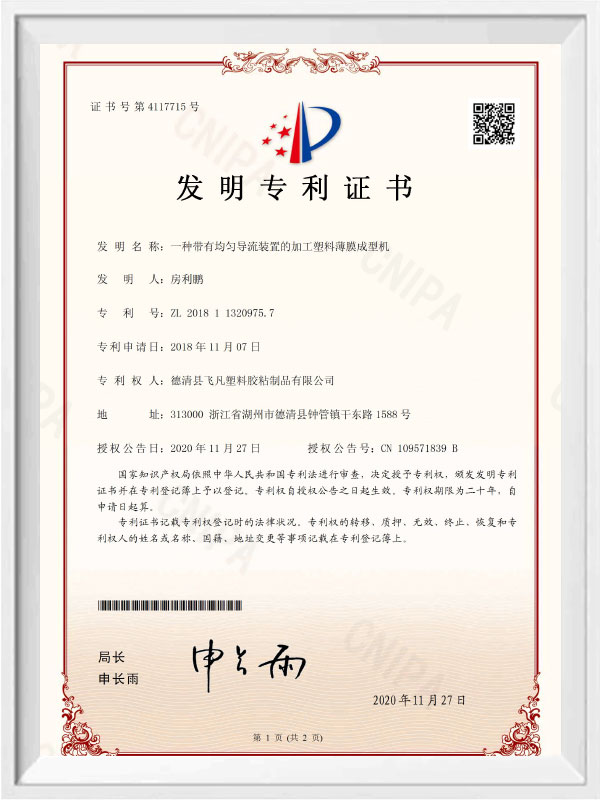
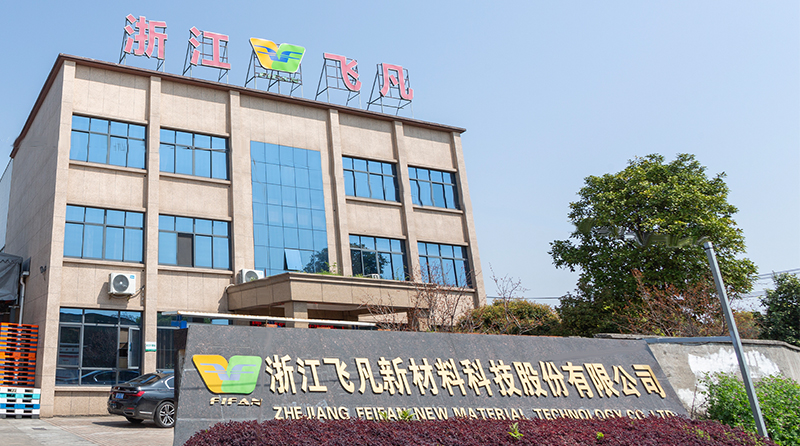
With over two decades of specialization in PE film and functional PE film, Zhejiang Feifan New Material Technology Co., Ltd. implements rigorous process control across its entire manufacturing chain. The company's advanced centralized feeding system ensures precise additive masterbatch metering and homogeneous blending, while state-of-the-art multi-layer coextrusion lines maintain precise layer thickness, temperature, and BUR control. This commitment to process excellence has earned the company recognition as a National High-Tech Enterprise and a Provincial "Specialized and Innovative" SME, serving distinguished clients including Robam, Fotile, BYD, and Haier. With a municipal R&D center and a portfolio of 2 invention patents and 15 utility model patents, the company continuously refines its additive formulations and coextrusion processes to deliver consistent functional performance across all key metrics.
FAQ
Q1: How does additive dispersion affect the performance of functional PE films, and how does Zhejiang Feifan New Material Technology Co., Ltd. ensure uniform dispersion?
Additive dispersion uniformity directly impacts functional performance. Poorly dispersed additives can cause inconsistent antistatic performance (surface resistivity variations), reduced barrier efficiency (clumping of nanoclay particles), and optical defects (visible specks or haze streaks). Zhejiang Feifan New Material Technology Co., Ltd. ensures uniform dispersion through the use of high-quality masterbatches with carrier resins matched to the base PE, optimized extrusion screw design for effective mixing, and precise temperature control to prevent additive degradation. The company's centralized feeding system enables accurate metering of masterbatches, ensuring reproducible additive concentrations across all production runs.
Q2: How does Zhejiang Feifan New Material Technology Co., Ltd. control barrier properties in functional PE films?
Barrier performance in functional PE films is controlled through two primary mechanisms: the incorporation of barrier-enhancing additives (such as nanoclays or nano-silica that create tortuous gas diffusion paths) and the optimization of processing parameters (such as BUR and cooling rate that influence film crystallinity). At typical nanoclay loadings of 3–8%, oxygen transmission rate (OTR) can be reduced by 30–60% compared to unfilled films. Additionally, higher BUR can further reduce OTR by up to 20–30% through increased molecular orientation. Zhejiang Feifan New Material Technology Co., Ltd. leverages its municipal R&D center and technical expertise to precisely balance additive loading, BUR, and cooling conditions to achieve target barrier specifications while maintaining other functional properties.
Q3: What are the critical factors to consider when designing a functional PE film for food packaging applications?
Designing functional PE films for food packaging requires careful consideration of multiple factors: regulatory compliance (food contact regulations such as GB 4806, EU No 10/2011, or FDA requirements), functional performance (barrier properties to extend shelf life, heat seal strength for package integrity), and processing compatibility (printability for branding, machinability on high-speed packaging lines). The selection of additives must ensure they are approved for food contact and that migration limits are not exceeded. Zhejiang Feifan New Material Technology Co., Ltd. offers functional PE film solutions that integrate barrier-enhancing formulations with high clarity and reliable heat seal performance, meeting the rigorous quality standards required by food industry customers. The company's in-house R&D capabilities enable rapid formulation adjustments to meet specific packaging requirements while ensuring full regulatory compliance.

 English
 русский
 عربى
عربى