
- Product
-
Our Story
Why Choose Us?We are a national high-tech enterprise and a provincial "Specialized and Refined" SME, focusing on the R&D, production, and sales of PE protective film. As a leader in the industry, we are committed to serving global customers with innovative technology and have won wide recognition in the market.
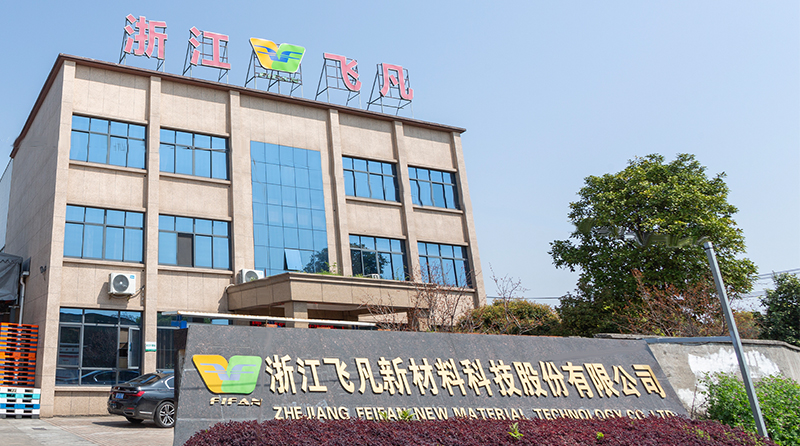 Coming From China, Marketing To The World.
-
News
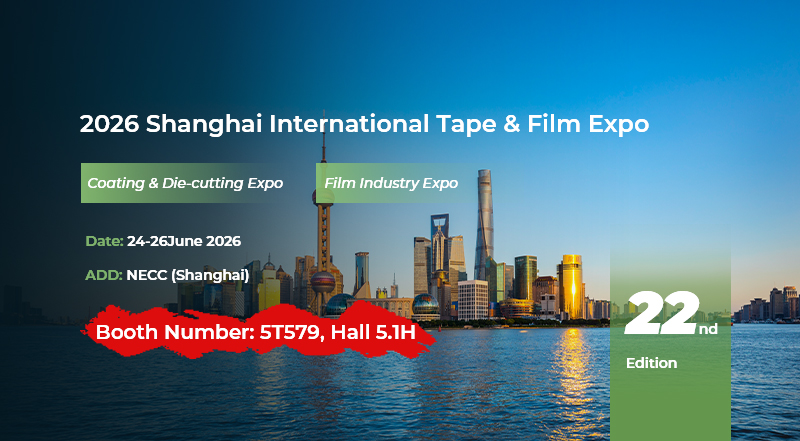 Feifan was invited to participate in the 2026 Shanghai International Tape and Film Exhibition
Dear Valued Customer / Partner, We are pleased to announce that our company will be exhibiting at APFE 2026 – the 22nd Shanghai International Adhesive Tape & Film Expo (Coating & Laminating E...
 English
 русский
 عربى
PET Label Material: Face Stock, Adhesive and Liner Specs That Hold on Press
Content
- 1 What PET Label Material Actually Contains: Three Layers, Three Failure Modes
- 2 PET vs PE vs PP Label Film: Match the Material to the Container
- 3 Thickness, Adhesive and Liner Specs That Decide PET Label Material Performance
- 4 When Polyester Is the Wrong Choice
- 5 Running PET Label Material on Press: Five Checks Before the First Pallet
- 6 How to Audit a PET Label Material Supplier
- 7 PET Label Material: Frequently Asked Questions
That gap matters because polyester has become the default face stock for any label that must survive heat, oil, moisture or two summers of outdoor sunlight. PET label material is rarely specified by brand. It is specified by numbers, and those numbers decide whether a job ships on schedule or stalls in a rework loop.
What PET Label Material Actually Contains: Three Layers, Three Failure Modes
Naming only the face film is the most common specification error in label purchasing, because the liner and the adhesive usually decide whether a reel survives the applicator.
| Layer | Typical specification | What it controls | How it fails |
| PET face film | 25 micron clear, 36 to 50 micron white or metallised, up to 80 micron heavy duty | Print sharpness, stiffness through the labeler, UV and chemical resistance | Curl after die-cutting, film flutter at high line speed |
| Adhesive | Water-based acrylic for sheet-fed offset, solvent acrylic for rough or cold surfaces | Initial tack, peel value, low-temperature performance | Edge lift on tight radii, ooze at high storage temperature |
| Release liner | 80 to 135 gsm glassine or coated paper, PET liner for high-speed rotary | Die-cutting depth, dispensing accuracy | Liner break on unwind, premature label release |
PET vs PE vs PP Label Film: Match the Material to the Container
Polyester is the strongest of the three common label films, and strength is not always what the job needs. PET holds fine print detail and resists oil, alcohol, moisture and ultraviolet light, which is why asset tags, chemical drum labels and electronics markings default to it. PE face film stretches with a squeeze bottle instead of cracking, and PP sits between the two as a moisture-resistant substitute for paper.
The material follows the container. A shampoo bottle in high-density polyethylene that is squeezed fifty times a day needs a PE label that flexes, because a PET label on the same bottle cracks along the fold line after a few hundred squeezes. A glass vial, a stainless steel asset plate and a battery pack are cases where dimensional stability pays for itself.
Choose PET when
- The label must survive outdoor exposure beyond one year
- The container is rigid: glass, metal, rigid plastic or painted panel
- Chemical resistance is mandatory, as on GHS drum labels
- Small type has to stay sharp at four point
- The container is PET, so the label stays in one polymer family
Choose PE or PP when
- The container is squeezed, flexed or dropped in use
- Label life is under twelve months indoors and cost dominates
- Deep-freeze storage pushes the adhesive toward rubber-based systems
- The label must disappear into an HDPE recycling stream
- Heavy ink coverage needs a film that conforms to curved surfaces
Film-making competence carries across these families, which is why buyers often qualify one supplier for several. Zhejiang Feifan New Material Technology Co., Ltd., based in Deqing, Huzhou, Zhejiang, has run PE film and PE protective film lines since 2003 and controls the full chain from blown film through coating, slitting and packing, with published capacity of 8,000 tonnes of PE film and 50 million square metres of protective film a year. Gauge uniformity, corona treatment for ink anchorage and low gel counts are the first three things any converter checks on a new film, whatever the polymer.
Thickness, Adhesive and Liner Specs That Decide PET Label Material Performance
Face-stock gauge is a machine-setting decision before it becomes a durability decision. Published ranges show how wide the spread runs: PE labels for ampoules typically measure 30 to 50 microns, while PE labels for large lubricant containers reach 110 microns. PET follows the same logic, with 25 micron clear film used for the no-label look on beverages and 50 micron white or metallised film where opacity and stiffness help the applicator.
Liner grammage then sets the practical cutting window. A 90 gsm glassine liner cuts differently from a 135 gsm coated paper liner at the same die pressure, and the heavier liner is what lets a high-speed rotary line dispense without stretching the web. Adhesive chemistry closes the decision: water-based acrylic suits sheet-fed offset and general purpose work, while solvent acrylic and hot-melt systems hold on low-surface-energy plastics and rough substrates.
When Polyester Is the Wrong Choice
PET should be skipped when the container squeezes, when the label has to come off without leaving a mark, or when the packaging is being pushed toward a single-polymer recycling stream.
- Squeeze and flex: PE face film moves with the bottle, while polyester cracks at the fold after repeated compression.
- Removability: peelable and resealable constructions rely on rubber-based adhesives that bond better to PE and PP than to rigid polyester.
- Mono-material recycling: a PE bottle with a PE label keeps one polymer family in the stream, while vinyl and metallised films contaminate both PE and PET recycling.
- Short-life logistics: a pallet label that only has to survive six weeks indoors rarely justifies a durable polyester construction.
- Cold chain: the film tolerates low temperature, but standard acrylic adhesives turn brittle in deep-freeze conditions and lose the bond first.
Running PET Label Material on Press: Five Checks Before the First Pallet
Run a short test on the final substrate before committing to a full pallet, because polyester is unforgiving of assumptions about tension, cutting depth and adhesive wet-out.
Condition the rolls. Bring stock to 20 to 23 degrees Celsius at roughly 50 percent relative humidity for 24 hours before die-cutting. Cold film straight from a winter warehouse cuts and dispenses differently from conditioned film.
Match the die to the liner. Set cutting depth against liner grammage, not against the face film. A 135 gsm coated liner tolerates more pressure than an 80 gsm glassine liner before the backing is scored.
Check web tension and stiffness. A 25 micron face film needs lower unwind tension than a 50 micron film, and excess tension produces curl that only appears once the label is applied.
Test adhesive wet-out on the real surface. Mould release agents, silicone sprays and oily mill residue are the usual reasons a label that passed a lab peel test falls off a production part.
Read the peel result after 24 hours. Acrylic adhesives keep building bond for a day, so a peel value measured five minutes after application understates final performance and can trigger an unnecessary specification change.
Plants that convert labels next to flat panel work also protect the panels themselves. Antistatic PE protective film is used on PET decorative panels and similar flat stock to keep dust and handling scratches off the surface before printing or lamination, and the static control that protects a panel also protects sensitive label faces during converting.
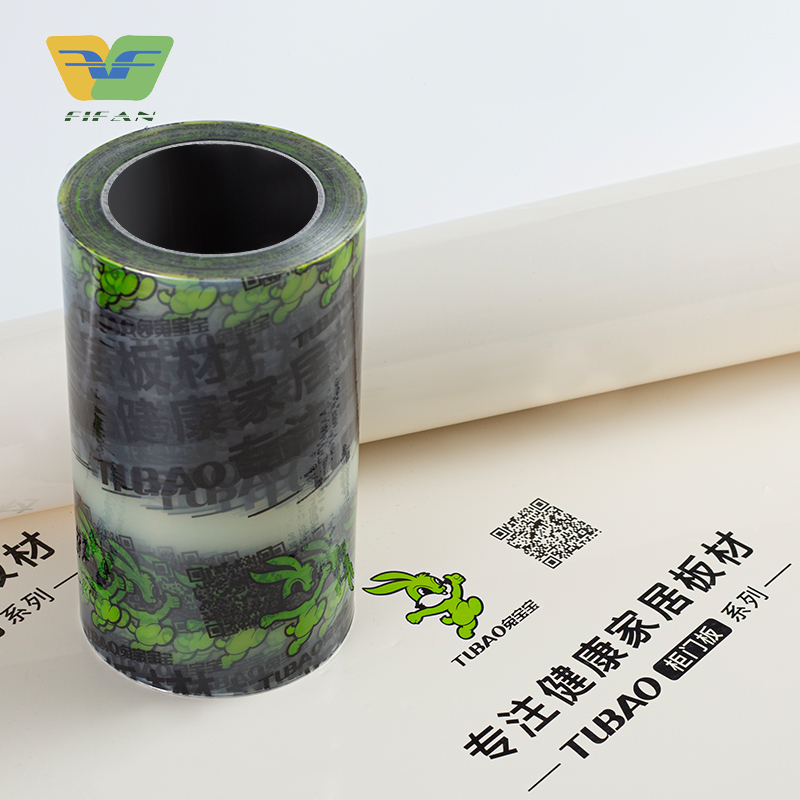 Anti-Static PE Protective Film for PET Decorative PanelsTemporary PE film for PET decorative panels, offering anti-static dust control, scratch protection, and clean removal during handling, CNC processing, and installation.View Product →
How to Audit a PET Label Material Supplier
Audit three things before signing: lot-level film data, the environment where the film is slit, and traceability from resin batch to shipped roll.
- Certificate of analysis per lot: gauge tolerance, tensile strength to ASTM D882, haze and gloss, and silicone release force.
- Adhesive coat weight and uniformity, typically held within a few percent across the web, since a light patch at the edge is where lifting starts.
- Cleanroom class and slitting environment for optical, electronic and medical labels, where one particle creates a print defect.
- Retention samples held for at least twelve months, so a field failure can be traced to a specific production lot.
- Written process control covering incoming resin inspection, in-process monitoring, final inspection and shipping sampling.
The supply base for films of this kind is deeper than most buyers assume. Zhejiang Feifan New Material Technology Co., Ltd. runs a Class 10,000 cleanroom, holds two invention patents and fifteen utility model patents, and keeps blown film, coating, slitting and packing inside one plant, which is the structure that makes lot traceability realistic rather than aspirational. Where one plant also supplies protective film, the audit questions overlap: purchasing checks for PE protective film come down to the same three risks that apply to label stock, namely gauge uniformity, coating weight and clean handling.
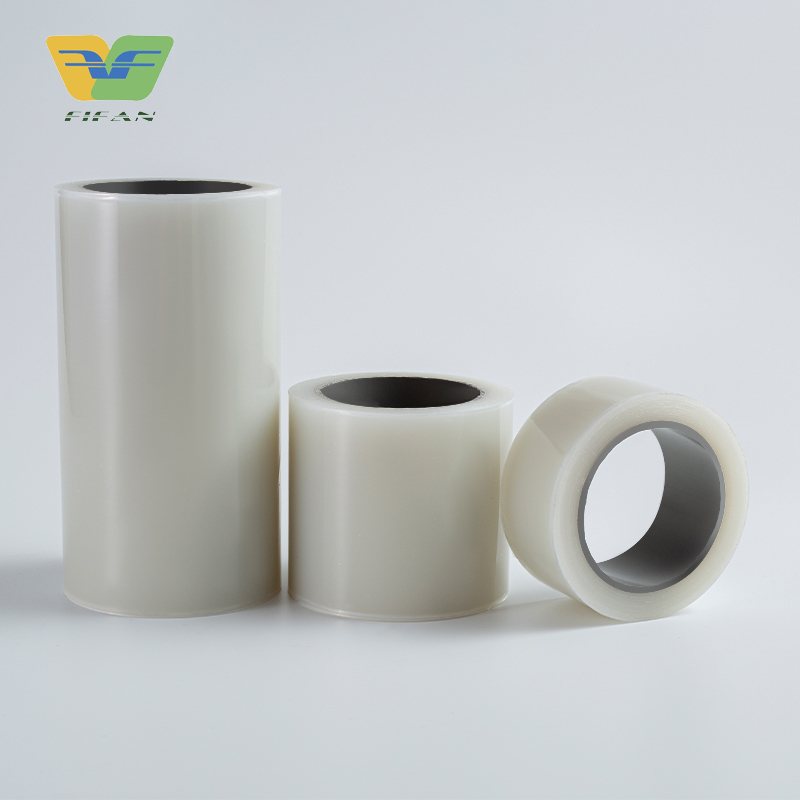 Anti-Static PE Protective Film for ESD-Sensitive Electronics and DisplaysThree-layer co-extruded PE film with stable anti-static protection for ESD-sensitive electronics, displays, and high-gloss plastics, supporting clean removal.View Product →
PET Label Material: Frequently Asked Questions
Is PET label material the same as PET packaging film?
No. Both use polyester resin, but label face stock is produced in thin gauges, commonly 25 to 50 microns, with controlled surface energy for ink anchorage and a release liner laminated in the same pass. Packaging film is usually thicker, thermoformable and judged on barrier and seal performance instead of print and die-cutting behaviour.
What thickness of PET label material suits a clear no-label look?
Twenty-five microns is the common starting point for a transparent, conformable look on beverages and cosmetic bottles. Step up to 36 or 50 microns when the applicator needs more stiffness at high speed or the label has to bridge a recessed panel.
Can PET labels be recycled with PET bottles?
A PET face film keeps the label in the same polymer family as the bottle, which is why it is preferred over PVC or metallised constructions in bottle labelling. Adhesive chemistry and liner disposal still matter, and wash-off adhesives are used where the label must separate cleanly during the recycling wash stage.
Why does my PET label lift at the edges after a week?
Edge lift is almost always adhesive creep, insufficient wet-out or surface contamination rather than a defective face film. Small radii, oily or moulded surfaces, storage above 40 degrees Celsius and an under-specified adhesive account for most cases. Re-test on the production substrate after 24 hours before changing the film.
Your email address will not be published. Required fields are marked *
-
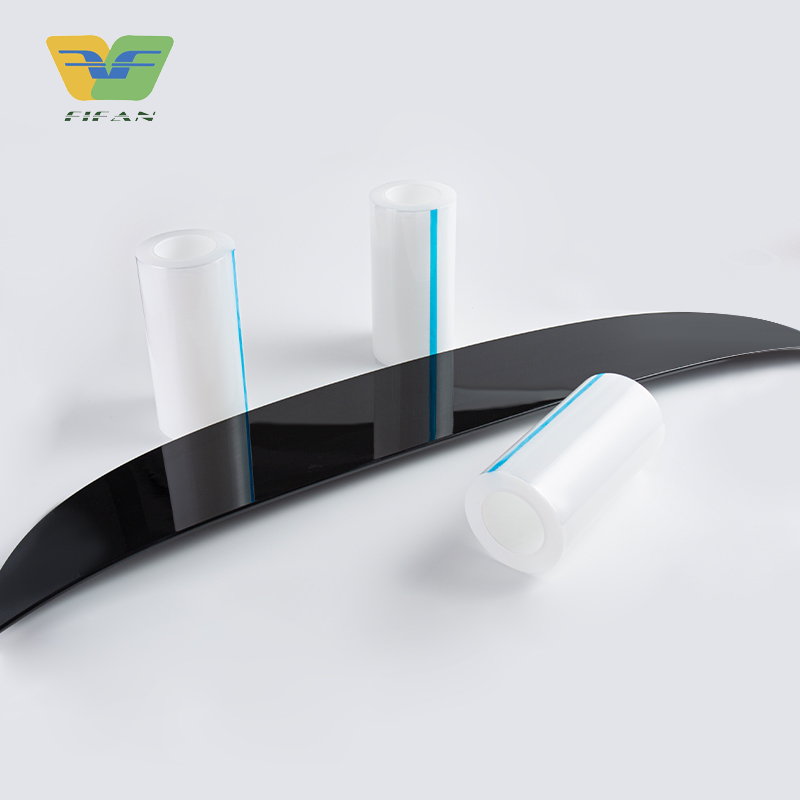
Self Adhesive PE Protective Film Self-Adhesive PE Protective Film for High-Gloss Injection Molded Parts View More
-
-
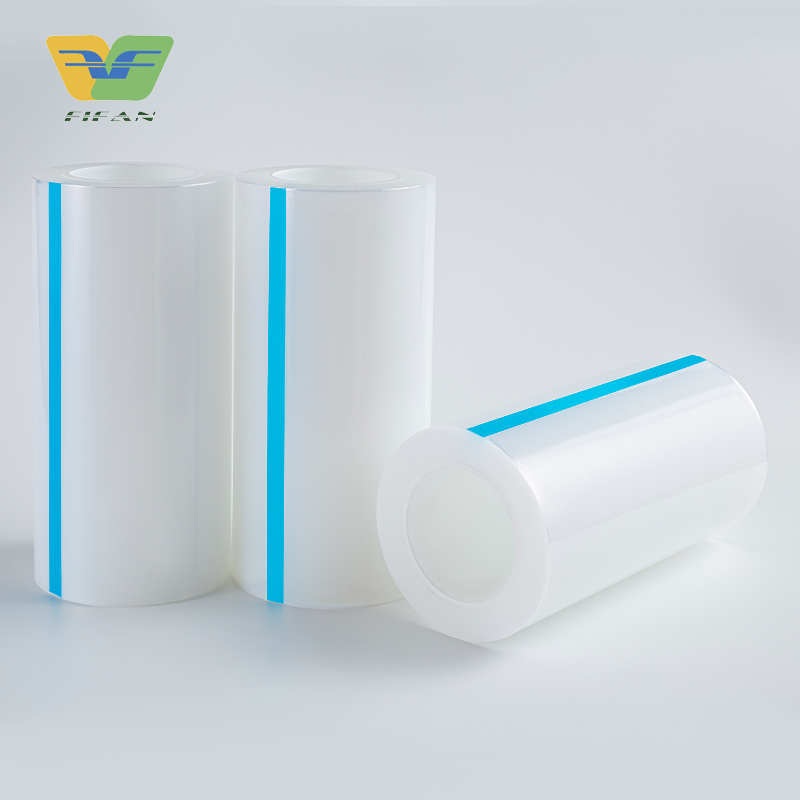
Self Adhesive PE Protective Film Self-Adhesive PE Protective Film for Polycarbonate (PC) Sheets View More
-
-
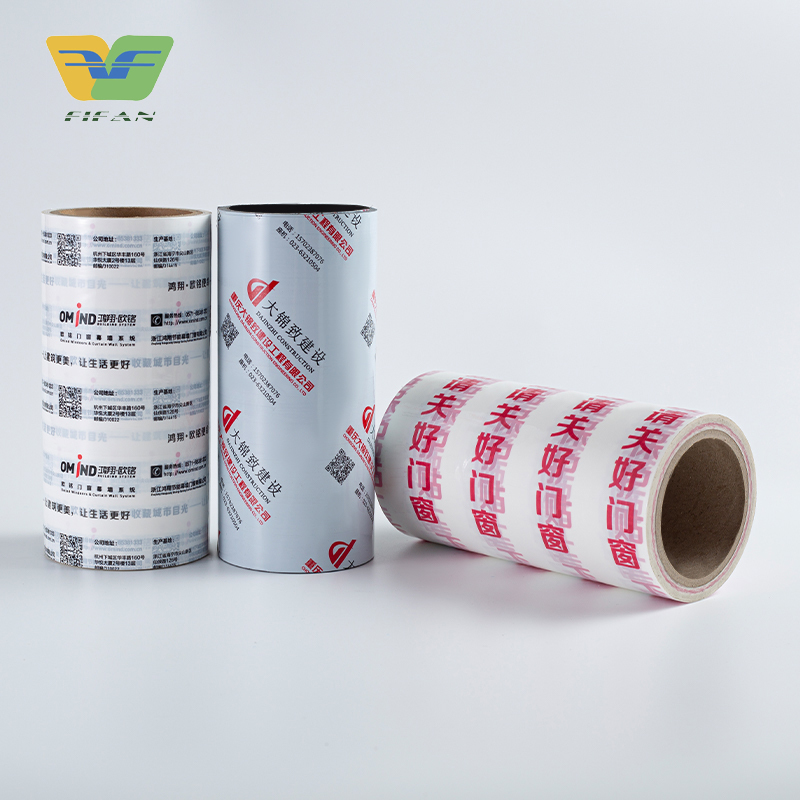
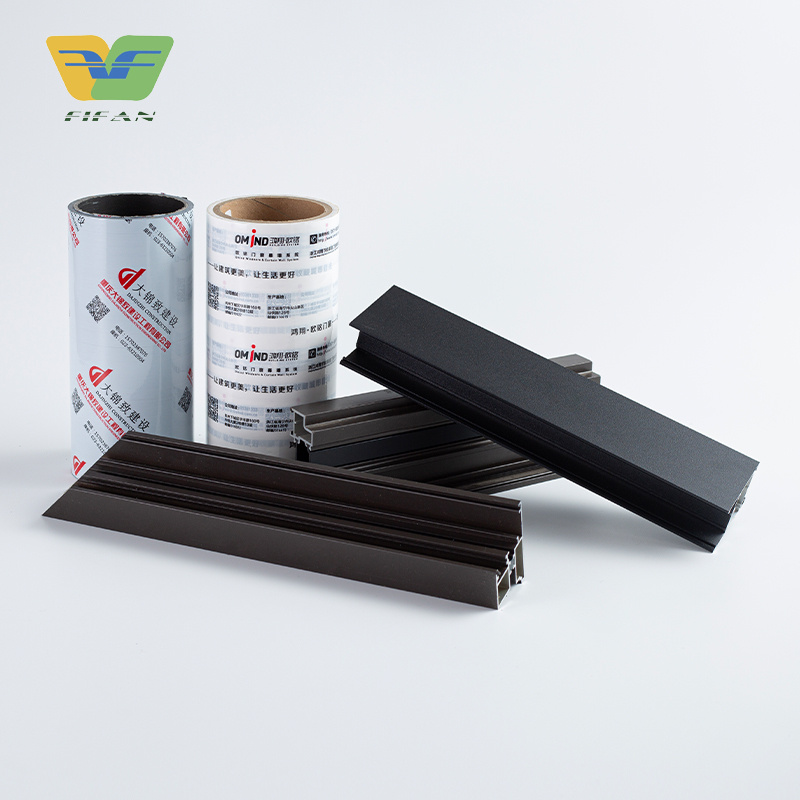
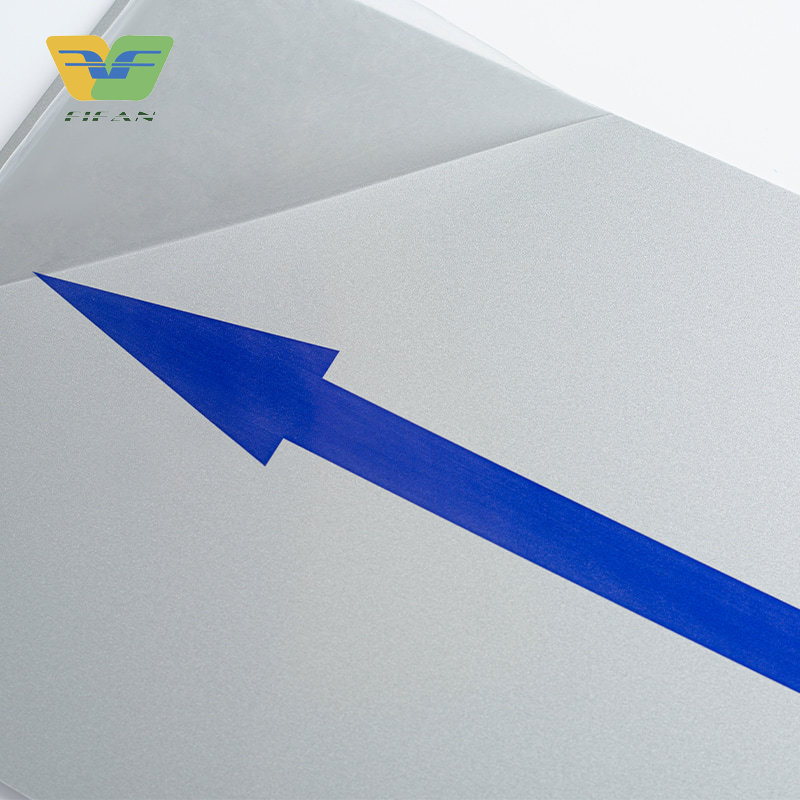
Construction Material PE Protective Film High-Tack PE Protection Film for Architectural Aluminum Panels View More
-

Address: No. 1588 Gan Dong Road, Zhongguan Town, Deqing County, Huzhou City, Zhejiang Province, China
TEL: +86-572-8498038 / +86-15067289913
E-mail: [email protected]
Mobile
WhatsApp

Copyright © Zhejiang Feifan New Material Technology Co., Ltd. All Rights Reserved
