From Raw Material Formulation to Forming Process: What Are the Core Control Points That Affect Key Properties of PE Film Materials?
1. Raw Material Formulation: The Molecular Foundation of Performance
The properties of a PE film are fundamentally determined by its molecular architecture. The choice of resin, blending strategy, and additive package are the primary levers for tailoring performance.
Resin Selection
- Melt Index (MI): A lower MI indicates higher molecular weight, which generally provides higher tensile strength and toughness but reduces processability. Blown film grades typically use an MI in the range of 2–6 g/10min to balance these factors.
- Resin Type: LDPE offers good flexibility and clarity, HDPE provides high stiffness and heat resistance, and LLDPE contributes excellent puncture resistance and tensile strength. Blending these resins allows for performance customization for specific applications such as food packaging or protective films.
- Additives: These are crucial for specific properties. Slip agents reduce friction for better machinability, anti-blocking agents prevent film layers from sticking, and processing aids improve extrusion stability and surface quality.
Additive and Blend Optimization
- For Heat-Seal Performance: A mPE/POE/LDPE ternary blend in the sealant layer can synergistically enhance low-temperature seal strength, achieving 7.3–7.9 N/15mm at 90°C, which is critical for high-speed packaging lines.
- For Mechanical Strength and Optics: The core layer reinforced with an LLDPE and HDPE rigid skeleton combined with a light-transmitting masterbatch can achieve tensile strength exceeding 25.5 MPa while maintaining haze levels around 12–13%.
2. Extrusion and Blown Film Process: Shaping the Properties
The transformation of raw material into film is where formulation meets mechanical and thermal history, directly dictating final properties.
Blow-Up Ratio (BUR) and Take-Up Ratio
- Blow-Up Ratio (BUR): This is the ratio of the bubble diameter to the die diameter. A higher BUR (typically 2.5–4.0 for LLDPE) results in increased transverse direction (TD) strength and improved toughness. However, excessively high BUR can reduce optical clarity and thickness uniformity.
- Take-Up Ratio (TUR): This is the ratio of the film take-off speed to the extrudate speed. A higher TUR increases machine direction (MD) orientation, enhancing MD tensile strength and stiffness but reducing elongation at break.
Temperature Control and Cooling
- Extrusion Temperature Profile: Proper temperature control along the barrel (typically 160–220°C for PE) ensures complete melting and homogenization without thermal degradation. Uneven temperatures lead to melt fracture and poor gauge uniformity.
- Cooling Air Ring: Efficient and uniform cooling of the bubble is essential. Rapid cooling produces smaller crystallites, resulting in better optical properties (lower haze, higher gloss). Slower cooling allows larger crystal growth, which increases toughness and tear resistance.
Film Thickness Control
- Gauge Uniformity: Thickness variation directly affects mechanical strength, optical properties, and heat-seal performance. Automatic gauge control (AGC) systems continuously monitor and adjust the die gap to maintain thickness tolerances within ±5%.
3. Post-Processing and Surface Treatment
Additional treatments after film formation can further tailor surface properties for specific applications.
Corona Treatment
- Surface Energy Enhancement: Corona treatment increases the surface energy of PE film, improving printability and adhesion for coatings or laminates. The treatment level is measured in dynes/cm, with a target of 38–42 dynes/cm for most printing applications.
Annealing
- Stress Relief: Controlled annealing reduces internal stresses introduced during the blown film process, minimizing shrinkage and warpage in the final product, which is particularly important for protective films used in precision applications.
4. Parameter Comparison: Impact on Key Properties
The following table summarizes the relationship between process parameters and resulting film properties, based on industry standards and operational experience at Zhejiang Feifan New Material Technology Co., Ltd.
| Property |
Affected By |
Optimal Range / Target |
Effect of Increasing Parameter |
| Optical Clarity |
Cooling Rate, BUR |
Haze < 10%, Gloss > 85% |
Faster cooling → lower haze |
| Heat-Seal Strength |
Blend composition, sealing temperature |
7–8 N/15mm @ 90°C |
Higher LLDPE content → higher seal strength |
| Tensile Strength (MD) |
TUR, resin MI |
≥ 25 MPa |
Higher TUR → higher MD strength |
| Tensile Strength (TD) |
BUR |
≥ 20 MPa |
Higher BUR → higher TD strength |
| Puncture Resistance |
Resin type (LLDPE), BUR |
≥ 50 N |
Higher LLDPE content → higher puncture resistance |
| Film Thickness Uniformity |
Die design, cooling air distribution |
±5% tolerance |
Improves with AGC system |
5. Quality Assurance at Zhejiang Feifan New Material Technology Co., Ltd.
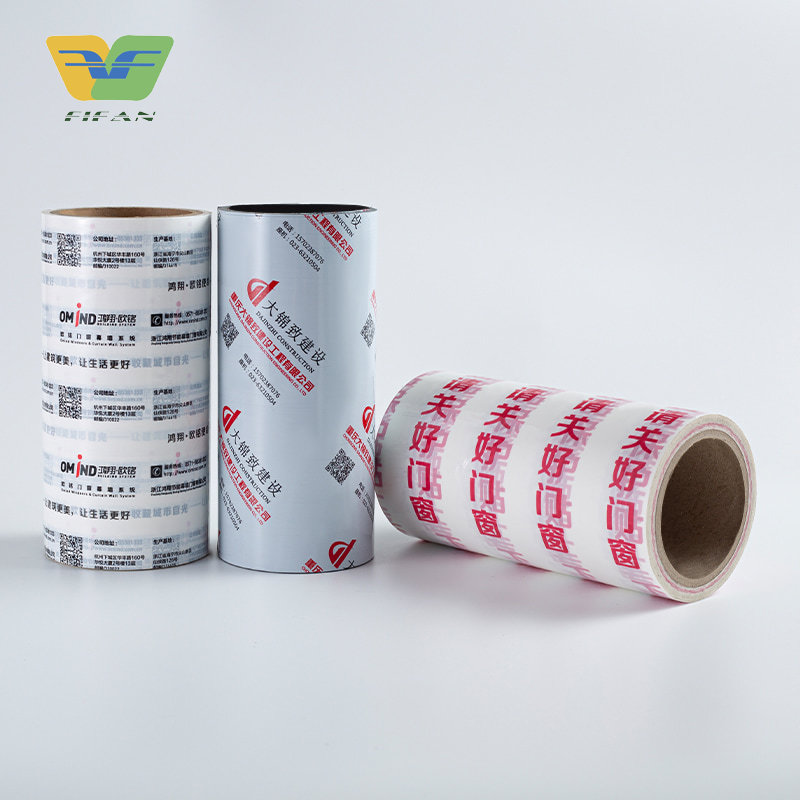
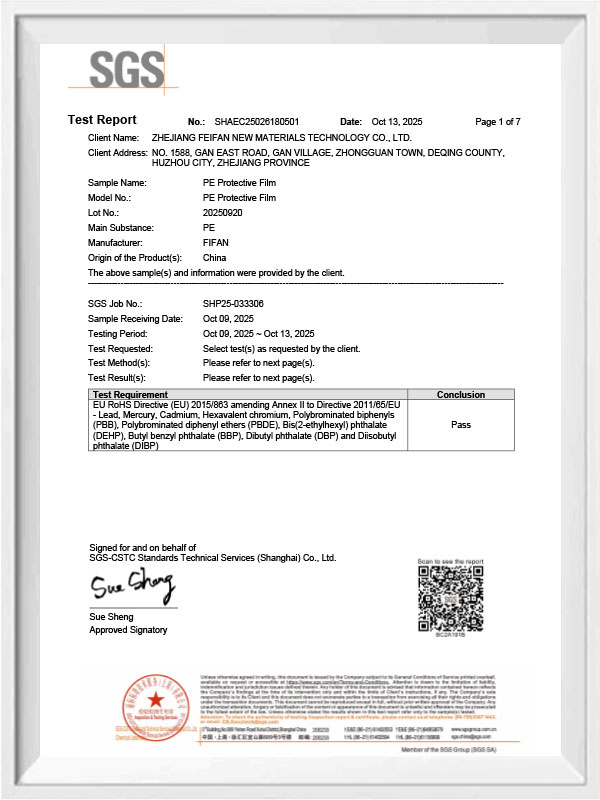
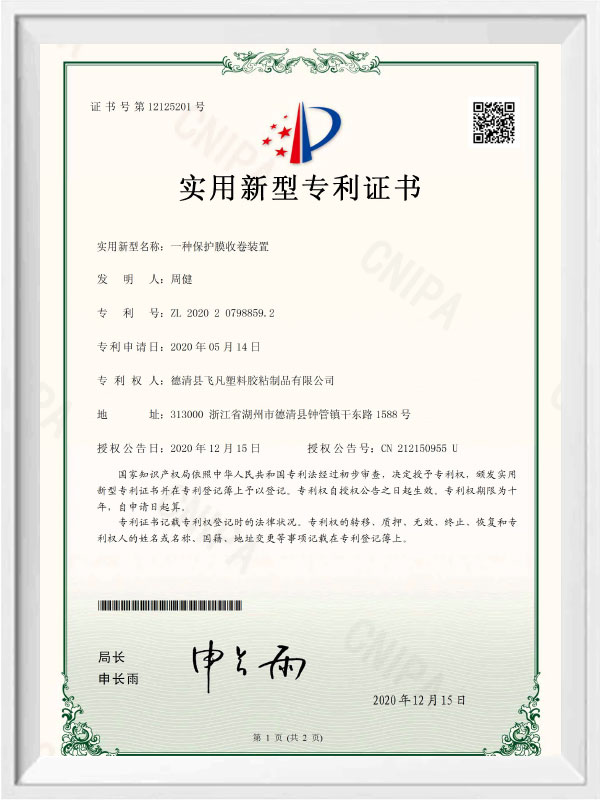
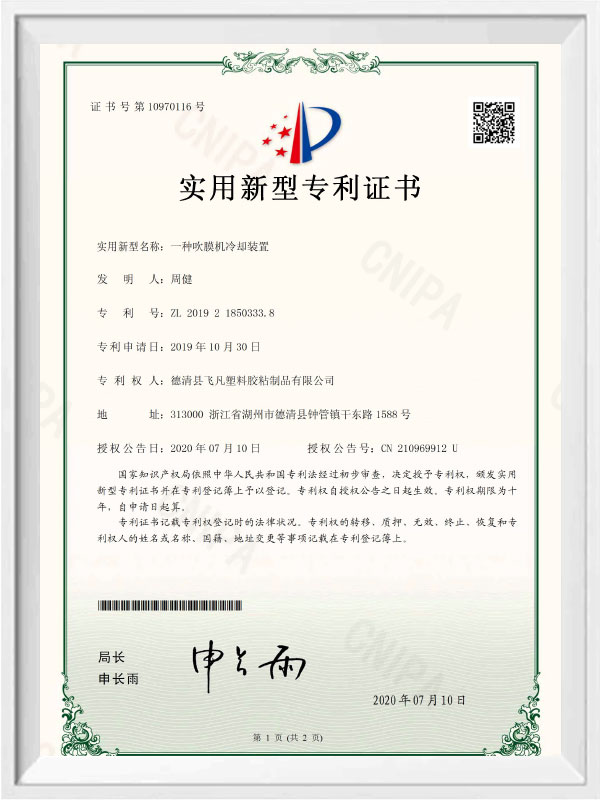
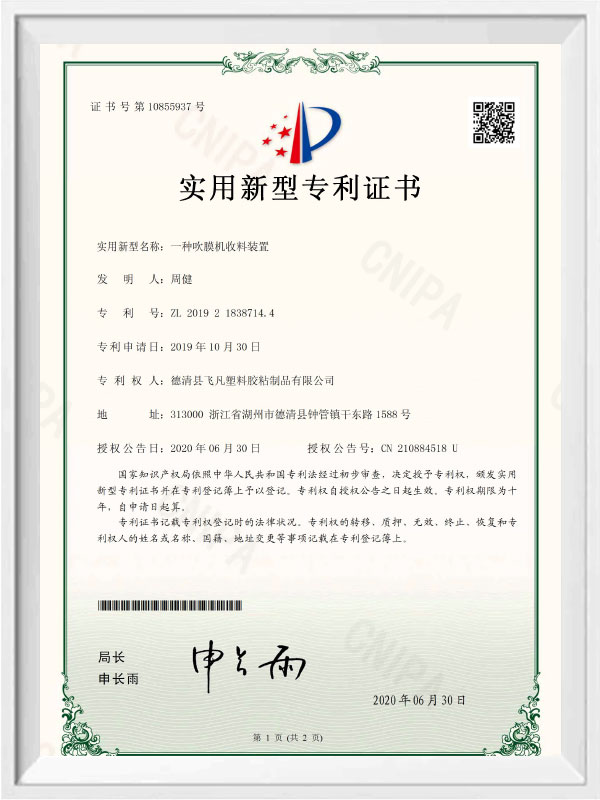
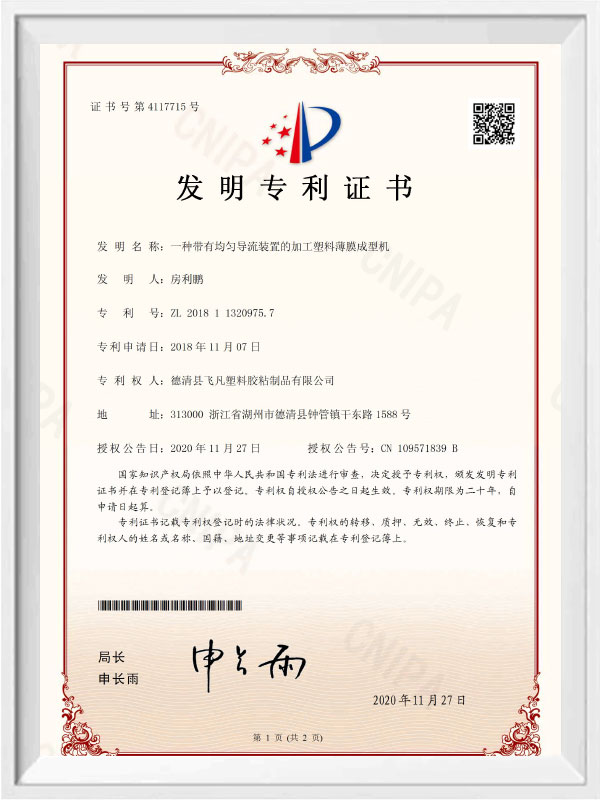
With over two decades of specialization in PE film and PE protective film, Zhejiang Feifan New Material Technology Co., Ltd. implements rigorous quality control throughout the entire manufacturing chain. The company's advanced centralized feeding system ensures consistent raw material blending, while state-of-the-art extrusion lines maintain precise temperature and thickness control. This commitment to process excellence has earned the company recognition as a National High-Tech Enterprise and a Provincial "Specialized and Innovative" SME, serving distinguished clients including Robam, Fotile, BYD, and Haier.
FAQ
Q1: How does Zhejiang Feifan New Material Technology Co., Ltd. ensure consistent quality across its PE film products?
Zhejiang Feifan New Material Technology Co., Ltd. maintains quality consistency through complete in-house process control from blowing and coating to slitting and packaging. The company utilizes a centralized feeding system for precise raw material blending and employs advanced automatic gauge control for thickness uniformity. With a municipal R&D center and multiple patents, the company continuously optimizes its formulations and processes to meet the rigorous requirements of customers such as BYD, Haier, and Fotile.
Q2: What are the key considerations when selecting a PE protective film for metal surface protection?
When selecting a PE protective film for metal surfaces such as stainless steel or appliances, critical factors include adhesion level, peel strength consistency, and resistance to UV aging. Zhejiang Feifan New Material Technology Co., Ltd. tailors its formulations to meet specific customer requirements, ensuring that films provide adequate protection during transportation and fabrication while leaving no residue upon removal, as evidenced by its long-term partnerships with leading appliance manufacturers.
Q3: Why is raw material formulation considered the most critical factor in determining PE film heat-seal performance?
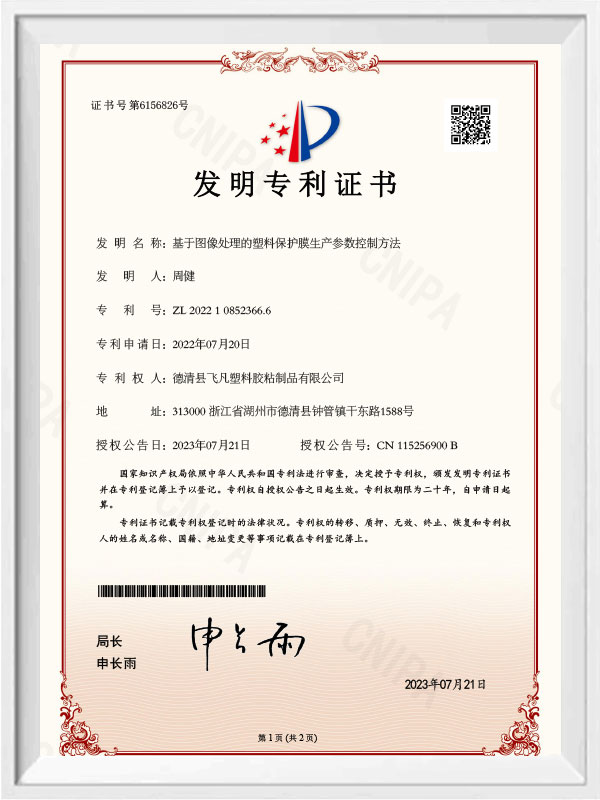
Raw material formulation directly determines the molecular structure and compatibility of polymers within the sealant layer. The selection of mPE, POE, and LDPE in precise ratios creates optimal molecular chain entanglement for strong interfacial diffusion during sealing. Zhejiang Feifan New Material Technology Co., Ltd. leverages its two invention patents and fifteen utility model patents to develop proprietary formulations that deliver consistent heat-seal strengths of 7–8 N/15mm at low temperatures, ensuring reliable performance in high-speed packaging applications for food and industrial products.
From Blown Film Extrusion to Cast Film Process: What Are the Core Process Control Parameters That Affect Key Properties of PE Films?
For over 20 years, Zhejiang Feifan New Material Technology Co., Ltd. has specialized in PE film and PE protective film, with full in-house process control from blowing and coating to slitting and packaging. The company's advanced centralized feeding system and state-of-the-art equipment produce 8,000 tons of PE film and 50 million square meters of PE protective film annually. This extensive operational experience provides valuable insight into how process parameters critically influence film performance. Below is a comprehensive analysis of the key control points affecting heat seal strength, barrier properties, and optical clarity.
1. Blown Film Extrusion: Key Process Parameters and Their Effects
Blown film extrusion involves extruding molten polymer through a circular die, inflating it into a bubble, and cooling it to form a tube that is then collapsed and wound. The following parameters are critical:
Blow-Up Ratio (BUR)
- Definition: The ratio of the bubble diameter to the die diameter, typically ranging from 2.0 to 4.0 for most PE film grades.
- Effect on Mechanical Properties: Increasing BUR enhances transverse direction (TD) tensile strength and impact resistance due to increased molecular orientation in the transverse direction.
- Effect on Optics: Higher BUR generally reduces haze and improves optical clarity, as the increased orientation reduces surface roughness.
- Limitations: Excessive BUR can lead to bubble instability and thickness non-uniformity, requiring precise control.
Take-Up Ratio (TUR) or Draw Ratio
- Definition: The ratio of the film take-off speed to the extrudate speed at the die.
- Effect on Mechanical Properties: Higher TUR increases machine direction (MD) tensile strength and stiffness while reducing elongation at break in the MD.
- Balance Required: Optimal TUR must balance MD and TD properties to achieve balanced film performance for specific applications.
Extrusion Temperature Profile
- Optimal Range: For PE resins, barrel temperatures typically range from 160°C to 220°C, with the die maintained at 180°C to 200°C.
- Effect on Melt Quality: Proper temperature control ensures complete melting and homogenization without thermal degradation, which directly affects film uniformity.
- Effect on Optics: Higher extrusion temperatures reduce haze due to improved melt homogeneity, but excessive temperatures can cause polymer degradation and color issues.
Cooling Rate and Frost Line Height
- Cooling Rate: Rapid cooling produces smaller crystallites, resulting in better optical properties (lower haze, higher gloss) and improved impact strength.
- Frost Line Height: A higher frost line allows slower cooling, promoting larger crystal growth which enhances toughness and tear resistance.
- Cooling Air Distribution: Uniform air flow around the bubble is essential for consistent thickness and optical uniformity.
Film Thickness Control
- Automatic Gauge Control (AGC): Continuous monitoring and adjustment of the die gap maintain thickness tolerances within ±5%.
- Impact on Properties: Thickness variation directly affects mechanical strength, barrier properties, and heat-seal performance.
2. Cast Film Extrusion: Distinct Process Characteristics
Cast film extrusion produces film by extruding molten polymer through a flat die onto a chilled roll, resulting in rapid quenching and distinct property profiles compared to blown film.
Chill Roll Temperature
- Optimal Range: Typically maintained at 20°C to 40°C for PE films.
- Effect on Properties: Lower chill roll temperatures produce higher clarity and gloss due to rapid freezing of molecular orientation.
- Effect on Crystallinity: Faster cooling results in lower crystallinity, which improves optical properties but may reduce stiffness.
Draw Speed and Take-Off Tension
- Effect on Orientation: Higher draw speeds increase MD orientation, improving tensile strength in the machine direction.
- Effect on Optics: Proper tension control prevents surface defects and maintains optical clarity.
Die Design and Lip Gap Setting
- Die Gap: Typically set between 0.5 mm to 1.0 mm for cast film extrusion.
- Effect on Thickness Uniformity: Precise die lip adjustment ensures consistent gauge across the film width.
- Effect on Optics: Smooth die surfaces and proper melt flow distribution minimize die lines and surface defects.
3. Parameter Comparison: Blown Film vs. Cast Film
The following table compares key process parameters and their typical effects on PE film properties based on industry standards and operational experience.
| Parameter |
Blown Film (Typical Range) |
Cast Film (Typical Range) |
Effect on Key Properties |
| BUR / Draw Ratio |
BUR: 2.0 - 4.0 |
Draw Ratio: 10 - 30 |
Higher ratio increases MD tensile strength; BUR also increases TD strength |
| Cooling Rate |
Slower (air cooling) |
Rapid (chill roll) |
Rapid cooling improves optical clarity; slower cooling enhances toughness |
| Optical Clarity |
Haze: 8-15% |
Haze: 2-5% |
Cast film generally has superior clarity due to rapid quenching |
| Heat Seal Strength |
7-9 N/15mm |
6-8 N/15mm |
Blown film often achieves higher seal strength due to balanced orientation |
| Tensile Strength (MD) |
25-35 MPa |
30-45 MPa |
Cast film typically has higher MD tensile strength due to higher draw ratios |
| Impact Resistance |
Higher (Dart drop: 80-150g) |
Lower (Dart drop: 40-80g) |
Blown film offers superior impact resistance due to balanced orientation |
| Thickness Tolerance |
±5-8% |
±3-5% |
Cast film provides better gauge uniformity across the width |
4. How These Parameters Impact Specific Key Properties
Heat Seal Strength
- Critical Factors: Seal temperature, pressure, and dwell time are process-dependent, but film thickness uniformity and surface smoothness are influenced by extrusion parameters.
- BUR Effect: Higher BUR improves TD molecular orientation, which can enhance seal strength by 10-15% when optimized.
- Cooling Rate: Faster cooling reduces surface crystallinity, promoting better heat sealability at lower temperatures.
Barrier Properties
- Oxygen Transmission Rate (OTR): Affected by film density and crystallinity, which are controlled by cooling rate and BUR. Typical PE film OTR ranges from 2,000 to 10,000 cc/m²/day.
- Water Vapor Transmission Rate (WVTR): Influenced by film thickness uniformity and density. Target WVTR for 50µm PE film is typically 5-10 g/m²/day.
- Process Effect: Higher BUR and slower cooling can increase crystallinity, which generally improves barrier performance.
Optical Transparency
- Haze and Gloss: Directly influenced by cooling rate and surface smoothness.
- Cast Film Advantage: Cast films achieve 2-5% haze compared to 8-15% for blown films due to rapid quenching on chill rolls.
- Process Optimization: Higher extrusion temperatures and optimal BUR can reduce haze in blown films by up to 30%.
5. Quality Assurance at Zhejiang Feifan New Material Technology Co., Ltd.
With over two decades of specialization in PE film and PE protective film, Zhejiang Feifan New Material Technology Co., Ltd. implements rigorous process control across its entire manufacturing chain. The company's advanced centralized feeding system ensures consistent raw material blending, while state-of-the-art blown film and cast film lines maintain precise temperature, BUR, and thickness control. This commitment to process excellence has earned the company recognition as a National High-Tech Enterprise and a Provincial "Specialized and Innovative" SME, serving distinguished clients including Robam, Fotile, BYD, and Haier. With a municipal R&D center and a portfolio of 2 invention patents and 15 utility model patents, the company continuously refines its processes to optimize film performance across all key metrics.
FAQ
Q1: What is the main difference between blown film and cast film processes for PE, and how does it affect product selection?
The primary difference lies in the cooling method and molecular orientation. Blown film uses air cooling and produces balanced MD/TD properties with superior impact resistance and heat seal strength, making it ideal for heavy-duty packaging and protective films. Cast film uses rapid chill roll cooling, resulting in higher optical clarity, better thickness uniformity, and higher MD tensile strength, suitable for applications requiring transparency, such as food packaging. Zhejiang Feifan New Material Technology Co., Ltd. operates both processes, allowing the company to tailor PE protective film solutions to specific customer requirements across appliance, automotive, and food packaging industries.
Q2: How does the blow-up ratio (BUR) affect the mechanical and optical properties of PE blown film?
The blow-up ratio (BUR) is a critical parameter that influences both mechanical and optical properties. Increasing BUR enhances transverse direction tensile strength and impact resistance due to increased molecular orientation in the TD. For optical properties, a higher BUR generally reduces haze and improves clarity by reducing surface roughness. However, BUR must be carefully optimized as excessive values can lead to bubble instability and thickness non-uniformity. Zhejiang Feifan New Material Technology Co., Ltd. utilizes advanced process control systems to maintain optimal BUR levels, ensuring consistent product quality for clients such as BYD and Haier.
Q3: Why is cooling rate considered a critical control point for PE film optical properties and heat seal performance?
Cooling rate directly affects polymer crystallization, which in turn governs both optical and thermal properties. Rapid cooling produces smaller crystallites, resulting in lower haze, higher gloss, and improved optical clarity. Additionally, faster cooling reduces surface crystallinity, promoting better heat sealability at lower temperatures. Conversely, slower cooling allows larger crystal growth, which enhances toughness and tear resistance but may sacrifice optical performance. Zhejiang Feifan New Material Technology Co., Ltd. leverages its municipal R&D center and technical expertise to precisely control cooling parameters, balancing these property trade-offs to meet the diverse needs of its customers in the appliance, aviation, and food packaging sectors.

 English
 русский
 عربى
عربى