
- Product
-
Our Story
Why Choose Us?We are a national high-tech enterprise and a provincial "Specialized and Refined" SME, focusing on the R&D, production, and sales of PE protective film. As a leader in the industry, we are committed to serving global customers with innovative technology and have won wide recognition in the market.
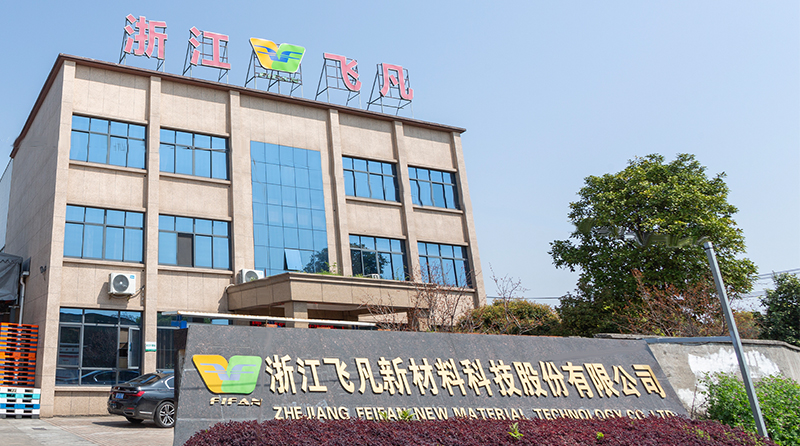 Coming From China, Marketing To The World.
-
News
 Feifan was invited to participate in the 2026 Shanghai International Tape and Film Exhibition
Dear Valued Customer / Partner, We are pleased to announce that our company will be exhibiting at APFE 2026 – the 22nd Shanghai International Adhesive Tape & Film Expo (Coating & Laminating E...
 English
 русский
 عربى
Printable PET Label Films for Fabric Surfaces: Print, Adhesion & Wash Durability
Content
- 1 What Printable PET Label Films for Fabric Surfaces Are Actually Built From
- 2 Print Method Decides the Topcoat, Not the Other Way Around
- 3 Adhesion of Printable PET Label Films on Woven and Knitted Fabrics
- 4 Glossy, Matte or Coated: Match the Finish to the Reading Task
- 5 Spec Sheet Checklist for Printable PET Label Film Buyers
- 6 How PE-Based Printed Film Fits Alongside PET Label Stock
- 7 Quality Control Checks That Catch Fabric Label Failures Before Shipment
- 8 Frequently Asked Questions
Twenty-five wash cycles at 40 degrees Celsius is the durability bar most apparel buyers now write into a care-label specification, and it is the point at which printed fabric labels fail in predictable ways. The failure is rarely the ink. It is the film, the coating and the adhesive underneath it.
Printable PET label films for fabric surfaces are bought on three numbers that most purchase orders leave blank: the gauge of the polyester core, the coat weight of the print-receptive layer, and the pressure-sensitive adhesive matched to the weave and finish of the textile. Fix those three and the printing method becomes a secondary decision. Get them wrong and no ribbon or ink set will rescue the label.
What Printable PET Label Films for Fabric Surfaces Are Actually Built From
A printable PET label film for fabric surfaces is a three-layer construction: a biaxially oriented polyethylene terephthalate (BOPET) core, a print-receptive coating on the face side, and a pressure-sensitive adhesive on the reverse.
BOPET cores for textile labelling are normally supplied at 50, 75 and 100 microns. The 50 micron gauge conforms to curved seams on knitwear, 75 microns is the general-purpose choice for printed brand and size labels, and 100 microns is stiff enough for high-speed magazine feeding and repeated retail handling.
Two numbers show whether a film is genuinely print-ready. Surface energy comes first: an untreated polyester face sits at roughly 42-44 dyne/cm, low enough that water-based flexo ink beads instead of anchoring, so a 1-2 g/m2 primer is added to bring it into a stable printing window. Coating weight comes second, and it belongs on the specification in grams per square metre rather than as a claim of printability, because a 4-6 g/m2 micro-porous coating is what absorbs a UV inkjet droplet without wicking along the fibre.
Adhesive choice follows the textile. Solvent acrylics hold best on tight woven cotton and survive industrial laundering; emulsion acrylics suit five-wash care labels; hot-melt rubber gives the highest initial tack on loose weaves and the weakest wash resistance.
Print Method Decides the Topcoat, Not the Other Way Around
Pick the printing method first, because each ink family needs a different receptive surface. Thermal transfer, UV inkjet, water-based flexo and laser toner do not share a coating, and a reel described only as printable PET is an unfinished specification.
| Print method | Required face coating | Consumable | Where it fits |
| Thermal transfer | Wax-resin receptive primer, 1-2 g/m2 | Wax-resin ribbon | High-volume care labels, barcodes, variable data |
| UV inkjet | Micro-porous coating, 4-6 g/m2 | UV-curable ink | Short runs, multi-colour brand labels, on-demand printing |
| Water-based flexo | Sealed acrylic primer, 2-3 g/m2 | Water-based ink | Solid colour fields and heavy coverage on woven tags |
| Laser toner | Anti-static toner coating | Toner | Sheet-fed prototypes and small batches |
The pattern is consistent: the more ink a method lays down, the heavier the coating needed to hold it. Moving a programme from flexo to UV inkjet without changing the film is a common cause of pin-holing and rub-off, because a 2 g/m2 primer that performs under a 3 g/m2 flexo laydown will not absorb an inkjet droplet of the same volume.
Adhesion of Printable PET Label Films on Woven and Knitted Fabrics
Peel on textile is a laundering story rather than a sticking story. A 25 mm strip of 75 micron PET label on woven cotton typically reads 4-8 N/25 mm in a 180 degree peel test at 300 mm/min, and the commercial question is how much of that peel survives washing, drying and pressing.
Three mechanisms explain the loss: detergent surfactants plasticise the adhesive, hot water swells the cotton weave and shears the bond line at the label edge, and fabric softeners deposit silicone that drops fabric surface energy to 28-32 dyne/cm, below the wetting threshold of many emulsion acrylics. Raising adhesive coat weight from 20 to 28 g/m2 recovers most of the retained peel on a five-wash label, and it costs less than reformulating.
A low-coat water-based system keeps less than half its initial peel after five washes, which is the largest single driver of edge lift in care labels returned from garment finishing.
Glossy, Matte or Coated: Match the Finish to the Reading Task
Matte and coated films win on sewn-in care labels; glossy films win where the label must be scanned automatically. The reasons are optical rather than aesthetic.
Glossy PET
- 88-92 gloss units, so solid brand marks print with high contrast under flexo.
- Barcode contrast is strongest when the scanner is held perpendicular to the label.
- Handling scratches and creases show up immediately on a reflective face.
- Lower coefficient of friction makes it the easier stock to feed on high-speed sew-in lines.
Matte and coated PET
- 8-20 gloss units diffuses light, so two-dimensional codes scan across a wider angle range.
- Holds UV inkjet dot shape and laser toner without the spread seen on a smooth face.
- Scuffing during washing and pressing stays far less visible.
- Needs a heavier coating to match the wash performance of glossy stock.
Spec Sheet Checklist for Printable PET Label Film Buyers
Six numbers belong on the purchase order before a sample reel is cut. If a supplier cannot quote them, the film is being sold on description rather than on specification.
- Gauge tolerance of plus or minus 5 percent on a nominal 75 micron core, since looser tolerances cause registration drift on rotary presses.
- Coating weight in g/m2, measured gravimetrically and never described as enhanced printability.
- Initial peel and retained peel after five ISO 6330 cycles, tested at 180 degrees and 300 mm/min on a named fabric.
- Surface energy on the face side in dyne/cm, measured within 24 hours of coating.
- Coefficient of friction below 0.35 to prevent reel telescoping and blocking on the unwind.
- Roll format: width to plus or minus 1 mm, core diameter, maximum roll diameter and a declared splice count per reel.
Buyers who source film the way they source adhesive tape tend to revisit the same defects. The recurring traps, from unstated coat weights to untested surface energy, are catalogued in this guide to avoiding pitfalls when purchasing PE protective film, and the checklist transfers directly to label stock.
How PE-Based Printed Film Fits Alongside PET Label Stock
PET remains the default face stock for laundry-durable fabric labels, and PE film is not a substitute for it. In the same converting plant, printed and coloured polyethylene does a different job: roll identification, masking and temporary surface protection on the metal, glass and moulded parts that carry labels further downstream. Zhejiang Feifan New Material Technology Co., Ltd. has produced PE film and PE protective film at Deqing, Zhejiang since 2003, with blowing, coating, slitting and packing kept in house.
For converters that need a printed polyethylene web rather than a label face, the OG0 printed PE protective film is one option inside the custom printed and coloured range.
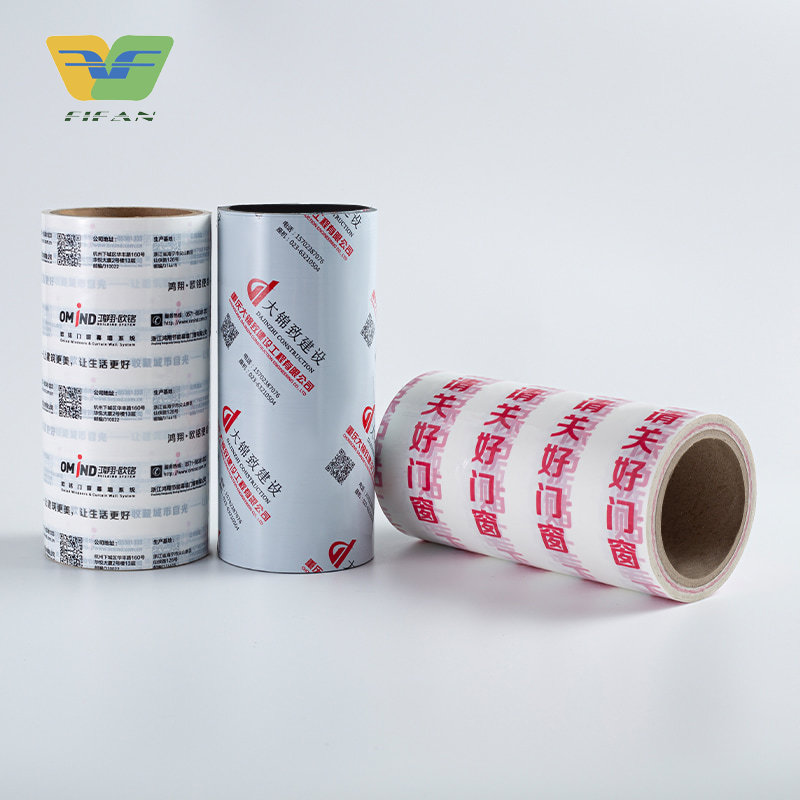 OG0 Printed PE Protective Film for Surface ProtectionCustom printed polyethylene protection film for metal, appliance, and plastic surfaces, with multi-color printing and clean removal options.View Product →
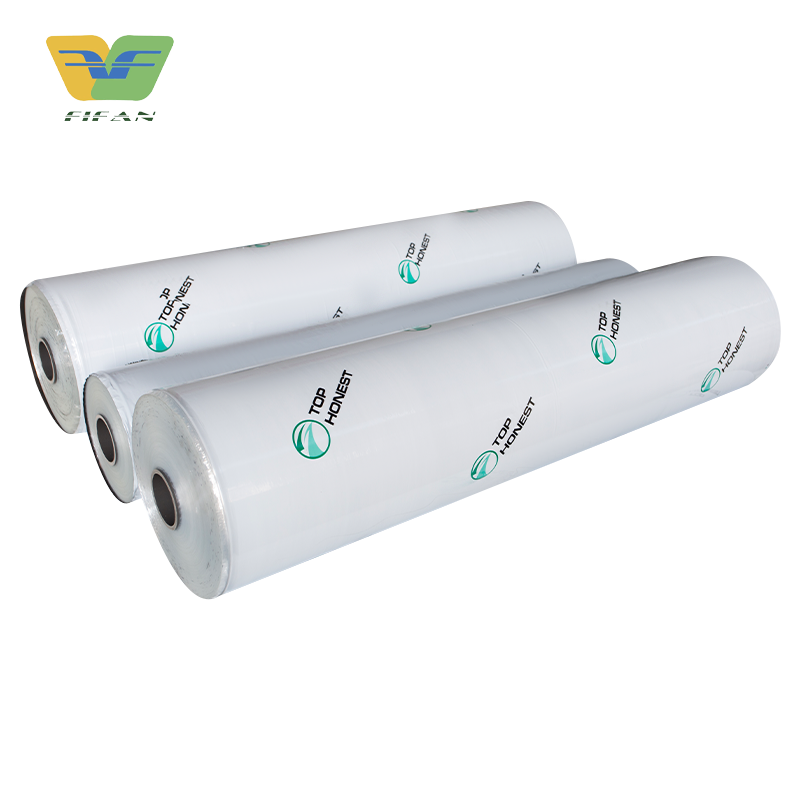
Where the requirement is a soft, low-gloss appearance rather than fine print detail, the milky white PE protective film delivers a translucent surface finish instead of a flat white one.
 Milky White PE Protective Film for Glossy SurfacesTranslucent milky white polyethylene film for acrylic, laminate, and window profiles, offering moderate sun and heat protection with clean removal.View Product →
Quality Control Checks That Catch Fabric Label Failures Before Shipment
Five checks, run in this order, catch nearly every field failure before a reel leaves the plant.
Gauge, face-side surface energy and coat weight verified batch by batch.
ASTM D3359 cross-hatch tape test on the first article and after every splice.
Five ISO 6330 cycles on the customer's own fabric rather than a cotton poplin substitute.
Gravimetric check held inside a plus or minus 3 percent band.
100 percent finished-product check plus random sampling on every batch.
Suppliers running a Class 10,000 cleanroom pair that inspection flow with particle control, which matters on optically sensitive stock as much as adhesion consistency matters on printed reels. Feifan reports 8,000 tonnes of PE film and 50 million square metres of protective film per year from in-house blowing, coating and slitting lines.
Frequently Asked Questions
Do printable PET label films adhere to stretch knit fabrics?
Yes, but the film has to be thinner and the adhesive softer. A 50 micron core with a high-coat solvent acrylic follows the stretch of a knit instead of buckling, while a 100 micron film on the same fabric lifts at the seam after two or three washes.
How many wash cycles should a PET fabric label survive?
Five ISO 6330 cycles at 40 degrees Celsius is the baseline for consumer care labels. Workwear, medical textiles and rental garments commonly specify 25 to 50 cycles, which requires a solvent acrylic and an adhesive coat weight above 25 g/m2.
Can PE film replace PET for fabric labels?
No. Polyethylene softens and shrinks at the temperatures used in industrial laundering and will not hold dimensional stability through repeated tumble drying. PE film belongs on the protective and printed-film side of the operation, not on the garment label itself.
What coating weight does UV inkjet need on polyester label stock?
A micro-porous coating of 4-6 g/m2. Below 4 g/m2 the ink sits on the surface and rubs off during handling; above 6 g/m2 the coating adds cost without improving dot sharpness at standard print resolutions.
Your email address will not be published. Required fields are marked *

-
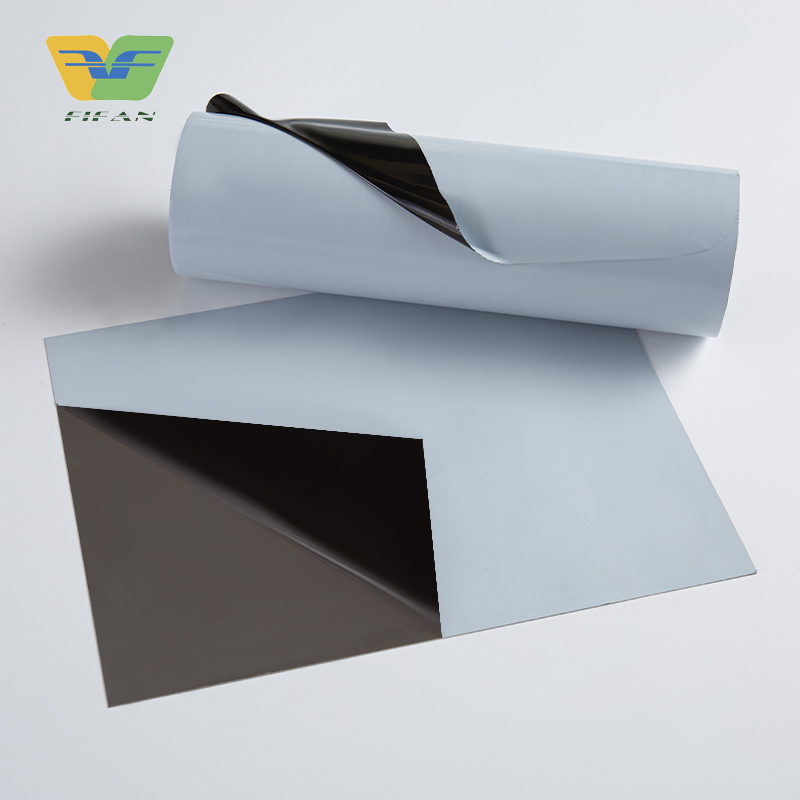
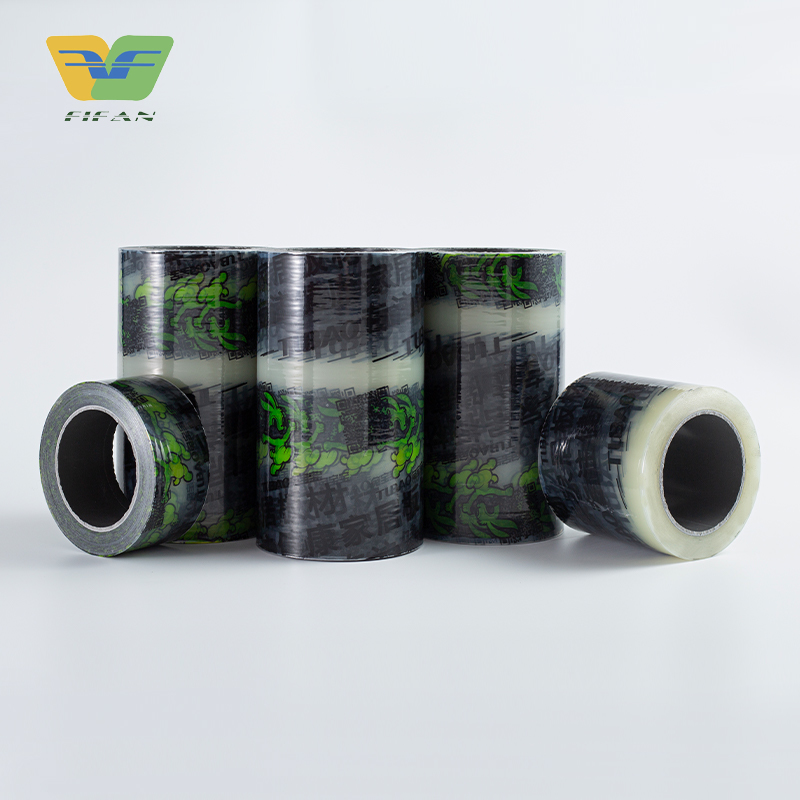
Construction Material PE Protective Film Anti-Static PE Protective Film for PET Decorative Panels View More
-
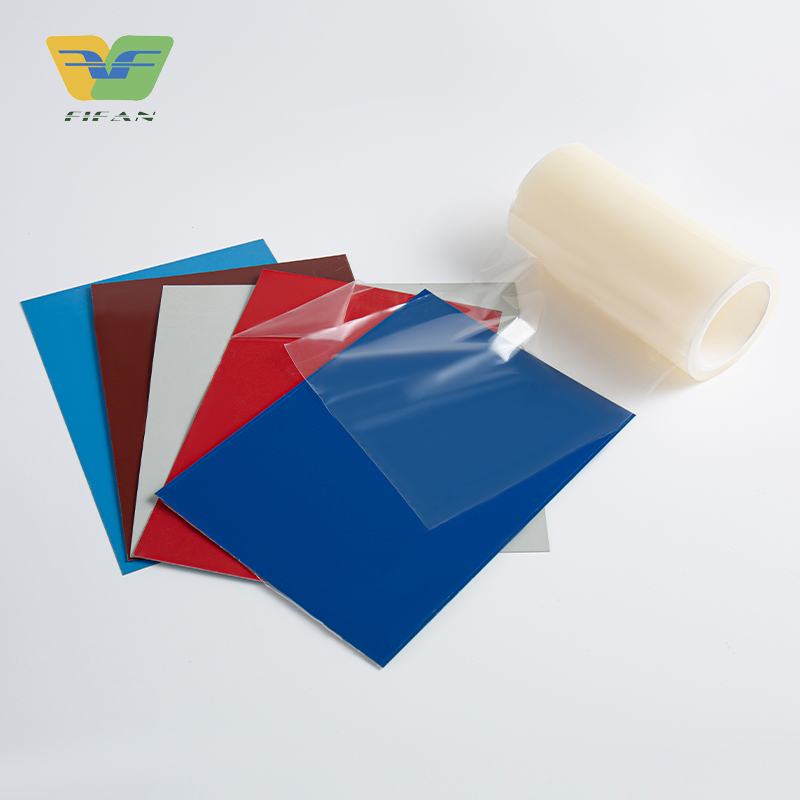
Construction Material PE Protective Film UV-Resistant & Anti-Aging PE Protective Film for Color Coated Steel Plates View More
-
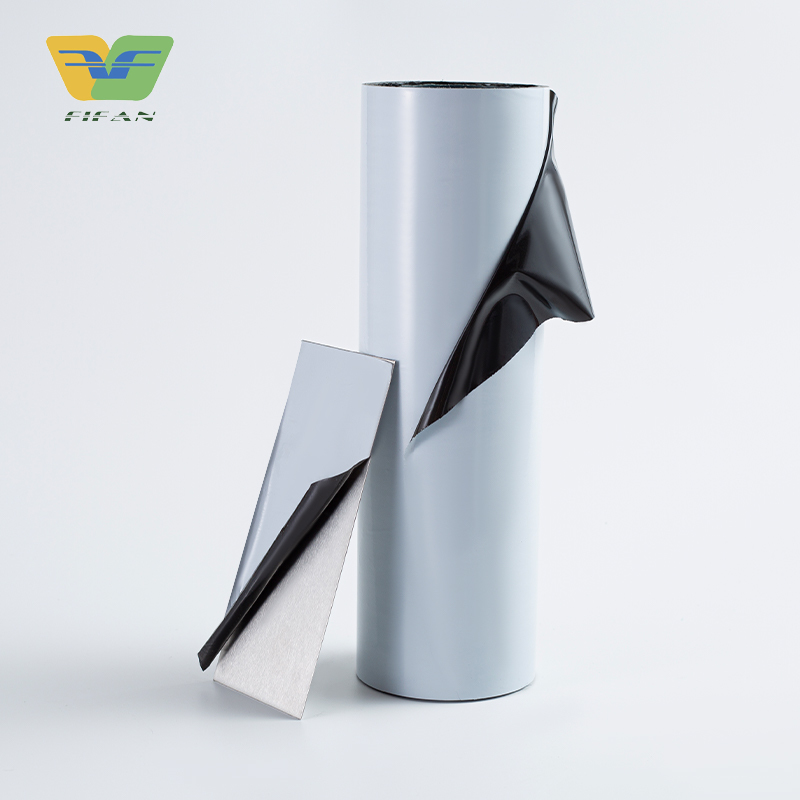
Construction Material PE Protective Film Heavy-Duty Anti-Scratch PE Protective Film for Stainless Steel View More
-
-
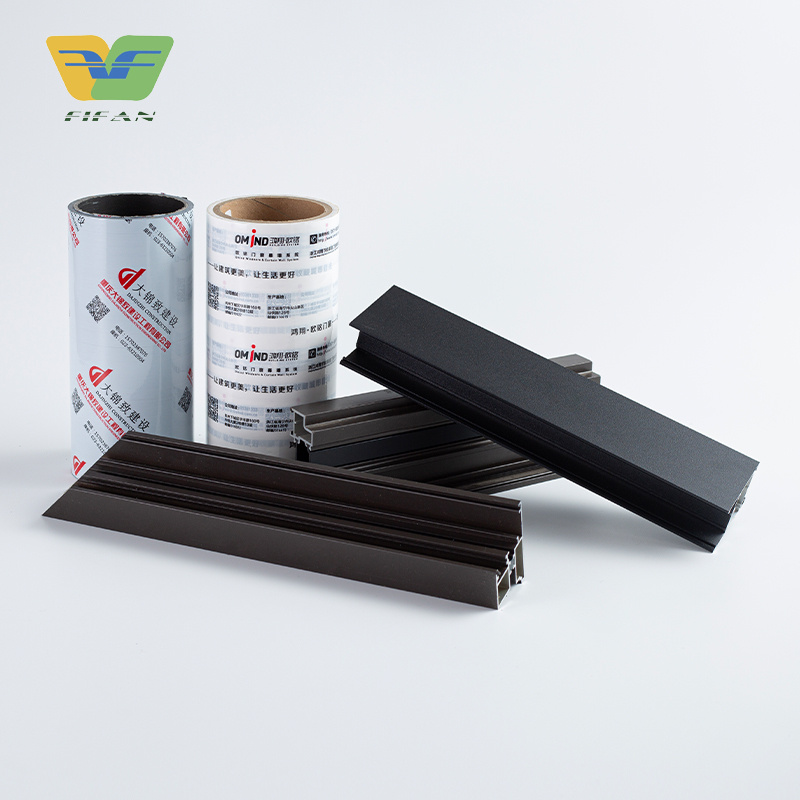
Construction Material PE Protective Film High-Tack PE Protection Film for Architectural Aluminum Panels View More
-

Address: No. 1588 Gan Dong Road, Zhongguan Town, Deqing County, Huzhou City, Zhejiang Province, China
TEL: +86-572-8498038 / +86-15067289913
E-mail: [email protected]
Mobile
WhatsApp

Copyright © Zhejiang Feifan New Material Technology Co., Ltd. All Rights Reserved
