Self-Adhesive PE Protective Film vs. Traditional Coated Protective Film: What Are the Essential Technical Differences, and How Are the Core Advantages of "Residue-Free" and "Stable Adhesion" Achieved?
1. Technical Principle: Fundamental Difference in Adhesion Mechanism
The essential distinction between self-adhesive and coated protective films lies in how adhesion is generated and maintained.
Traditional Coated Protective Film (Adhesive-Based)
- Adhesion Mechanism: Relies on a separate adhesive layer applied to the substrate surface. The adhesive (acrylic, rubber, or silicone-based) is coated onto the PE film and undergoes a curing or drying process.
- Bonding Principle: Adhesion is achieved through chemical or physical interactions between the adhesive and the protected surface, including van der Waals forces, hydrogen bonding, and mechanical interlocking.
- Coating Process: Requires solvent-based, water-based, or hot-melt coating systems, followed by drying, curing, and sometimes crosslinking reactions.
Self-Adhesive PE Protective Film (Adhesive-Free)
- Adhesion Mechanism: Does not require a separate adhesive layer. Instead, the self-adhesive layer is an integral part of the film itself, formed by specially formulated resins (EVA, ULDPE, or polyolefin plastomers) that provide inherent tack.
- Bonding Principle: The low-molecular-weight polymers within the self-adhesive layer diffuse into the microscopic cavities and irregularities of the protected surface, creating mechanical interlocking through physical adhesion rather than chemical bonding.
- Coextrusion Process: Produced using multi-layer coextrusion technology, where the self-adhesive layer is coextruded simultaneously with the substrate layer, eliminating the need for post-coating processes.
2. Core Advantage 1: Residue-Free Removal – How It Is Achieved
Residue-free removal is the most critical performance metric for protective films, particularly in construction, electronics, and automotive applications.
Challenges in Coated Protective Films
- Adhesive Transfer: When the adhesive layer has cohesive strength lower than its adhesion to the substrate, peeling causes the adhesive to split (cohesive failure), leaving residue on the protected surface.
- Crosslinking Imbalance: Insufficient crosslinking leads to poor internal strength; excessive crosslinking reduces wetting ability and may cause adhesive hardening.
- Aging Effects: UV exposure, temperature cycling, and moisture can accelerate adhesive degradation, increasing the likelihood of residue over time.
Advantages of Self-Adhesive Films
- No Adhesive Layer Transfer: Since there is no separate adhesive layer, the risk of cohesive failure is inherently eliminated. The self-adhesive material remains fully intact within the film structure.
- Physical Adhesion Mechanism: Adhesion relies on mechanical interlocking rather than strong chemical bonds. When peeled, the self-adhesive layer simply disengages from the surface micro-cavities without leaving material behind.
- Controlled Tack Levels: The peel strength of self-adhesive films can be precisely engineered through resin selection and blend ratios (EVA, ULDPE, POP) to match the surface roughness of specific substrates.
3. Core Advantage 2: Stable Adhesion – How It Is Achieved
Adhesion stability over time and across environmental conditions is essential for reliable surface protection.
Challenges in Coated Protective Films
- Adhesion Build-Up: Many acrylic PSAs experience increased peel strength over time (adhesion build-up), making removal increasingly difficult.
- Temperature Sensitivity: Adhesive viscosity changes with temperature, causing tack reduction at low temperatures and excessive flow at high temperatures.
- Curing Variability: Inconsistent curing conditions during manufacturing lead to batch-to-batch adhesion variations.
Advantages of Self-Adhesive Films
- Minimal Adhesion Build-Up: The self-adhesive layer exhibits stable peel strength over extended periods, as the physical adhesion mechanism does not undergo the same chemical aging processes as crosslinked adhesives.
- Broad Temperature Tolerance: Properly formulated self-adhesive layers maintain consistent tack across a wide temperature range, making them suitable for diverse application environments.
- Process Consistency: Coextrusion offers superior thickness and composition control, ensuring reproducible adhesion properties from batch to batch.
4. Comparative Parameters: Self-Adhesive vs. Coated Protective Films
The following table compares key parameters between self-adhesive and traditional coated PE protective films, based on industry standards and operational experience at Zhejiang Feifan New Material Technology Co., Ltd.
| Parameter |
Self-Adhesive PE Film |
Coated PE Film (Solvent/Acrylic PSA) |
Performance Impact |
| Adhesion Mechanism |
Physical (mechanical interlocking) |
Chemical/Physical (adhesive-substrate bond) |
Self-adhesive offers inherently lower residue risk |
| Residue Risk |
Very low (no adhesive layer to fail) |
Moderate to high (depends on crosslinking) |
Self-adhesive is preferred for clean-removal applications |
| Peel Strength Stability |
Stable over time |
Tends to increase with age (adhesion build-up) |
Self-adhesive offers more predictable removal |
| Temperature Range |
Broad (-10°C to 60°C typical) |
Depends on adhesive formulation |
Both can be engineered for specific ranges |
| Manufacturing Process |
Multi-layer coextrusion |
Coating + drying + curing |
Self-adhesive has fewer processing steps |
| VOC Emissions |
Virtually none |
Solvent-based systems emit VOCs |
Self-adhesive is more environmentally friendly |
| Adhesive Layer Thickness |
1–5 µm (integral to film) |
10–30 µm (coated on surface) |
Self-adhesive uses significantly less material |
5. Typical Adhesion Levels for Self-Adhesive PE Protective Films
Self-adhesive protective films are classified by peel strength to match specific substrate roughness and application requirements. The following table provides typical ranges for different adhesion levels.
| Adhesion Level |
Peel Strength (g/cm) |
Substrate Type |
Typical Applications |
| Ultra-Low |
≤ 5 |
Mirror-smooth, high-gloss surfaces |
Optical films, glass, high-gloss plastics |
| Low |
5–20 |
Smooth surfaces (e.g., painted metal) |
Automotive exterior parts, appliance panels |
| Medium |
20–60 |
Semi-rough surfaces |
Stainless steel, aluminum, general construction |
| High |
60–100 |
Rough or textured surfaces |
Wood, textured plastics, heavy-duty protection |
| Ultra-High |
> 100 |
Highly textured or porous surfaces |
Specialty industrial applications |
6. Quality Assurance at Zhejiang Feifan New Material Technology Co., Ltd.
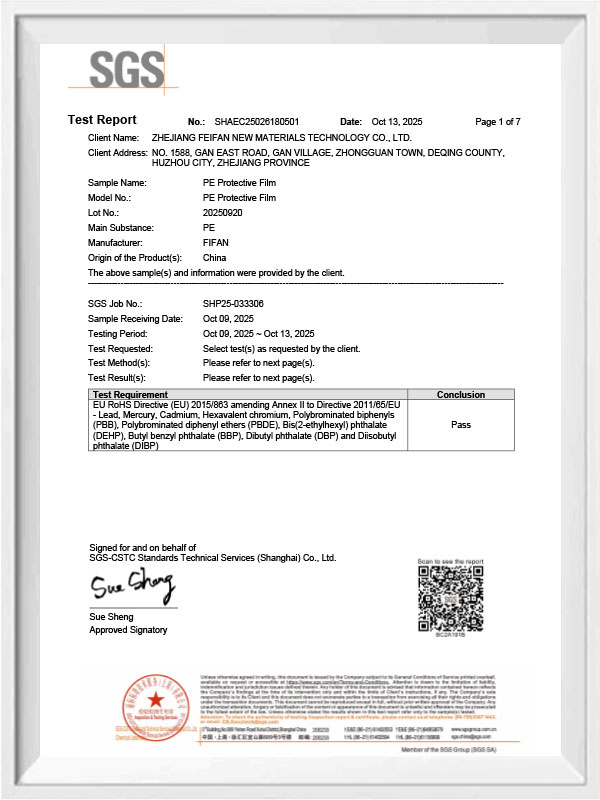
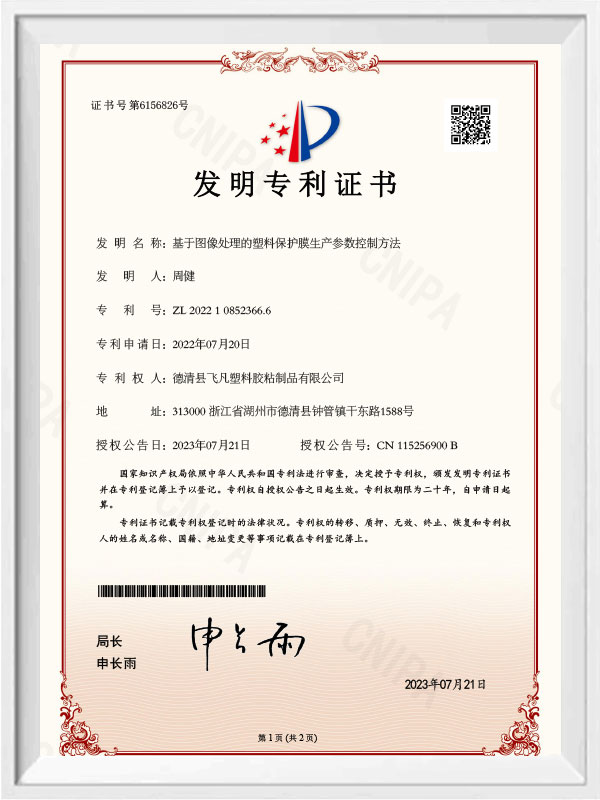
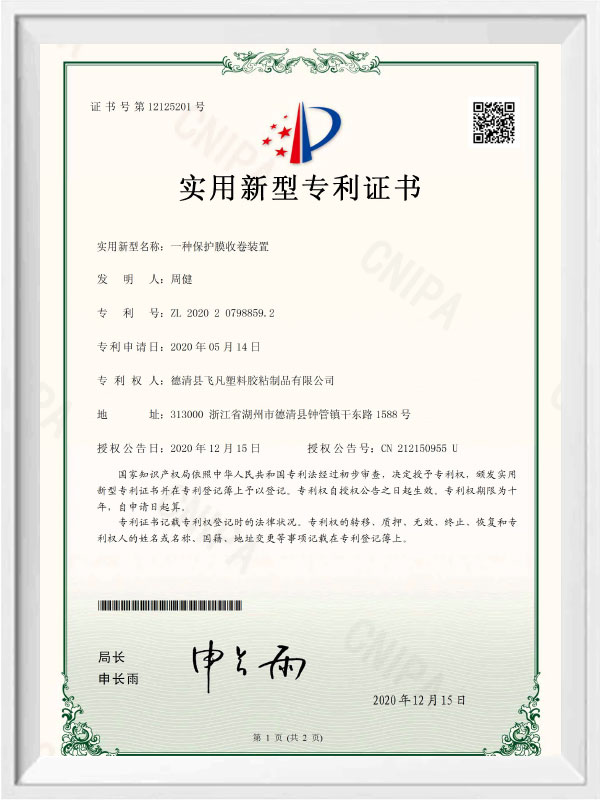
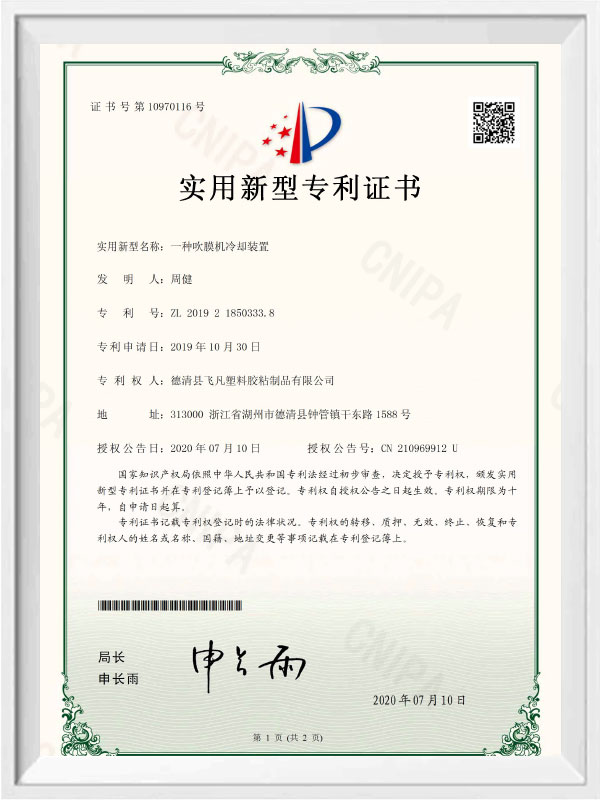
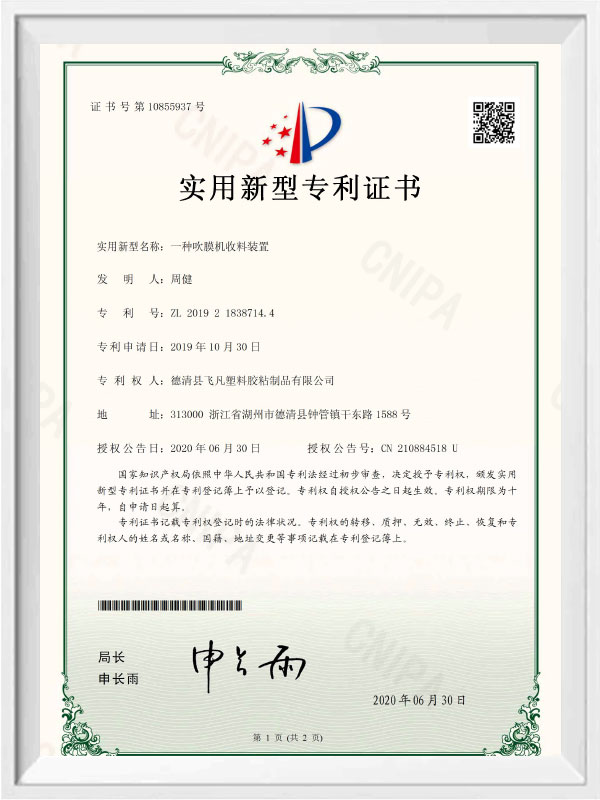
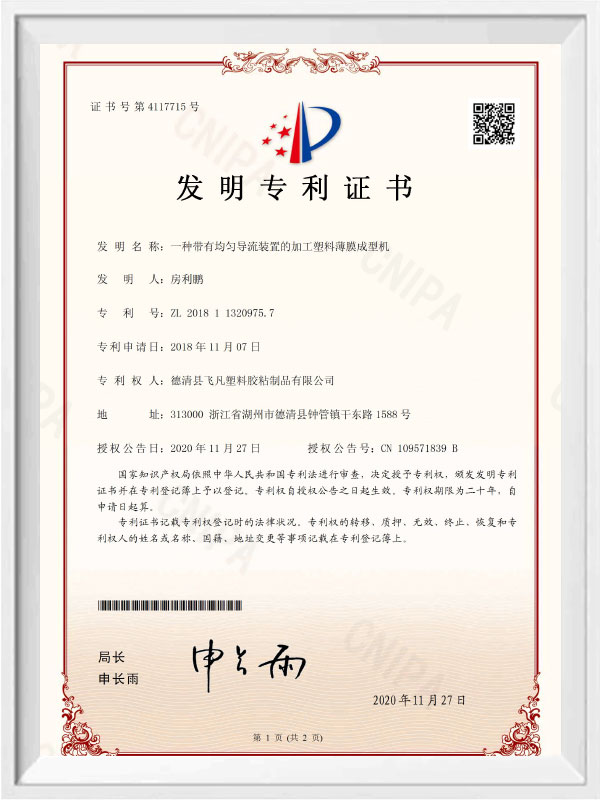
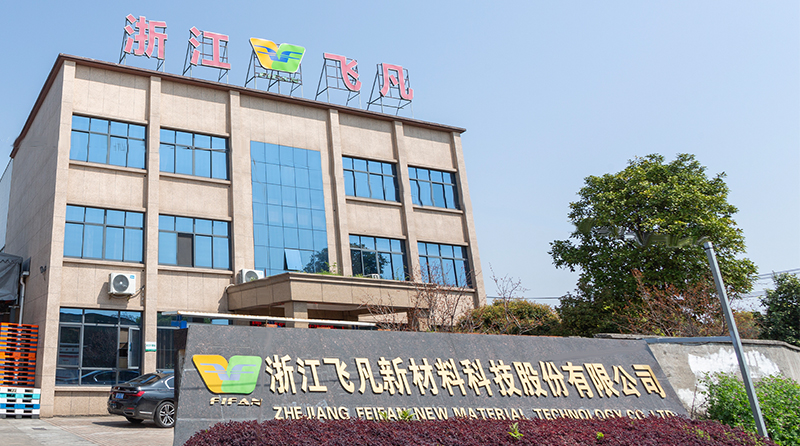
With over two decades of specialization in PE film and PE protective film, Zhejiang Feifan New Material Technology Co., Ltd. implements rigorous process control across its entire manufacturing chain. The company's advanced centralized feeding system ensures consistent raw material blending, while state-of-the-art multi-layer coextrusion lines maintain precise layer thickness and composition control. This commitment to process excellence has earned the company recognition as a National High-Tech Enterprise and a Provincial "Specialized and Innovative" SME, serving distinguished clients including Robam, Fotile, BYD, and Haier. With a municipal R&D center and a portfolio of 2 invention patents and 15 utility model patents, the company continuously refines its self-adhesive formulations and coextrusion processes to deliver residue-free, stable-adhesion solutions across diverse applications.
FAQ
Q1: What is the main difference between self-adhesive PE protective films and traditional coated protective films?
The fundamental difference lies in the adhesion mechanism. Traditional coated films rely on a separate adhesive layer applied to the PE substrate, which can leave residue if the adhesive's internal cohesion fails. Self-adhesive films, on the other hand, use a coextruded layer of specially formulated resins (such as EVA, ULDPE, or polyolefin plastomers) that provide inherent tack through physical adhesion. This eliminates the risk of adhesive transfer and ensures clean, residue-free removal. Zhejiang Feifan New Material Technology Co., Ltd. specializes in multi-layer coextrusion technology to produce self-adhesive PE protective films with controlled and stable adhesion properties tailored to specific substrates.
Q2: How does Zhejiang Feifan New Material Technology Co., Ltd. ensure consistent peel strength and residue-free performance across different production batches?
Zhejiang Feifan New Material Technology Co., Ltd. ensures consistency through fully integrated in-house process control, from raw material blending using a centralized feeding system to multi-layer coextrusion and finished product slitting. The company's municipal R&D center conducts rigorous raw material qualification and formulation optimization. Advanced automated thickness and surface energy monitoring systems maintain tight tolerances, while comprehensive peel strength testing verifies that every batch meets customer specifications. With 2 invention patents and 15 utility model patents, the company continuously refines its self-adhesive layer formulations to achieve stable adhesion performance over extended storage and application periods.
Q3: How do I select the right adhesion level for my surface protection application?
Selecting the appropriate adhesion level depends on the surface roughness and application requirements of the substrate. For ultra-smooth, high-gloss surfaces (such as optical films or mirror finishes), ultra-low or low adhesion levels (≤ 20 g/cm) are recommended to ensure easy removal. For semi-rough surfaces such as stainless steel, aluminum, or painted metal, medium adhesion (20–60 g/cm) provides adequate protection without residue. For rough or textured surfaces, high adhesion (60–100 g/cm) is necessary to achieve reliable coverage and protection. Zhejiang Feifan New Material Technology Co., Ltd. offers a full range of adhesion levels and provides technical consultation to help customers select the optimal self-adhesive PE protective film for their specific substrate and application conditions.

 English
 русский
 عربى
عربى