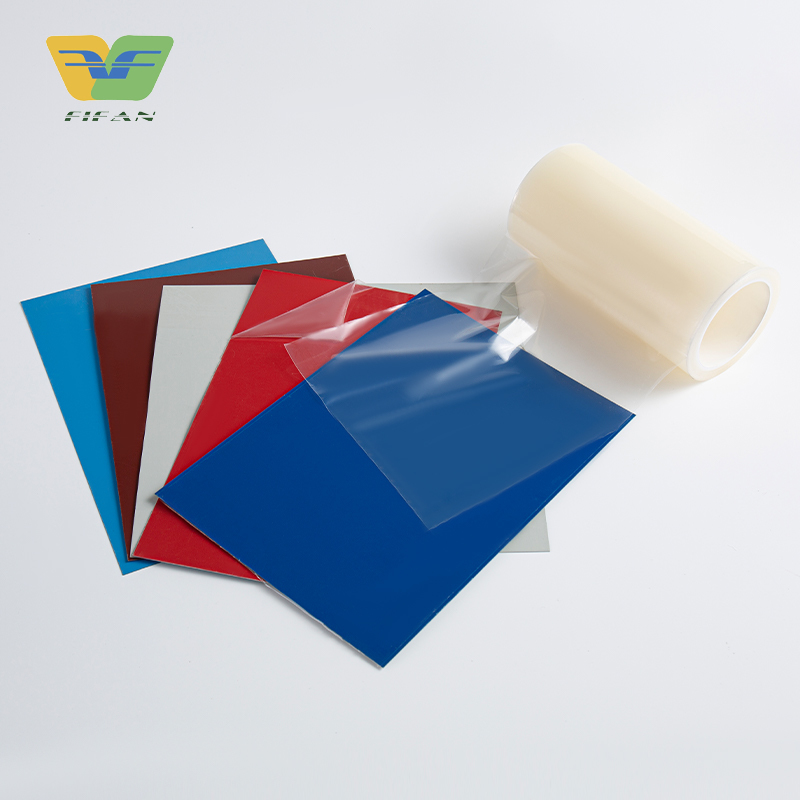
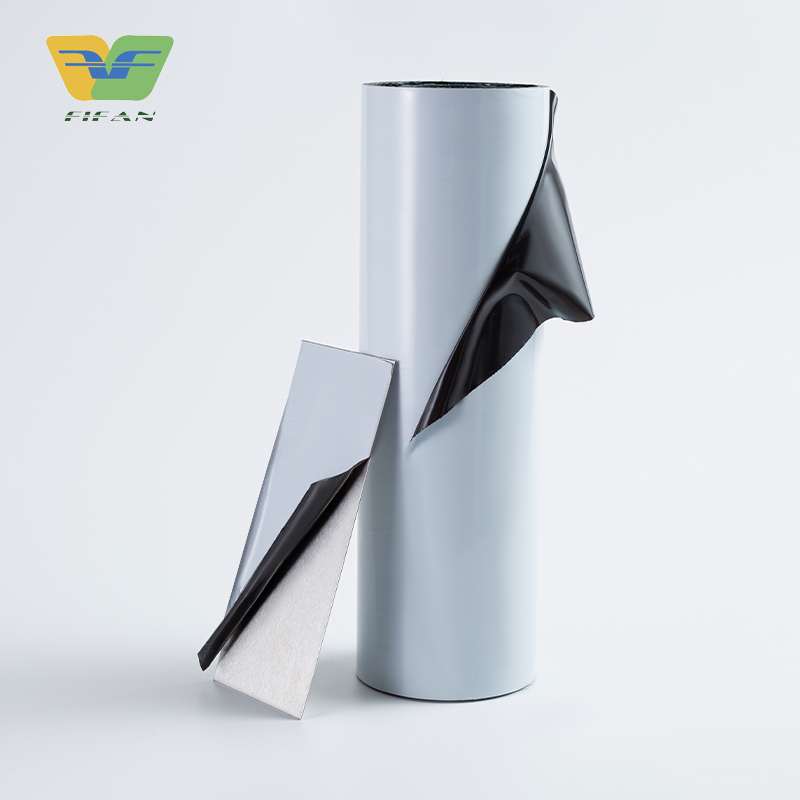
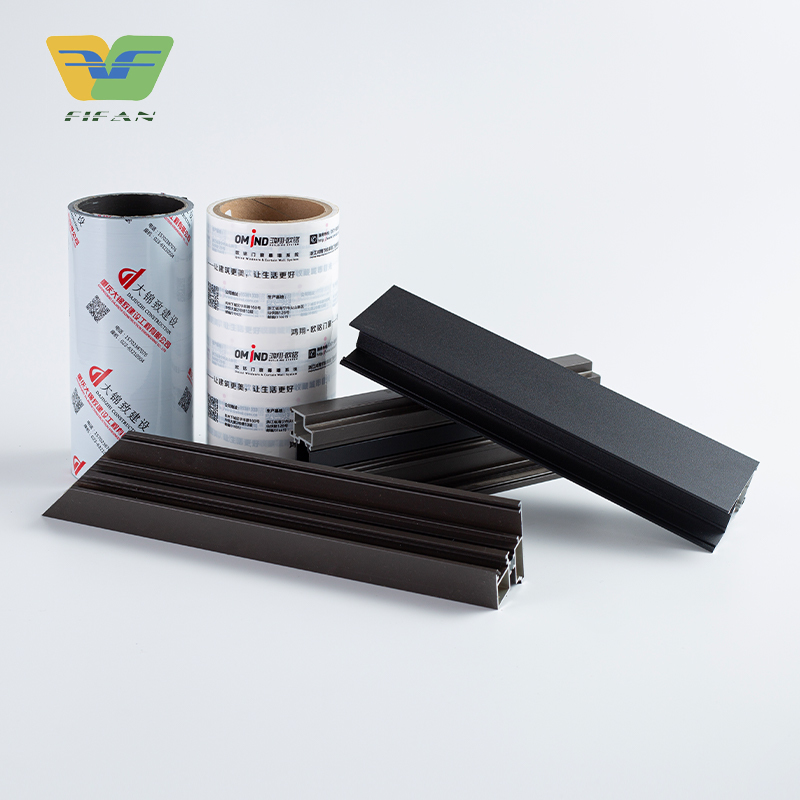
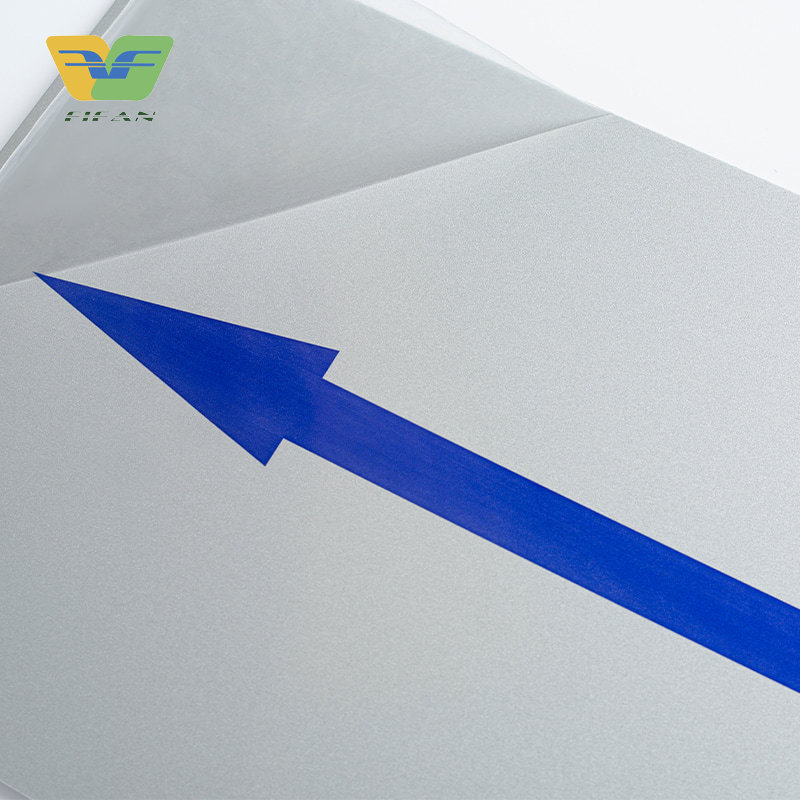
From Substrate Selection to Adhesive Formulation: What Are the Core Control Points That Affect Key Properties of Construction Material PE Protective Films?
1. Substrate (PE Film) Selection: The Foundation of Protective Performance
The base film directly influences mechanical strength, conformability, and the surface energy available for adhesive bonding.
Resin Type and Blend Composition
- LLDPE (Linear Low-Density Polyethylene): Offers superior tensile strength, impact resistance, and environmental stress crack resistance compared to traditional LDPE, making it ideal for demanding construction surface protection.
- LDPE (Low-Density PE): Provides good flexibility and clarity, suitable for smooth surfaces like glass and high-gloss panels.
- HDPE (High-Density PE): Delivers high stiffness and heat resistance, often used in heavy-duty construction films for vapor barriers and ground protection.
- Blend Optimization: Combining LLDPE with LDPE or HDPE allows performance customization to balance toughness, clarity, and cost for specific substrate protection needs.
Film Thickness and Gauge Uniformity
- Thickness Range: Construction PE protective films typically range from 0.025mm to 0.5mm depending on application, with heavier gauges (up to 500µm) used for heavy-duty vapor barrier and ground protection applications.
- Gauge Uniformity: Thickness variations directly affect mechanical strength and optical properties. Automatic Gauge Control (AGC) systems maintain tolerances within ±5% for consistent protection.
Surface Treatment (Corona Treatment)
- Purpose: Increases surface energy of PE film to improve adhesive wetting and bonding.
- Target Level: Surface tension should be maintained at 38–42 dynes/cm for optimal adhesive anchorage.
- Durability: Treated surface energy decays over time, requiring timely adhesive coating or storage under controlled conditions.
2. Adhesive Formulation: The Heart of Adhesion Performance
The adhesive system determines peel strength, removal characteristics, and long-term stability.
Adhesive Types for Construction PE Protective Films
- Solvent-Based Acrylic PSA: Provides good balance of initial tack, peel strength, and cohesion. Reticulated (crosslinked) structures enhance cohesion and reduce residue risk.
- Water-Based (Emulsion) Acrylic PSA: Environmentally friendly, non-toxic, and odorless. Offers high initial adhesion and adjustable peel strength by varying curing agent ratio.
- Rubber-Based Adhesive: Offers aggressive tack and permanent bonding, suitable for seaming vapor barrier films and heavy-duty applications.
Key Formulation Components and Their Functions
- Soft Monomers (e.g., Butyl Acrylate, 2-Ethylhexyl Acrylate): Provide low glass transition temperature (Tg) for good surface wetting, initial tack, and peel strength. Typical content: 48–52%.
- Hard Monomers (e.g., Methyl Methacrylate, Styrene): Increase cohesive strength and internal resistance. Typical content: 2–6%.
- Functional Monomers (e.g., Acrylic Acid, Hydroxyethyl Acrylate): Improve adhesion to the substrate and provide crosslinking sites. Typical content: 0.8–2.6%.
- Crosslinking Agents (Curing Agents): React with functional groups to form a three-dimensional network, enhancing cohesive strength and preventing residue. Examples include toluene diisocyanate, aziridine, and titanium chelates.
- Catalysts: Accelerate crosslinking reactions. Dibutyltin dilaurate is commonly used for isocyanate-based systems.
Adhesive Coating Weight and Thickness
- Coating Weight Ratio: PE film to adhesive ratio typically ranges from 92-97:5 (by weight) to achieve optimal performance.
- Adhesive Layer Thickness: Usually 1–3 µm for protective films. Thicker coatings may improve tack but increase the risk of residue and bubble formation.
3. Key Performance Properties and Their Control Parameters
Adhesion Stability (Consistency Over Time)
- Control Factors: Proper crosslinking density, monomer selection, and curing conditions.
- Challenge: Adhesives can experience tack reduction or tack increase over extended storage periods. Crosslinked acrylic PSAs maintain more stable peel strength over time.
- Parameter: Optimal crosslinker dosage balances initial adhesion and long-term stability.
Residue-Free Peeling (Clean Removal)
- Control Factors: Cohesive strength development, controlled crosslinking, and balanced monomer composition.
- Mechanism: Residue occurs when adhesive cohesion is lower than adhesion to the substrate. Increasing crosslinker content enhances cohesive strength, enabling clean peeling.
- Balance Required: Excessive crosslinking reduces initial peel strength and may cause adhesive hardening.
Weatherability (UV and Aging Resistance)
- Control Factors: UV stabilizers, antioxidant additives, and resin selection.
- Polymer Backbone Stability: Acrylic PSAs offer inherent UV resistance due to their carbon-carbon backbone.
- Additives: HALS (Hindered Amine Light Stabilizers) and UV absorbers can be incorporated to extend outdoor service life for construction applications.
4. Parameter Comparison: Impact on Key Properties
The following table summarizes the relationship between formulation/process parameters and resulting protective film properties, based on industry standards and operational experience at Zhejiang Feifan New Material Technology Co., Ltd.
| Property |
Affected By |
Optimal Range / Target |
Effect of Increasing Parameter |
| Initial Peel Strength |
Soft monomer content, coating weight |
2–15 N/25mm (depending on adhesion level) |
Higher soft monomer → higher initial tack and peel strength |
| Adhesion Stability (Aging) |
Crosslinker dosage, catalyst concentration |
Crosslinker: 0.16–1% of total PSA weight |
Higher crosslinker → more stable peel strength over time |
| Residue-Free Removal |
Cohesive strength, crosslinking density |
≥ 72 hours cure time before testing |
Higher crosslinker → cleaner removal, reduced residue |
| Weatherability (UV Resistance) |
UV stabilizer content, resin type (acrylic vs. rubber) |
HALS: 0.5–2% of adhesive solids |
Higher stabilizer content → extended outdoor durability |
| Film Tensile Strength (MD) |
Resin type (LLDPE vs. LDPE), TUR |
≥ 25 MPa |
Higher LLDPE content → higher tensile strength and puncture resistance |
| Surface Energy (Corona Treatment) |
Treatment power, dwell time |
38–42 dynes/cm |
Higher treatment level → better adhesive wetting and anchorage |
5. Quality Assurance at Zhejiang Feifan New Material Technology Co., Ltd.
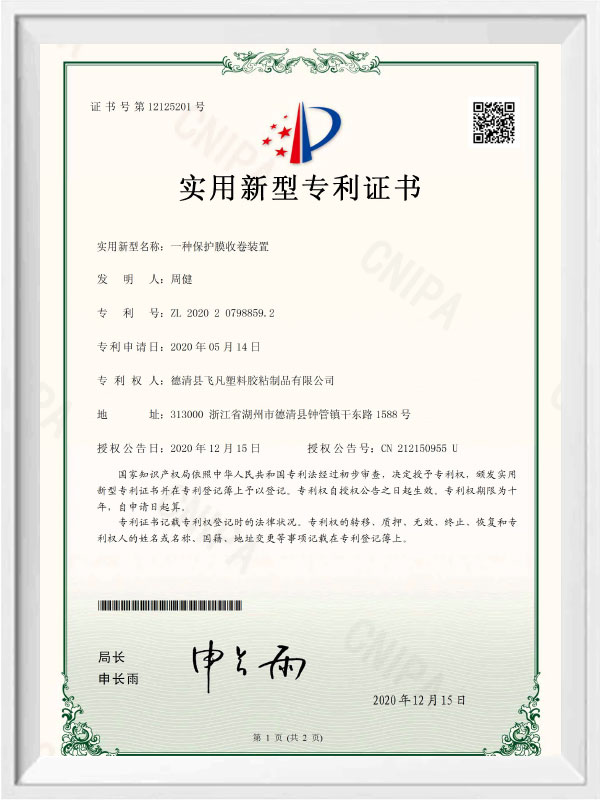
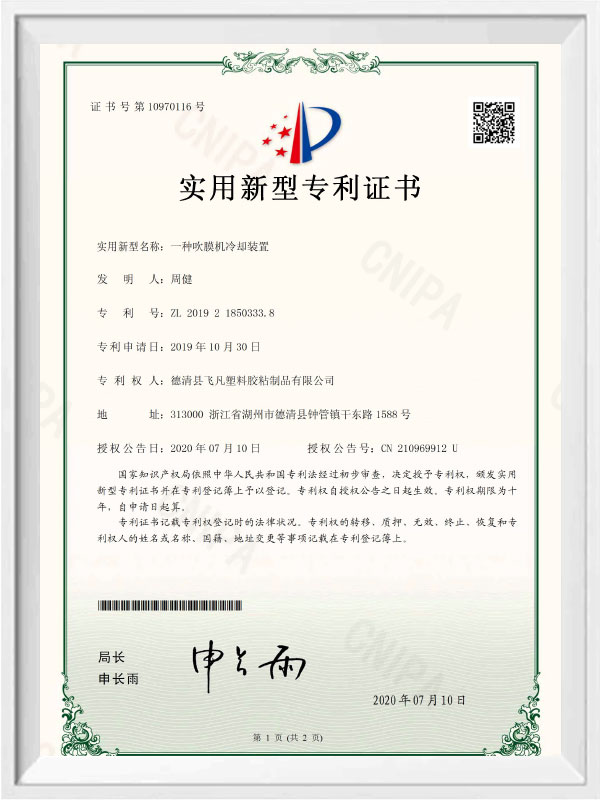
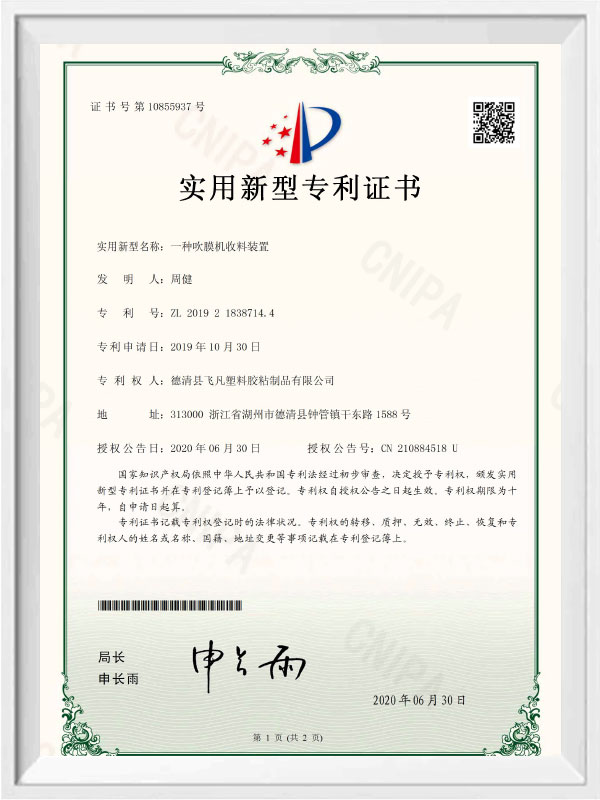
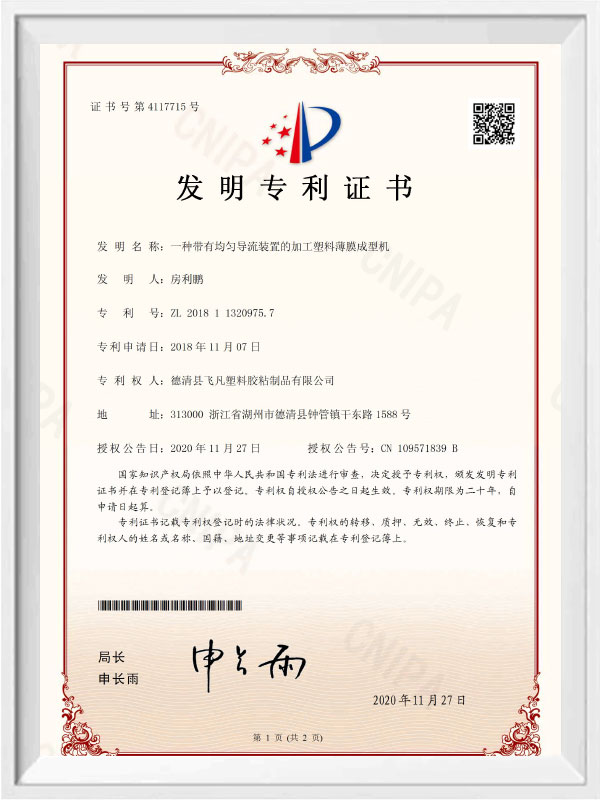
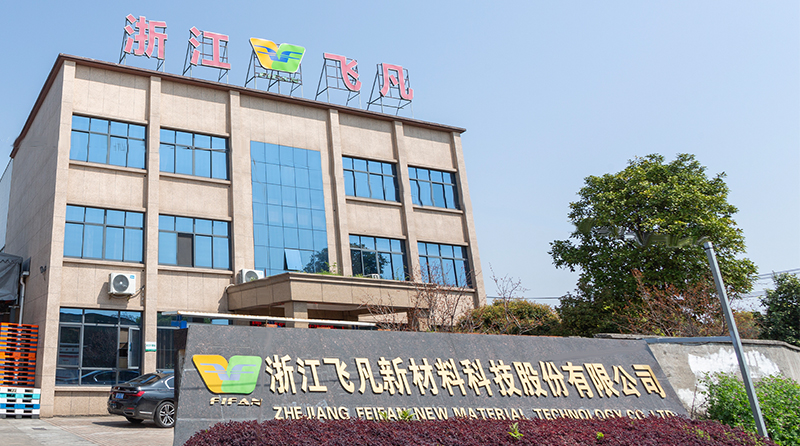
With over two decades of specialization in PE film and PE protective film, Zhejiang Feifan New Material Technology Co., Ltd. implements rigorous process control across its entire manufacturing chain. The company's advanced centralized feeding system ensures consistent raw material blending, while state-of-the-art blown film and coating lines maintain precise temperature, thickness, and adhesive application control. This commitment to process excellence has earned the company recognition as a National High-Tech Enterprise and a Provincial "Specialized and Innovative" SME, serving distinguished clients including Robam, Fotile, BYD, and Haier. With a municipal R&D center and a portfolio of 2 invention patents and 15 utility model patents, the company continuously refines its formulations and processes to optimize protective film performance across all key metrics.
FAQ
Q1: What is the difference between solvent-based and water-based acrylic adhesives for construction PE protective films?
Solvent-based acrylic PSAs offer excellent balance of initial tack, peel strength, and cohesion, making them suitable for a wide range of construction substrates. However, they contain volatile organic compounds (VOCs) and require solvent recovery systems. Water-based (emulsion) acrylic PSAs are environmentally friendly, non-toxic, and odorless, with adjustable peel strength by varying curing agent ratio. Zhejiang Feifan New Material Technology Co., Ltd. offers both adhesive systems and can tailor the selection based on customer application requirements, substrate type, and environmental compliance needs.
Q2: How does crosslinking affect the performance of PE protective films, particularly regarding residue-free removal?
Crosslinking creates a three-dimensional polymer network that enhances the cohesive strength of the adhesive. Properly crosslinked adhesives have sufficient internal strength to resist cohesive failure during peeling, enabling clean removal without leaving residue on the protected surface. However, excessive crosslinking can reduce initial peel strength and cause adhesive hardening. Zhejiang Feifan New Material Technology Co., Ltd. leverages its municipal R&D center and formulation expertise to precisely control crosslinker dosage and curing conditions, ensuring optimal balance between clean removal and adequate adhesion for each specific application.
Q3: Why is weatherability important for construction material PE protective films, and how can it be improved?
Construction materials are often stored outdoors or transported over long distances, exposing protective films to UV radiation, temperature fluctuations, and moisture. Poor weatherability can lead to adhesive degradation, discoloration, embrittlement, or difficult removal after extended outdoor exposure. Weatherability can be improved by incorporating UV stabilizers (such as HALS and UV absorbers) into the adhesive formulation and by selecting resin backbones with inherent UV resistance (acrylic vs. rubber-based adhesives). Zhejiang Feifan New Material Technology Co., Ltd. has developed proprietary formulations that provide reliable protection for construction materials, ensuring easy removal even after prolonged outdoor exposure.

 English
 русский
 عربى
عربى