
- Product
-
Our Story
Why Choose Us?We are a national high-tech enterprise and a provincial "Specialized and Refined" SME, focusing on the R&D, production, and sales of PE protective film. As a leader in the industry, we are committed to serving global customers with innovative technology and have won wide recognition in the market.
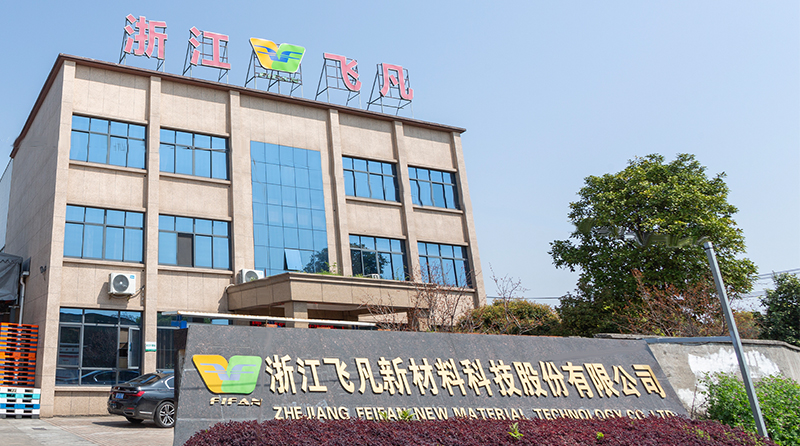 Coming From China, Marketing To The World.
-
News
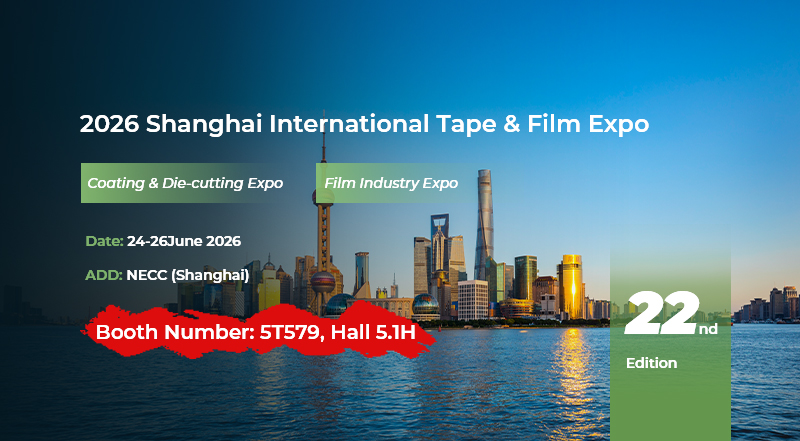 Feifan was invited to participate in the 2026 Shanghai International Tape and Film Exhibition
Dear Valued Customer / Partner, We are pleased to announce that our company will be exhibiting at APFE 2026 – the 22nd Shanghai International Adhesive Tape & Film Expo (Coating & Laminating E...
 English
 русский
 عربى
Custom Self Adhesive PE Protective Film: Tack, Peel Force and Spec Guide
Content
- 1 What Custom Self Adhesive PE Protective Film Actually Is
- 2 Specifying Custom Self Adhesive PE Protective Film: Four Variables That Decide Pass or Fail
- 3 Where Custom Self Adhesive PE Protective Film Earns Its Cost
- 4 Peel Force Grows With Time and Heat: The Numbers to Request
- 5 How Process Control Protects Your Yield, Not Just the Film
- 6 Colour and Light Blocking: What Custom Printing Actually Buys You
- 7 Frequently Asked Questions About Custom Self Adhesive PE Protective Film
That gap between purchase price and true cost is the whole argument for custom self adhesive PE protective film. The film is not a commodity bought by the roll; it is a process variable that decides how much rework a finishing line absorbs.
What Custom Self Adhesive PE Protective Film Actually Is
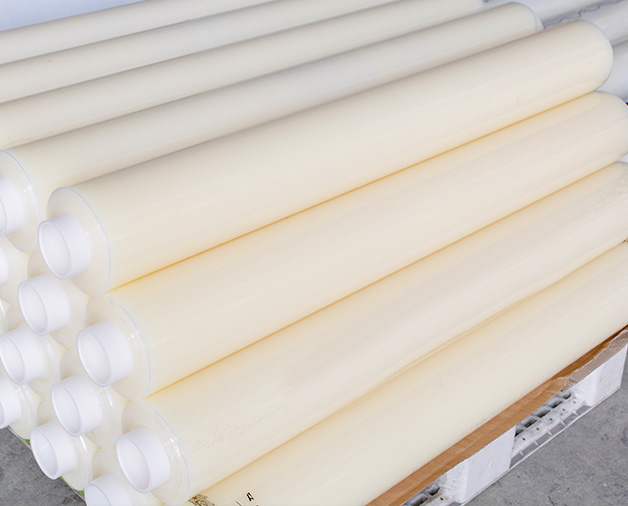
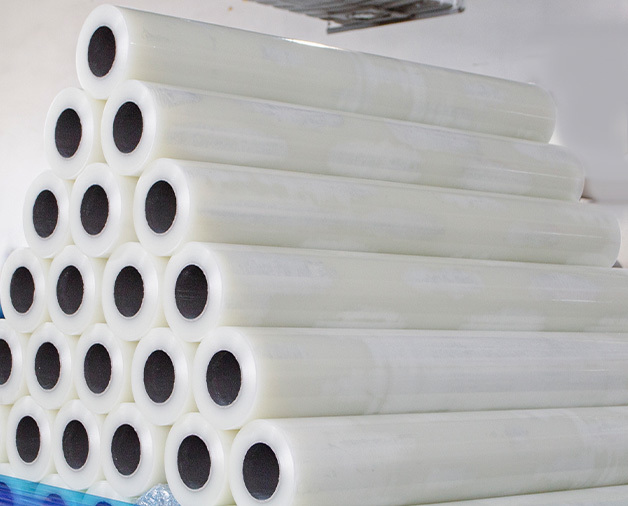
Custom self adhesive PE protective film is a polyethylene backing film, typically 30 to 100 microns thick, coated on one face with a pressure-sensitive adhesive tuned to a single substrate and a single removal window.
Three words in that name do the heavy lifting. PE fixes the backing chemistry, because polyethylene is flexible, moisture resistant and inexpensive enough to cover large areas. Self adhesive fixes the attachment method, because the film carries its own tack and needs no water, heat or press. Custom is where the engineering starts, since tack, thickness, colour and width are chosen per application rather than per catalogue page.
Zhejiang Feifan New Material Technology Co., Ltd., trading as fifanfilm.com and based in Deqing County, Huzhou, Zhejiang, has produced PE film and PE protective film since 2003 and runs film blowing, coating, slitting and packing in house. Its film reaches appliance and automotive supply chains that include Robam, Fotile, Haier and BYD, which is the level of consistency a protection film must reach before it belongs on a process sheet.
Specifying Custom Self Adhesive PE Protective Film: Four Variables That Decide Pass or Fail
Thickness, peel adhesion, adhesive chemistry and the colour or print layer decide roughly 90 percent of field failures.
Buyers who negotiate only on price usually learn this the hard way, because the film with the lowest cost per square meter is the one that leaves ghost marks across a batch of coated panels. The table below maps each variable to the failure it controls.
| Variable | Typical range | What it controls | Failure when specified wrong |
| Backing thickness | 30 to 100 microns | Stiffness, edge curl, die cutting | Thin film wrinkles on wide panels; thick film lifts at the edges |
| Peel adhesion | 5 to 400 g/25 mm | Grip during bending, residue on removal | Too high leaves ghost marks; too low lifts in transit |
| Adhesive chemistry | Acrylic or rubber | Ageing, UV and heat resistance | Rubber adhesive migrates above 40 degrees Celsius |
| Colour and print | Clear, blue tint, milky white, opaque black, printed | Identification and light blocking | Film left on shipped parts; light damage to sensitive coatings |
| Elongation | 200 to 600 percent | Conformability on curves and profiles | Tearing during hand application on bent profiles |
Adhesive chemistry deserves its own comparison, because acrylic and rubber behave very differently once a roll sits in a hot warehouse.
- Resists ageing and ultraviolet exposure
- Peel force climbs slowly and predictably
- Preferred for outdoor panels, glass and coated steel
- Clean removal after months of indoor storage
- Higher initial tack on rough or dusty surfaces
- Softer, conforms easily around profiles
- Can migrate above 40 degrees Celsius
- Better for short in-plant protection cycles
Where Custom Self Adhesive PE Protective Film Earns Its Cost
Custom film pays for itself on any surface where a single scratch, haze patch or adhesive outline costs more than the entire roll.
- Brushed and mirror stainless steel: a heavy-duty anti-scratch film that survives bending and shearing, then peels without shadowing the grain.
- Architectural aluminium panels: a high-tack film that holds on textured, sometimes dusty surfaces through outdoor site storage.
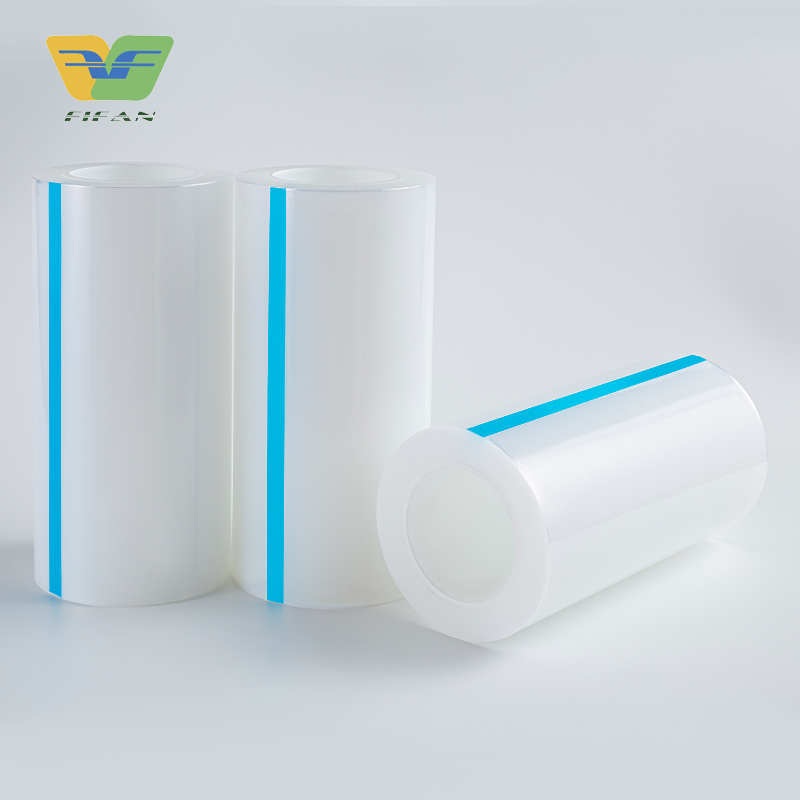
- Polycarbonate sheets: a self adhesive film that preserves optical clarity through cutting, transport and installation.
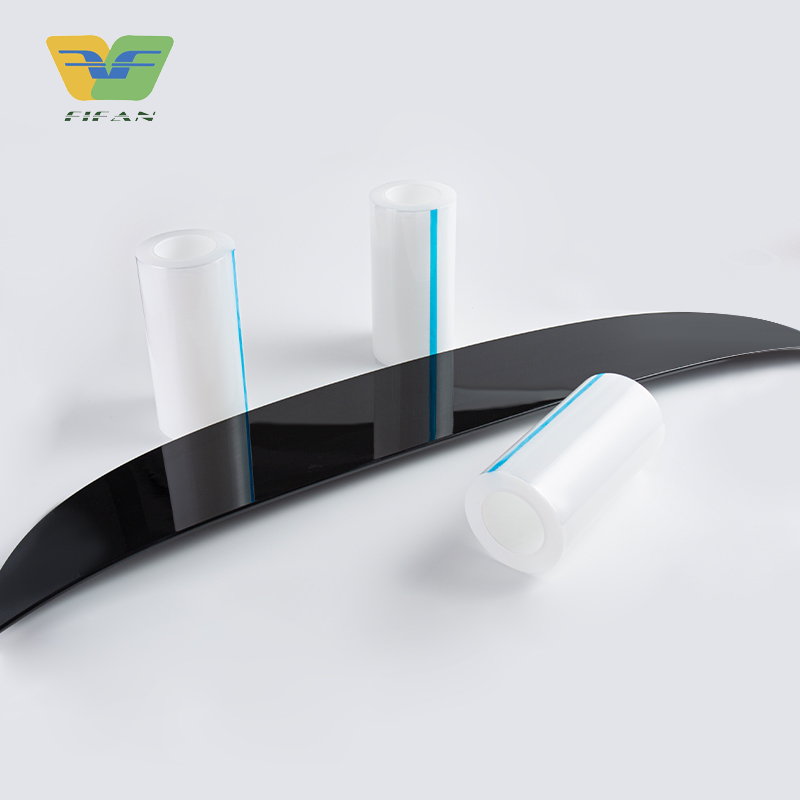
- High-gloss injection molded parts: a very low-tack film, because adhesive build-up on a piano-black surface reads as visible haze.
- Glass: a UV-resistant self adhesive film rated for outdoor exposure during construction schedules.
- Coated appliance panels: a film that survives blanking, stamping and assembly, then comes off before the appliance ships.
The matching rule is simple. Smooth, high-surface-energy substrates such as glass and polycarbonate need low tack, while textured, embossed or dusty surfaces need higher tack. Reversing that pairing is the most common reason a protective film fails in the field, and it is also the cheapest mistake to prevent.
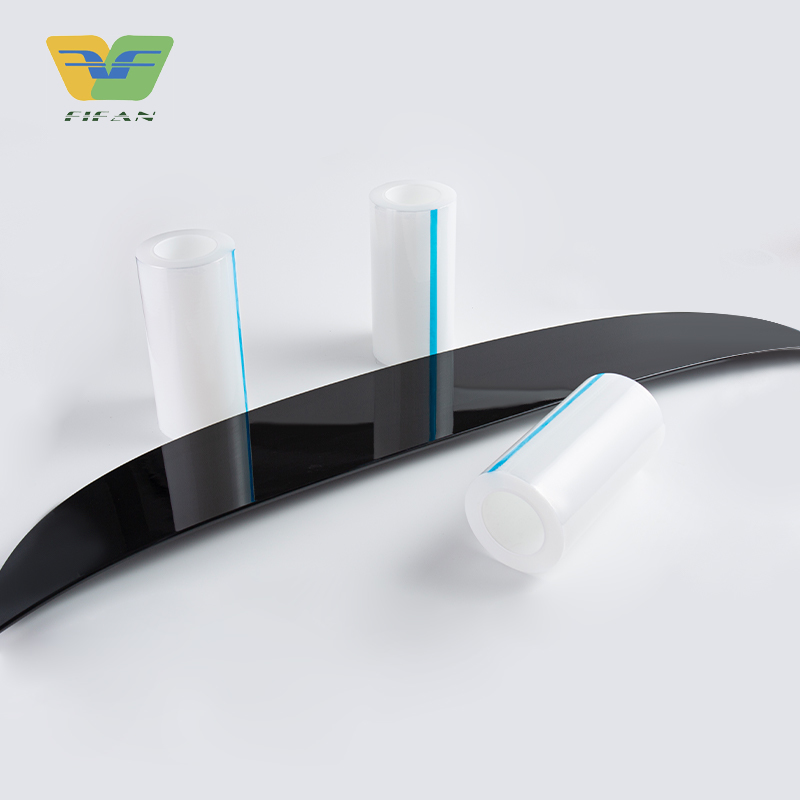 Glue-Less PE Protective Film for High-Gloss Injection Molded PartsCo-extruded PE film protects high-gloss molded ABS, PC, PMMA, or PP parts with a tack layer for clean, residue-free removal during handling and storage.View Product →
Peel Force Grows With Time and Heat: The Numbers to Request
Peel force is not a fixed specification; it climbs with dwell time and temperature, and that climb decides whether the film removes cleanly after six weeks on a dock in August.
Two acrylic films can start at different points and still finish in very different places, which is why a single laboratory figure proves nothing. A low-tack film that doubles its grip over a month remains safe on coated panels, while a standard film that doubles from an already high starting point does not.
That behaviour is why the removal window, not the initial tack figure, is the specification that matters. The mechanism is explained further in this overview of how self adhesive PE protective film protects industrial surfaces.
How Process Control Protects Your Yield, Not Just the Film
A protection film is only as repeatable as the line that produced it, and repeatability is what stops a finishing line from absorbing random rework.
Four controls matter when you audit a supplier. A Class 10,000 cleanroom limits particles before coating. Low-tack adhesive chemistry delivers clean peel with high light transmission. Optical-grade materials serve sensitive parts such as lenses, screens and electronic components. A documented inspection chain runs from incoming resin checks through in-process monitoring to 100 percent inspection of finished rolls and random sampling before shipment.
Verification gets easier when you know what to ask. A structured guide to avoiding pitfalls when purchasing PE protective film is worth reading before a first order, because most disputes trace back to questions nobody raised at the sampling stage.
One structural fact belongs in the same conversation: when film blowing, coating, slitting and packing all sit inside one plant, a width change or a tack adjustment does not restart a supply chain.
Colour and Light Blocking: What Custom Printing Actually Buys You
Colour and print on PE protective film are functional tools rather than decoration, because they change what an operator can see and what a stored part is exposed to.
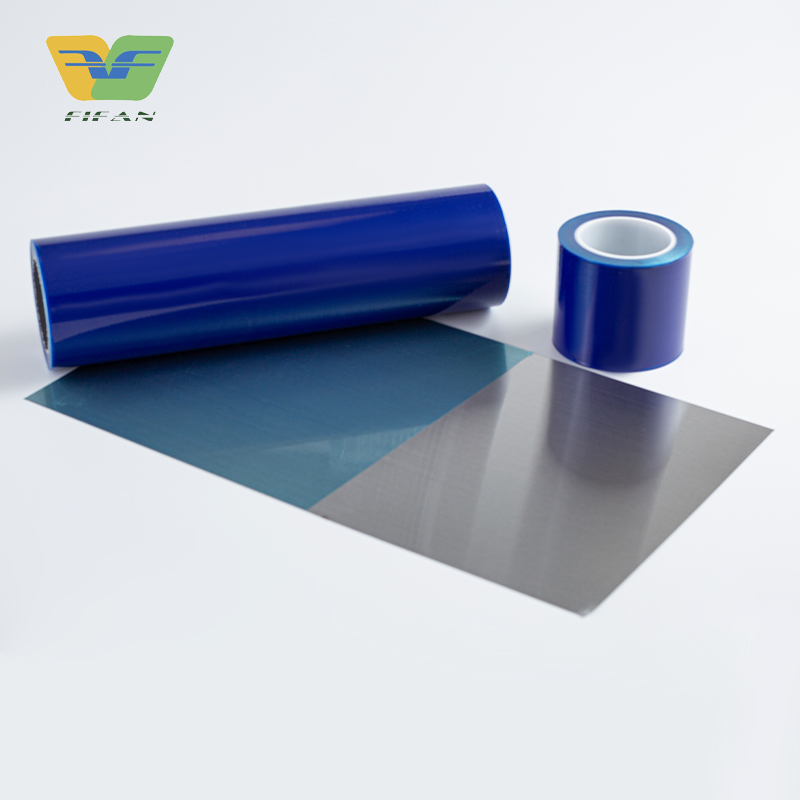
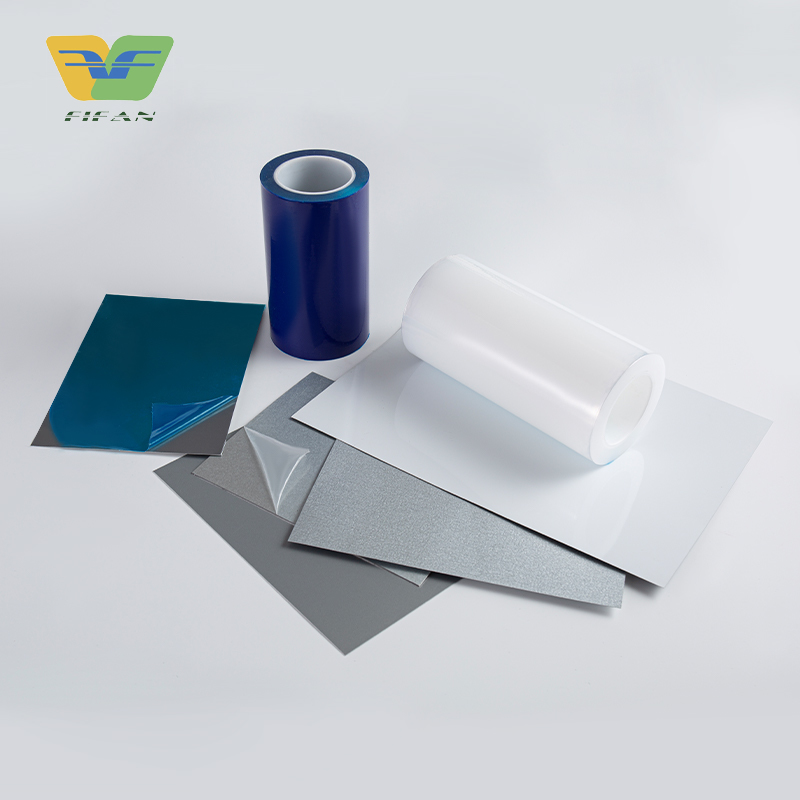
- High-clarity blue tint: makes film visible on clear or reflective surfaces so panels are not shipped with the film still attached.
- Milky white: a general-purpose option that masks minor handling marks during transport.
- Opaque black: blocks light where coatings or adhesives are light sensitive.
- Heavy-duty black and white: adds thickness and stiffness for demanding handling on thick metal.
- Printed film: carries part numbers, orientation marks or brand identity directly on the protection layer.
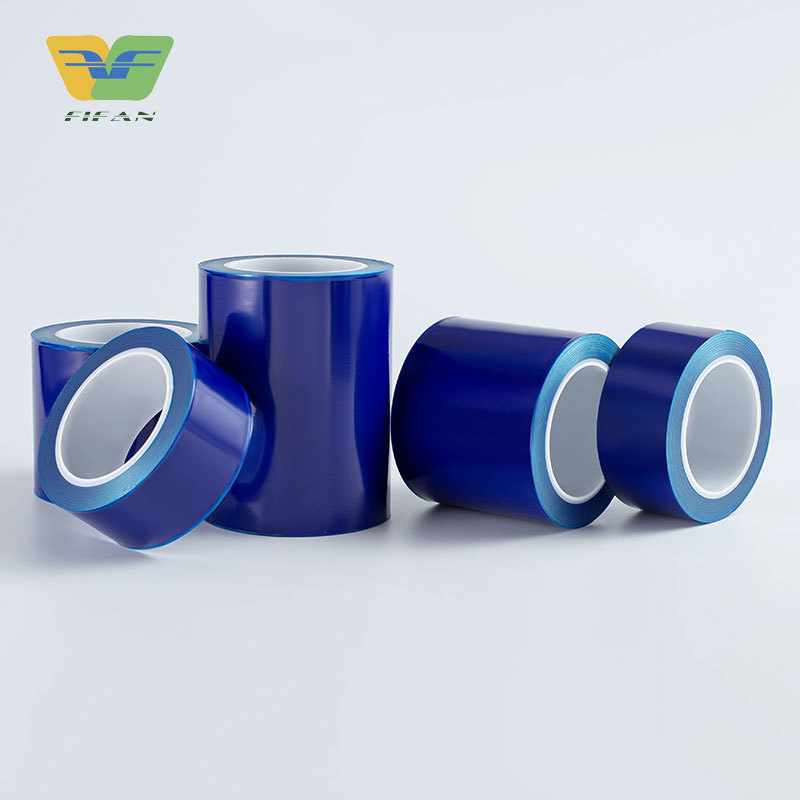 High-Clarity Blue Tinted PE Surface Protection FilmBlue-tinted PE protection film offers visible surface inspection, UV filtering, and clean removal on stainless steel, aluminum, or glass while helping prevent leftover film.View Product →
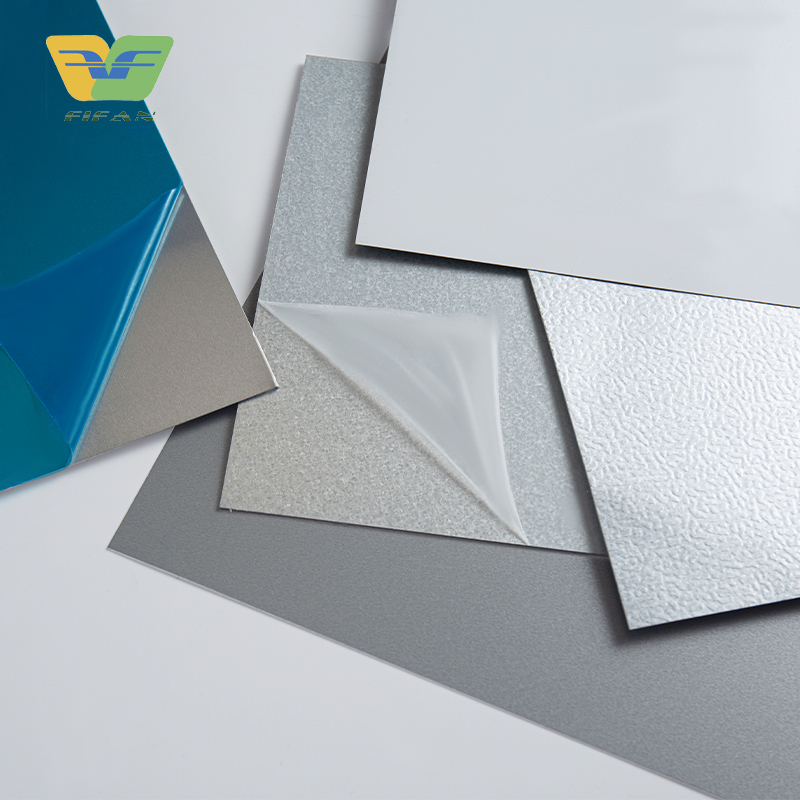 Glue-Less PE Protective Film for Metal Sheets and PlatesCo-extruded PE film with a tack layer protects metal sheets during bending, fabrication, and storage, allowing clean removal without adhesive transfer or chemical migration.View Product →
Print carries a cost structure worth understanding before a first order. The printing cylinder is the fixed cost, so repeat runs of the same pattern amortise quickly while one-off artwork rarely does. That is why custom printing normally enters a plant on high-volume lines first and spreads from there.
Frequently Asked Questions About Custom Self Adhesive PE Protective Film
How long can custom self adhesive PE protective film stay on a surface before it leaves residue?
Plan on six to twelve months indoors for a low-tack acrylic film kept below 30 degrees Celsius, and weeks rather than months above 40 degrees Celsius. The adhesive slowly wets the surface, so peel force rises with time and heat. Specify the service window first, then choose the tack level that fits it.
Is self adhesive PE film the same as co-extruded PE film?
No. Self adhesive PE film carries a coated adhesive layer, so tack is engineered independently of the backing. Co-extruded or glueless films rely on the film surface itself and generally suit shorter service windows or surfaces where any adhesive transfer is unacceptable. Metal sheets and plates that cannot tolerate residue are the classic case for the glueless approach.
Can the film be supplied in custom widths, colours and print?
Yes, and all three come from the converting stage rather than the base film. Width is set at slitting, colour at the resin or coating stage, and print at the printing stage. Confirm three points before ordering: the slitting tolerance your applicator needs, colour consistency from roll to roll, and the minimum run length that makes a custom colour or print economical.
What should be tested before a full production order?
Run three checks on a sample roll. Apply the film to your actual substrate and store it at your real warehouse temperature for the full service window. Peel it at normal line speed and inspect under low-angle light for residue. Then repeat both tests after a heat-age cycle at 40 degrees Celsius. A film that passes the first test and fails the second was specified for a catalogue, not for your process.
Your email address will not be published. Required fields are marked *
-
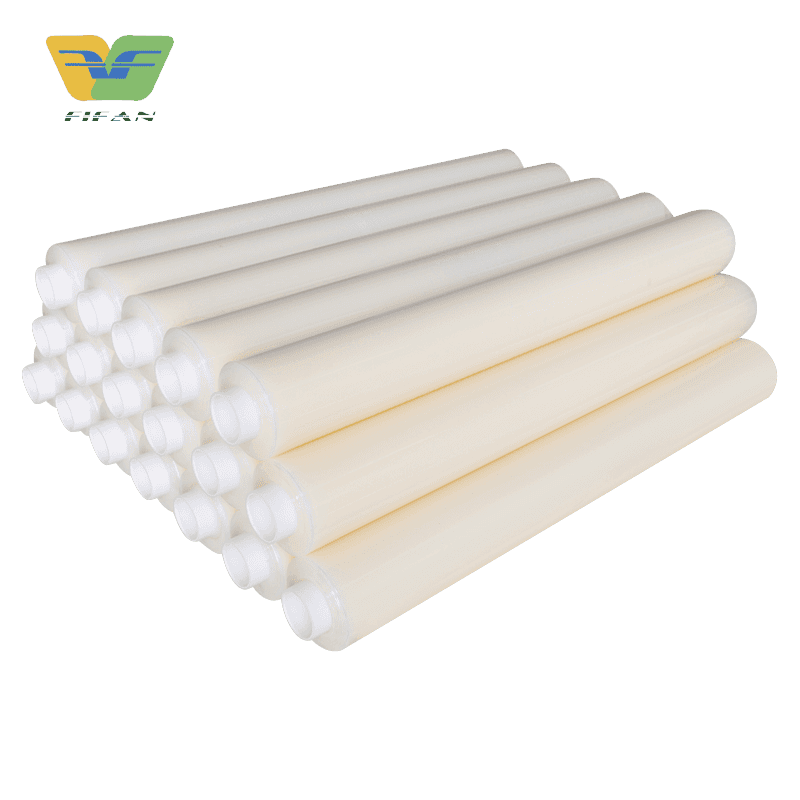
Self Adhesive PE Protective Film Self-Adhesive PE Protective Film for High-Gloss Injection Molded Parts View More
-
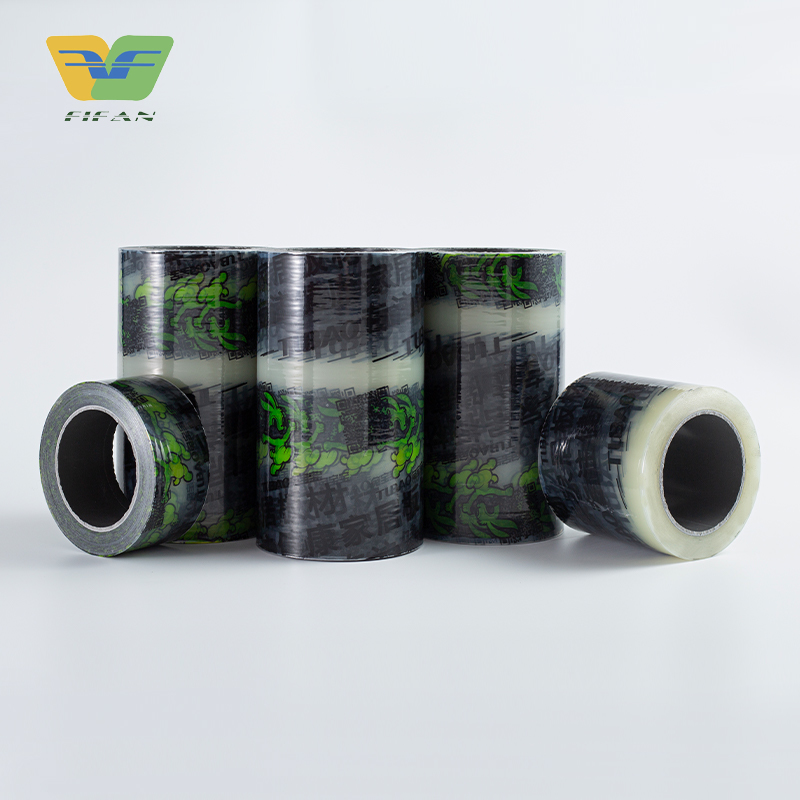
Self Adhesive PE Protective Film Self-Adhesive PE Protective Film for Polycarbonate (PC) Sheets View More
-
-
-
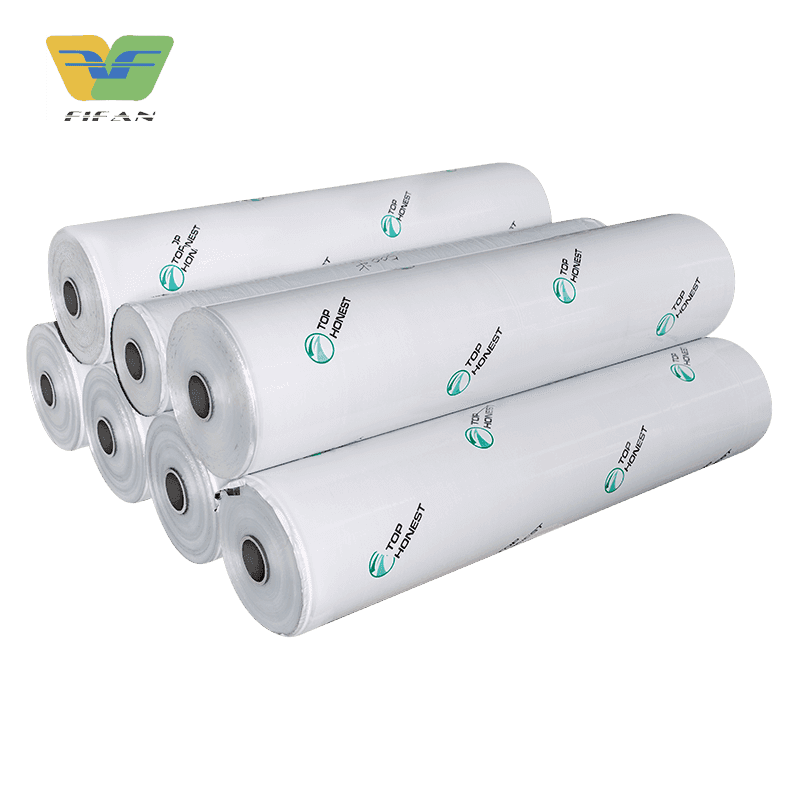
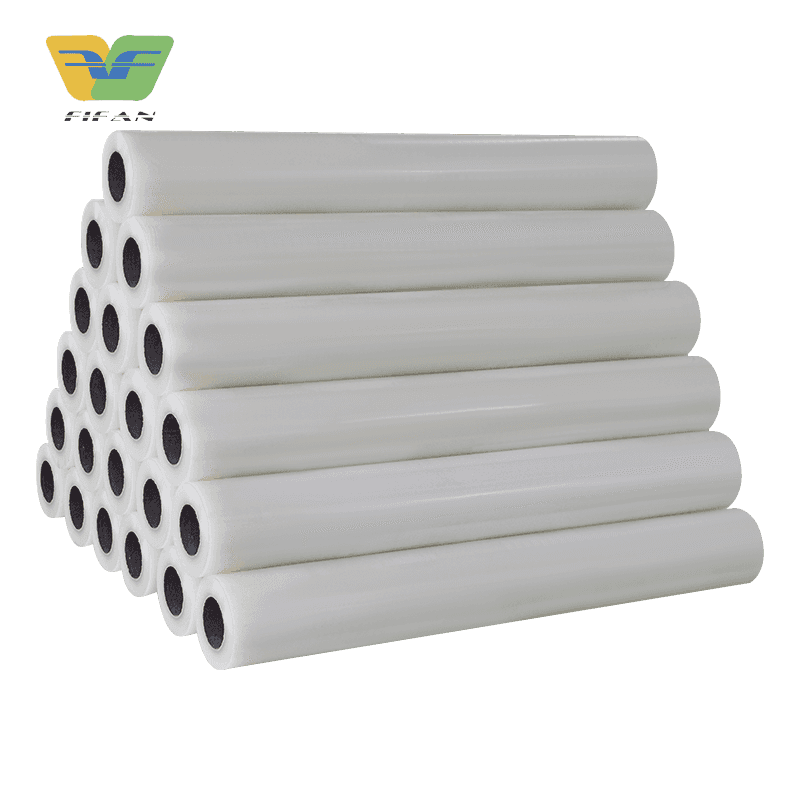
Self Adhesive PE Protective Film Glue-less Surface Self-Adhesive PE Protective Film for Metal Sheets & Plates View More
-

Address: No. 1588 Gan Dong Road, Zhongguan Town, Deqing County, Huzhou City, Zhejiang Province, China
TEL: +86-572-8498038 / +86-15067289913
E-mail: [email protected]
Mobile
WhatsApp

Copyright © Zhejiang Feifan New Material Technology Co., Ltd. All Rights Reserved
