
- Product
-
Our Story
Why Choose Us?We are a national high-tech enterprise and a provincial "Specialized and Refined" SME, focusing on the R&D, production, and sales of PE protective film. As a leader in the industry, we are committed to serving global customers with innovative technology and have won wide recognition in the market.
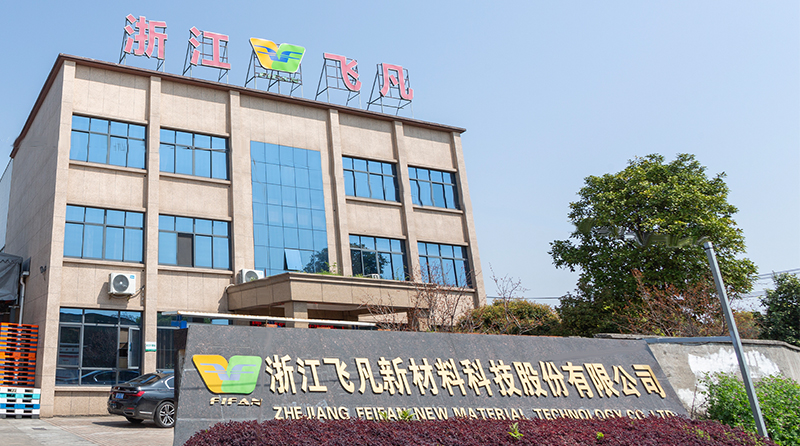 Coming From China, Marketing To The World.
 -
News
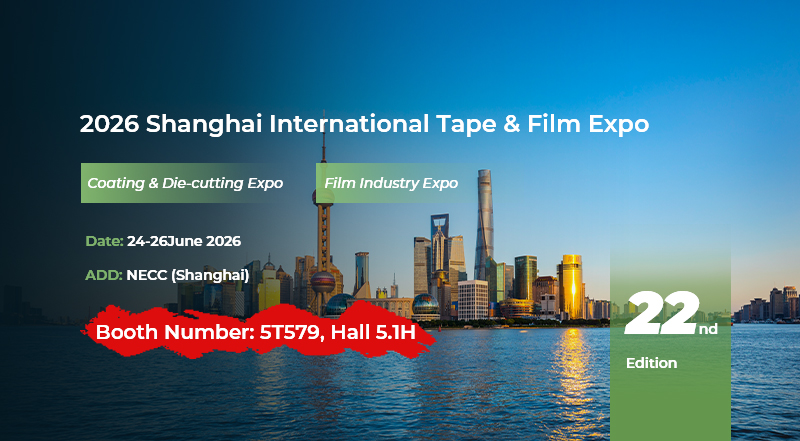 Feifan was invited to participate in the 2026 Shanghai International Tape and Film Exhibition
Dear Valued Customer / Partner, We are pleased to announce that our company will be exhibiting at APFE 2026 – the 22nd Shanghai International Adhesive Tape & Film Expo (Coating & Laminating E...
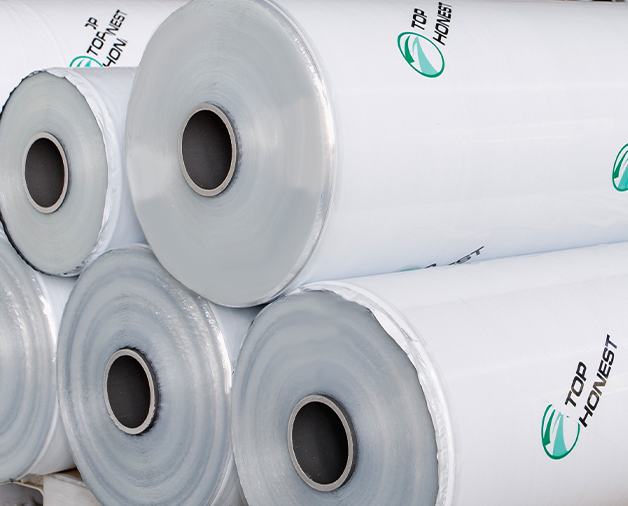
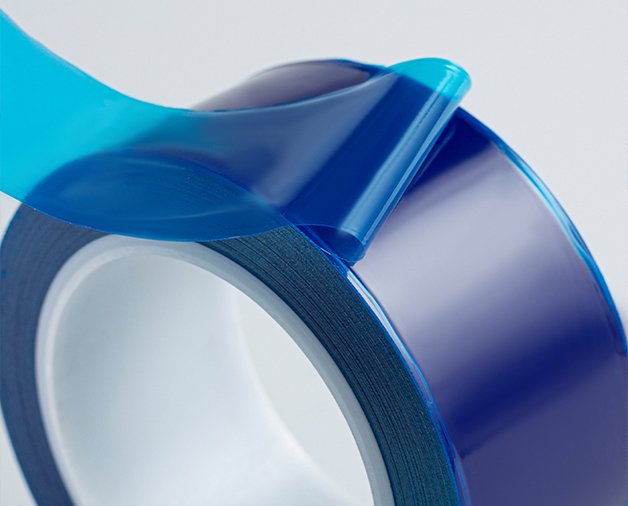
 English
 русский
 عربى
عربىUV-Stabilized Anti-Aging PE Protective Film Manufacturers: What to Verify Before Ordering
Content
- 1 What "UV-Stabilized Anti-Aging" Means in a PE Protective Film
- 2 When Anti-Aging PE Protective Film Justifies Its Cost
- 3 How to Evaluate a UV-Stabilized Anti-Aging PE Protective Film Manufacturer
- 4 Common Failure Modes to Check Before Committing to a Supplier
- 5 What a Full-Process Manufacturer Can Do Differently
- 6 Final Recommendation for Procurement Teams
Six weeks after a batch of color-coated steel panels leaves the factory, the protective film on them has turned yellow, cracked along the bend lines, and left a sticky residue when a contractor peeled it off. The panels themselves were fine. The replacement cost was not. This is the reality that drives industrial buyers to search for UV-stabilized anti-aging PE protective film manufacturers instead of simply ordering the cheapest self-adhesive PE film they can find.
The short version is clear: a genuinely UV-stabilized anti-aging PE protective film is defined by its additive package, its base resin, and the process control of the manufacturer that produces it. The label alone tells you little. Knowing what to inspect makes supplier evaluation far more reliable.
What "UV-Stabilized Anti-Aging" Means in a PE Protective Film
Polyethylene absorbs ultraviolet radiation in the 290 to 400 nm range, and the incoming energy attacks polymer chains through photo-oxidation. The visible results are yellowing, surface embrittlement, cracking, and a gradual loss of mechanical strength. For a protective film there is a second consequence that matters just as much: the adhesive layer changes. Peel strength can rise or fall unpredictably, and the film can split or leave residue during removal.
Two complementary families of additives counter this degradation:
- UV absorbers (UVA) — compounds that absorb damaging UV photons and dissipate the energy as heat before it reaches the polymer backbone.
- Hindered amine light stabilizers (HALS) — radical scavengers that interrupt the chain of oxidative reactions after UV exposure has started.
A film that contains only a UV absorber delays the onset of damage. A film formulated with both UVA and HALS at adequate loading levels, evenly dispersed in the resin, extends service life dramatically. That is why buyers should ask which stabilizer system is used, not just whether the film is described as "UV grade."
When Anti-Aging PE Protective Film Justifies Its Cost
UV-stabilized film is not needed for every job. If a film is applied to a stainless steel sheet that is processed indoors and used within a week or two, a standard film performs perfectly. The calculation changes when the protected surface will face sunlight for longer periods:
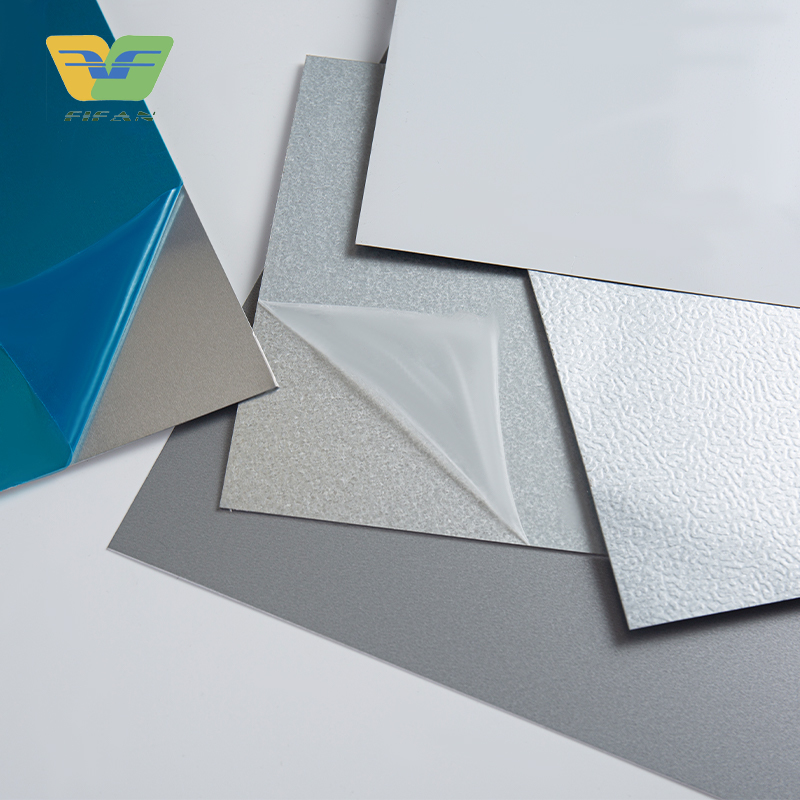
- Color-coated steel and aluminum plates stored outdoors before architectural installation
- Door and window profiles delivered to a construction site weeks before fitting
- Glass sheets and curtain wall units staged in open yards
- Polycarbonate sheets and other transparent panels exposed to daylight during transport
- Metal components shipped overseas with long transit times through high-irradiance regions
In those situations the protective film is effectively part of the outdoor environment. Without UV stabilization it becomes brittle, hard to remove, and can leave adhesive residue that requires costly cleaning — or worse, damages the very surface it was meant to protect.
How to Evaluate a UV-Stabilized Anti-Aging PE Protective Film Manufacturer
Because the technical gap between a well-made UV-stabilized film and a superficially similar product is large, evaluation should focus on six concrete areas.
1. Additive System and Formulation Transparency
Ask the manufacturer which stabilizer type they use and at what loading. A combined UVA/HALS package is the right starting point for outdoor exposure. Vague answers such as "we add anti-UV material" are a red flag; detailed answers about masterbatch dosing and target film properties indicate a manufacturer that actually controls the formulation.
2. Base Resin Selection
The matrix resin matters as much as the additives. High-clarity LLDPE and LDPE blends, consistent melt flow, and low gel content determine how evenly the stabilizer is dispersed. A poor resin base creates localized weak spots that fail long before the average film properties predict.
3. Process Control and Thickness Consistency
Ask about blown film line capability, thickness tolerance, and in-line quality checks. A film that varies in thickness by more than about ten percent will develop weak zones where UV damage appears first. Feifan New Material performs film blowing, coating, slitting, and packaging in-house, so the film never leaves the production site between extrusion and final inspection.
4. Adhesive Performance and Clean Removal
UV aging affects the adhesive layer, not just the film. Ask how the manufacturer balances initial tack, peel strength after accelerated aging, and residue-free removal on your specific substrate. Low-tack adhesive with controlled coating weight is the usual answer for decorative panels, coated steel, and glass. Understanding how self-adhesive PE protective film protects industrial surfaces helps you frame the right questions about adhesion stability.
5. Test Data and Evidence
Request accelerated weathering results — for example xenon arc or QUV data with a defined irradiance cycle — and, where possible, natural outdoor exposure data. Strong manufacturers also test peel strength before and after aging, not just appearance. Before-and-after values for yellowing index and peel adhesion are much more convincing than a brochure claim.
6. Customization for the Real Exposure Cycle
Outdoor exposure is not identical for a roof sheet in a desert climate and a glass panel in a coastal city. A manufacturer with in-house R&D can adjust film thickness, adhesive type, color, and stabilizer loading to the substrate and the exposure period. A generic one-size-fits-all film is usually a compromise.
Common Failure Modes to Check Before Committing to a Supplier
The table below summarizes the most frequent field failures of PE protective films exposed to sunlight, together with their causes and their practical impact on the buyer.
| Failure mode | Root cause | Practical impact |
|---|---|---|
| Yellowing | Photo-oxidation of the polymer; stabilizer levels too low or absent | Visible discoloration on light-colored panels; rejects at final inspection |
| Brittle cracking | Chain scission reduces elongation; film cannot survive handling or removal | Film tears during removal; operators must scrape fragments off the surface |
| Adhesion drift | Adhesive degrades under UV and heat | Peel strength rises (surface damage) or drops (film lifts and exposes the panel) |
| Adhesive residue | Adhesive hardens or crosslinks after prolonged exposure | Costly cleaning of coated steel, aluminum, glass, and plastic panels |
These are not theoretical risks; they are the most common complaints in field failures of protective films. The cost of a rejected batch of building panels is often hundreds of times larger than the savings from choosing a cheaper, non-stabilized film.
What a Full-Process Manufacturer Can Do Differently
UV-stabilized film quality is especially sensitive to how the film is produced. Additives are wasted if they are poorly dispersed, and film defects cannot be repaired after the roll is wound. This is where manufacturing structure decides the outcome.
Feifan New Material has produced PE film and PE protective film since 2003, with an annual capacity of 8,000 tonnes of PE film and 50 million square meters of PE protective film. Film blowing, coating, slitting, and packaging are all done in-house, and a Class 10,000 clean room supports the consistency that UV stabilization demands. Buyers who want to avoid the common pitfalls when purchasing PE protective film should verify exactly this kind of process coverage before signing a contract.
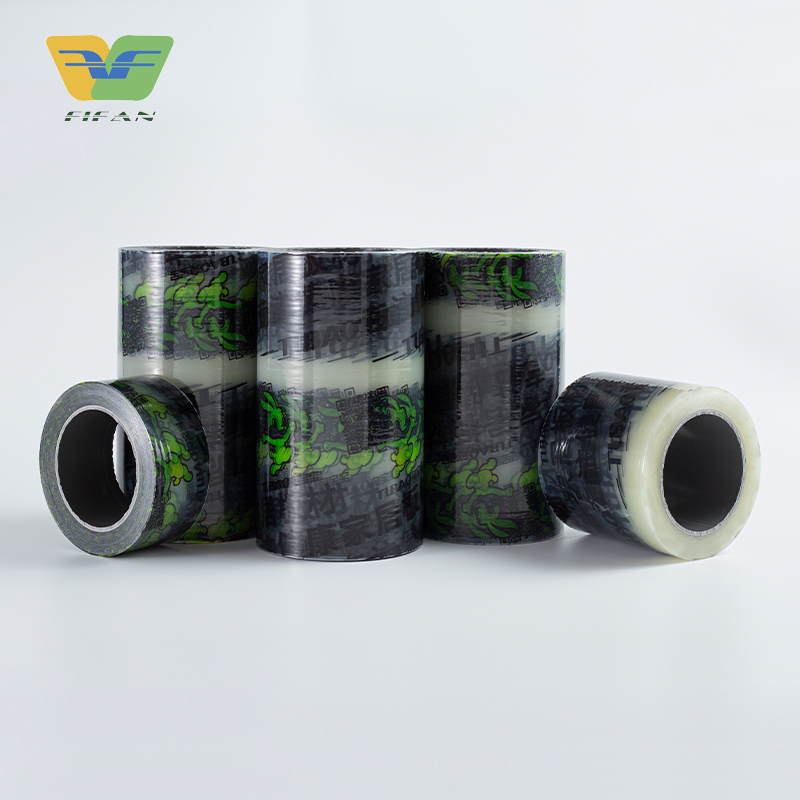
For outdoor duties, the company's core product is a UV-stabilized anti-aging PE protective film formulated for extended exposure rather than short logistics protection.
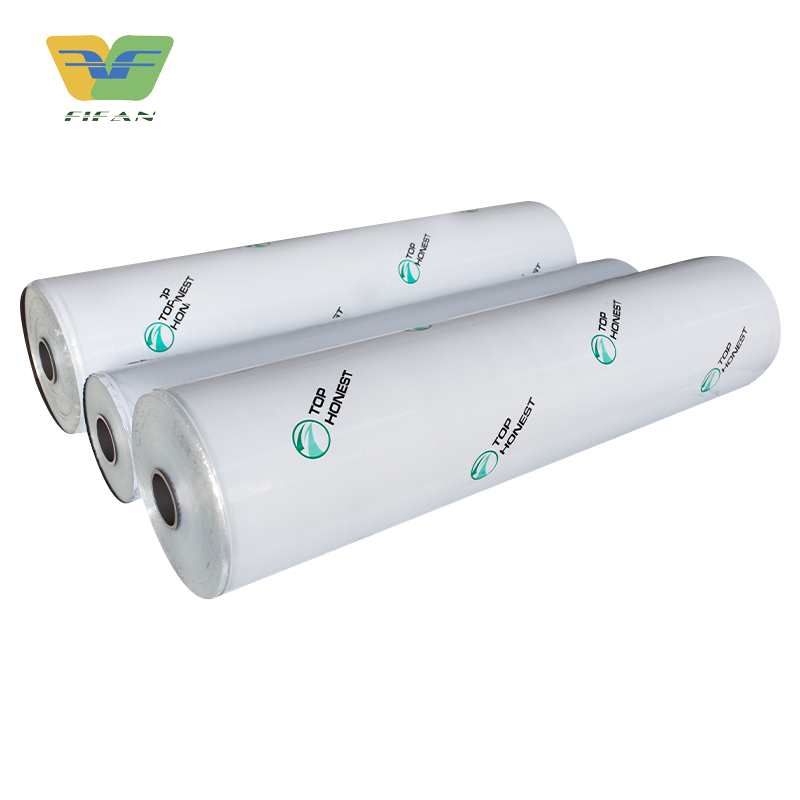 Custom UV-Stabilized Anti-Aging PE Protective Film ODM/OEM Suppliers, Exporter, Zhejiang Feifan New Material Technology Co., Ltd. Is China Custom UV-Stabilized Anti-Aging PE Protective Film ODM/OEM Suppliers, Exporter...View Product →
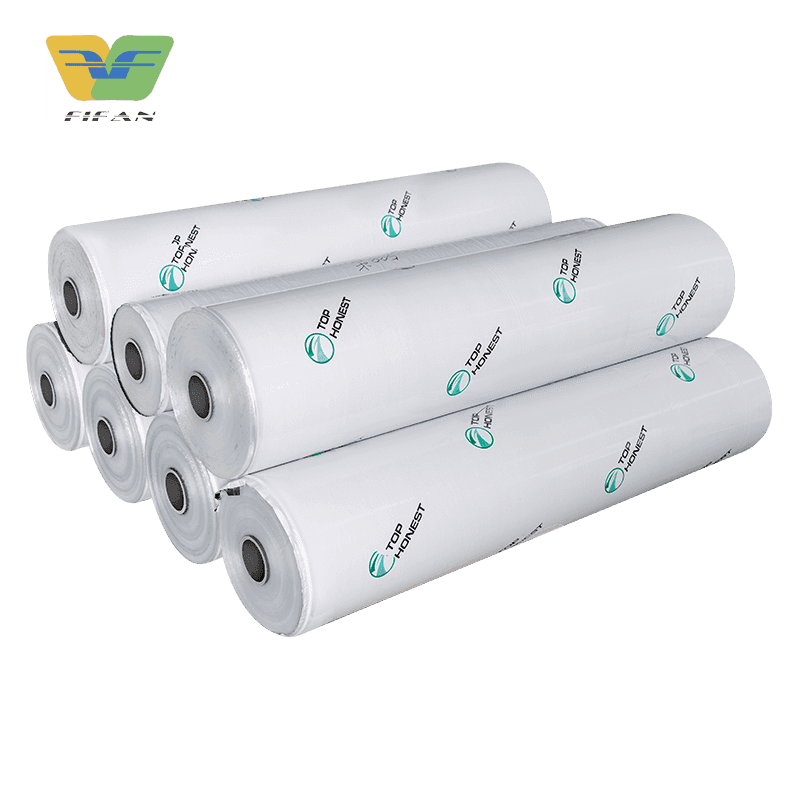
Where the substrate needs a matched solution, Feifan also offers a UV-resistant anti-aging PE protective film for color-coated steel plates, developed for metal building panels that may remain outdoors for weeks before installation.
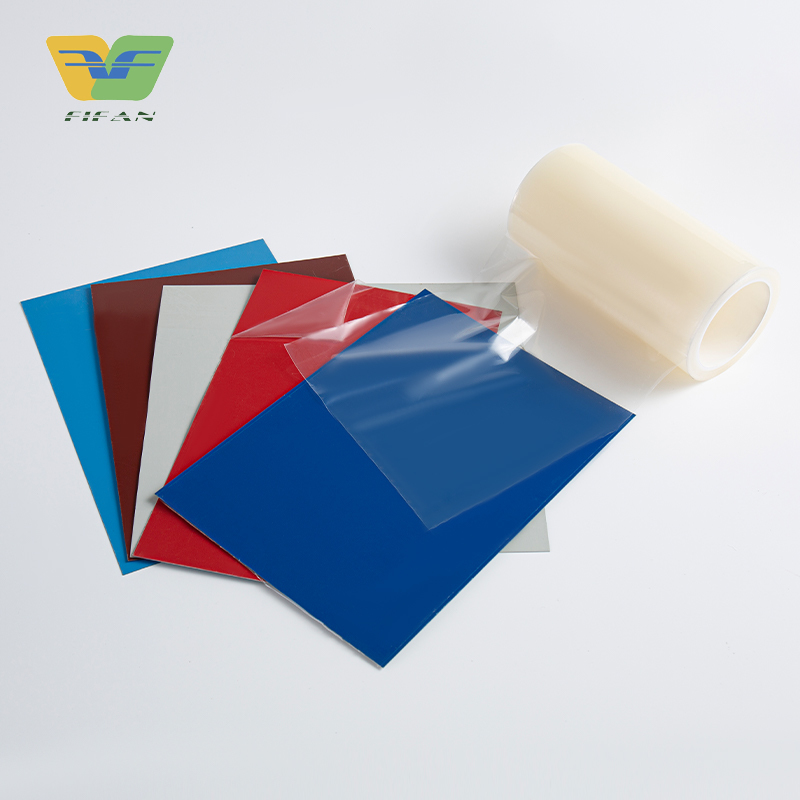 Custom UV-Resistant & Anti-Aging PE Protective Film for Color Coated Steel PlateZhejiang Feifan New Material Technology Co., Ltd. Is China Custom UV-Resistant & Anti-Aging PE Protective Film for Color Coated Steel Pla...View Product →
For glass processors, the UV-resistant self-adhesive PE protective film for glass combines UV stabilization with the clean-removal behavior that glazing plants require.
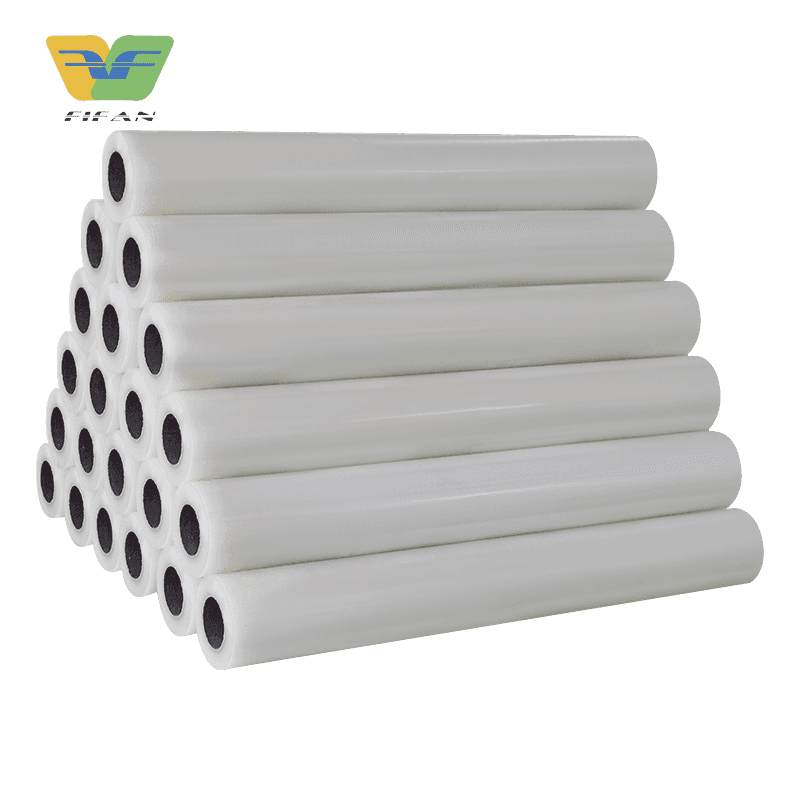 Custom UV-Resistant Self-Adhesive PE Protective Film for Glass ODM/OEM SuppliersZhejiang Feifan New Material Technology Co., Ltd. Is China Custom UV-Resistant Self-Adhesive PE Protective Film for Glass ODM/OEM Supplie...View Product →
R&D depth matters for the same reason. Feifan operates a municipal-level R&D center, holds invention and utility model patents, and cooperates with university research groups. In practice this means the formulation can be adapted to your actual exposure cycle — three months of outdoor storage for steel coils, one year on a glazing project, or a specific transit route across tropical latitudes.
Final Recommendation for Procurement Teams
Treat every supplier claim as a hypothesis until the evidence supports it. Ask for the stabilizer type and loading. Ask for accelerated weathering curves and aged peel strength data. Verify that the manufacturer controls the full process, from resin and masterbatch to coating and slitting. Then run a small trial on your actual substrate under your actual exposure period before committing to a full order.
A properly formulated UV-stabilized film costs slightly more per square meter. It prevents rejects, cleaning labor, and warranty claims that cost far more. For outdoor exposure duties, that difference is not an expense — it is the whole reason for using a protective film in the first place.
To see how Feifan New Material structures its protective film line and which options fit your substrate, browse the complete PE protective film range or send your exposure conditions and substrate details to the technical team.
Your email address will not be published. Required fields are marked *
-
-
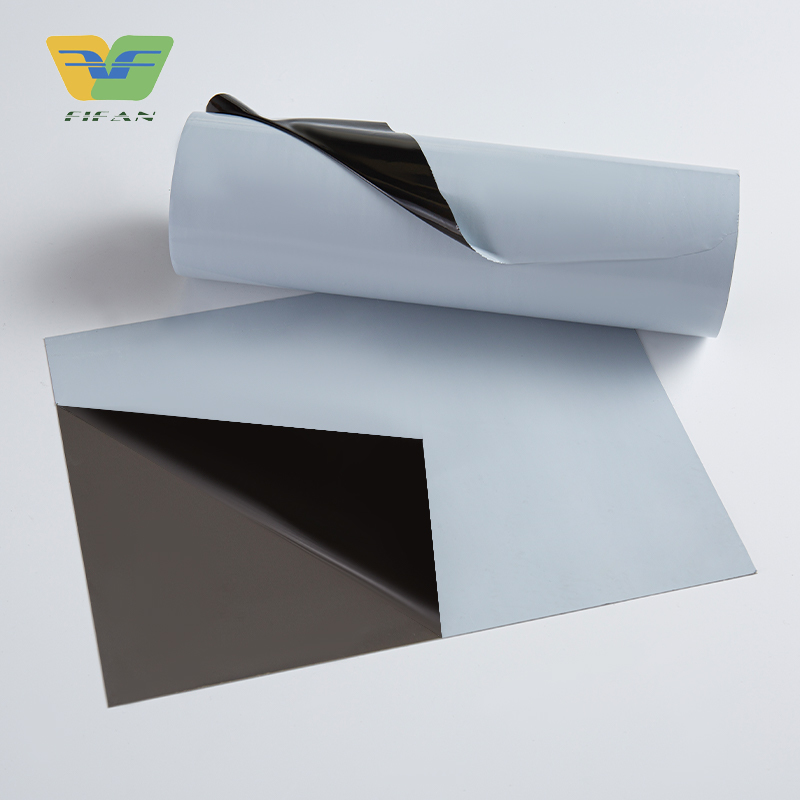
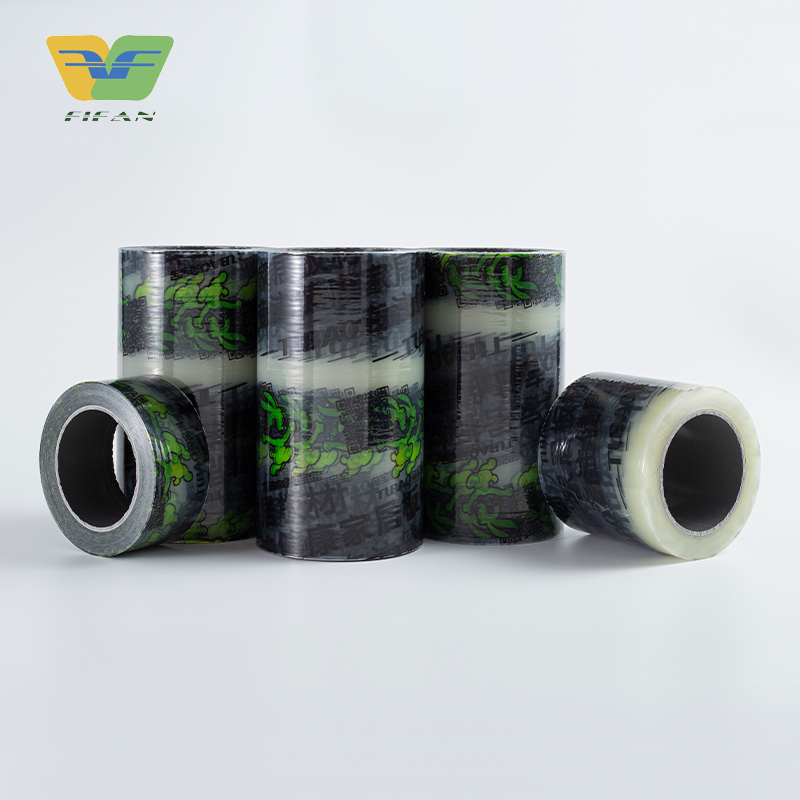
Construction Material PE Protective Film UV-Resistant & Anti-Aging PE Protective Film for Color Coated Steel Plates View More
-
-
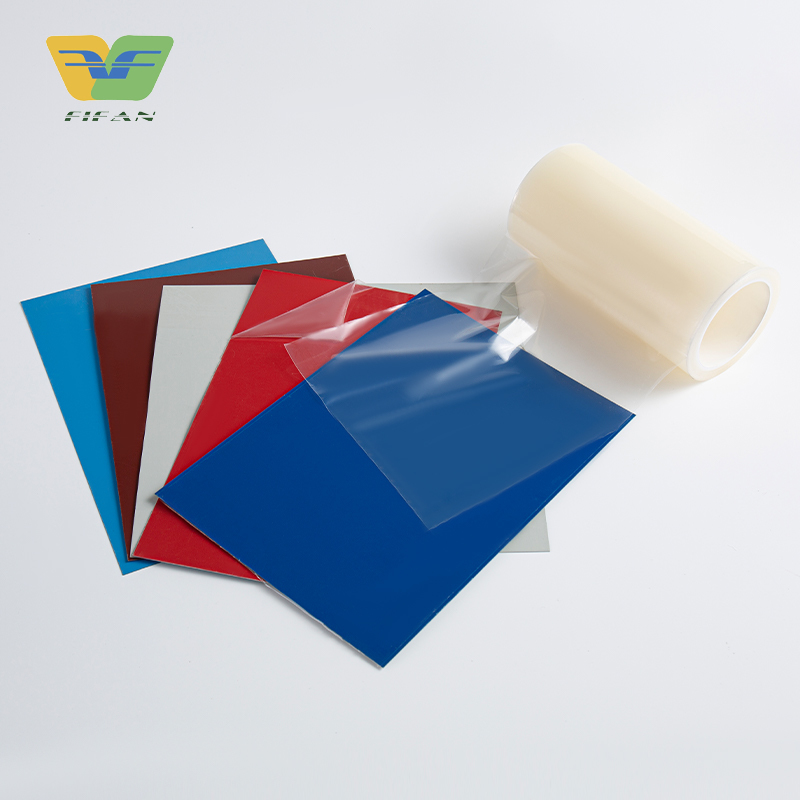
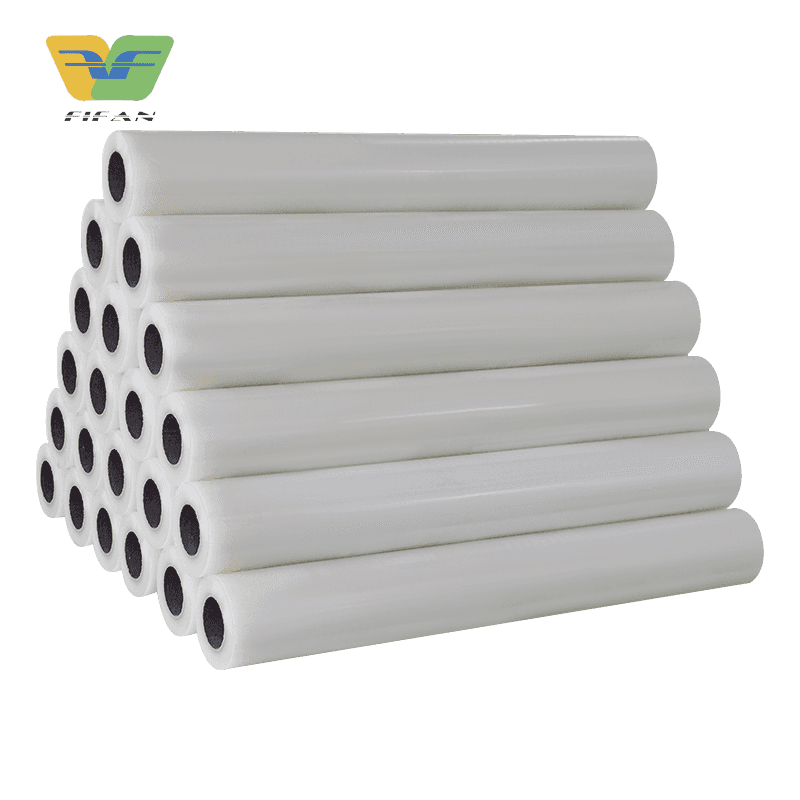
Construction Material PE Protective Film Anti-Static PE Protective Film for PET Decorative Panels View More
-
-
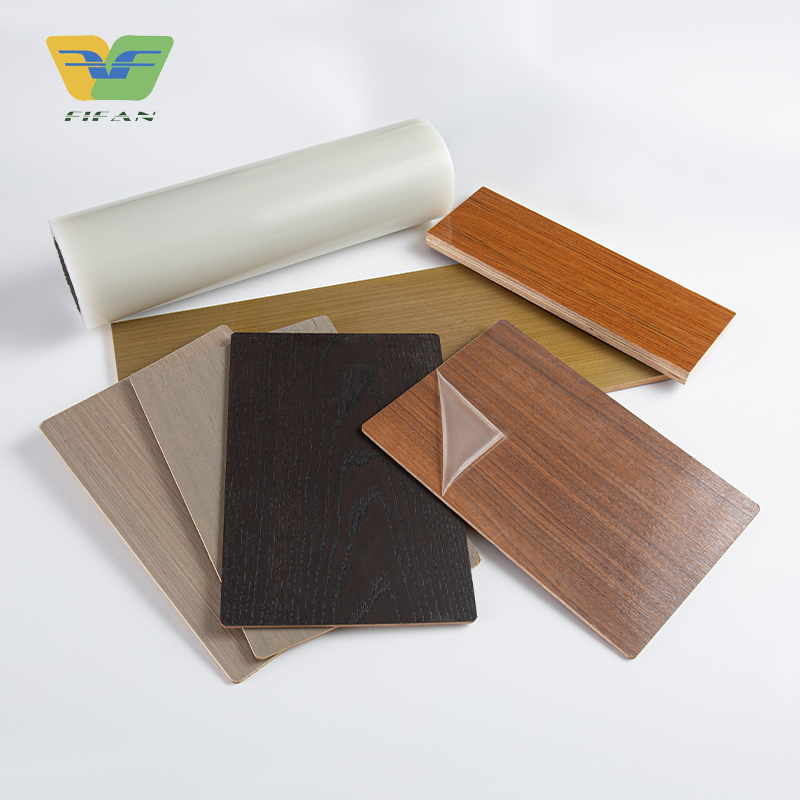
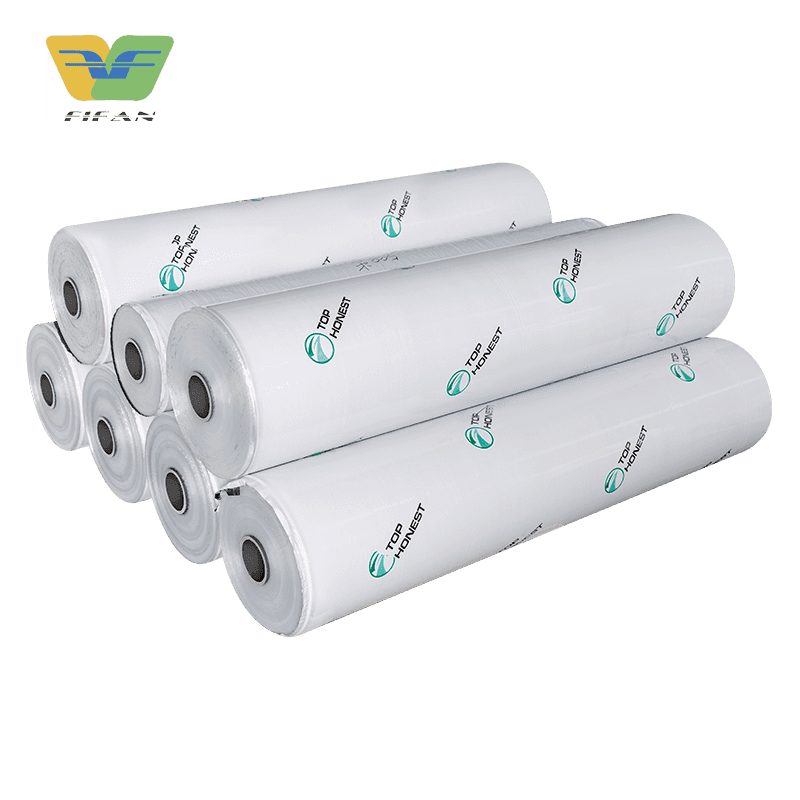
Construction Material PE Protective Film UV-Resistant PE Protective Film for Windows and Doors View More

Address: No. 1588 Gan Dong Road, Zhongguan Town, Deqing County, Huzhou City, Zhejiang Province, China
TEL: +86-572-8498038 / +86-15067289913
E-mail: [email protected]
Mobile
WhatsApp

Copyright © Zhejiang Feifan New Material Technology Co., Ltd. All Rights Reserved
