UV-Resistant & Anti-Aging PE Protective Film for Color Coated Steel Plates Industry knowledge
For Color Coated Steel Plates Exposed to Long-Term Outdoor Conditions (UV Radiation, Thermal Cycling, Moisture Attack), What Are the Key Performance Indicators of UV-Resistant & Anti-Aging PE Protective Films, and How Are Industry Test Standards Defined?
1. Understanding the Degradation Mechanisms of Color Coated Steel Plates in Outdoor Environments
Color coated steel plates exposed to outdoor conditions face multiple simultaneous degradation factors that compromise both the coating and the protective film.
UV Radiation Degradation
- Mechanism: Ultraviolet radiation (particularly UV-B at 280–315 nm and UV-A at 315–400 nm) breaks chemical bonds in polymer chains through photo-oxidation. This causes chain scission, crosslinking, and the formation of chromophores that lead to yellowing and discoloration.
- Effect on PE Film: Extended UV exposure leads to surface cracking (chalking), embrittlement, loss of tensile strength, and reduced elongation at break. The film may become difficult to remove cleanly.
- Effect on Coated Steel: The protective film's UV-blocking capability is critical; if the film degrades or becomes transparent to UV, the underlying coating can experience color fading, gloss loss, and chalking.
Thermal Cycling (Temperature Fluctuations)
- Mechanism: Daily and seasonal temperature variations cause differential expansion and contraction between the PE film, adhesive layer, and the steel substrate. This creates mechanical stress at the interface.
- Effect on PE Film: Repeated thermal cycling can accelerate adhesive aging, cause loss of peel strength, and induce film shrinkage or warpage.
- Effect on Coated Steel: Thermal stress can cause micro-cracking of the coating and promote adhesive failure at the film-coating interface.
Moisture and Humidity Attack
- Mechanism: Atmospheric moisture, rain, and condensation can penetrate through film edges or micro-defects, reaching the adhesive interface. Hydrolysis of adhesive components can occur, particularly with ester-based adhesives.
- Effect on PE Film: Moisture absorption can plasticize or hydrolyze adhesive layers, leading to loss of adhesion or adhesive residue upon removal.
- Effect on Coated Steel: Moisture trapped at the interface can promote corrosion of the steel substrate and blistering or delamination of the coating.
2. Key Performance Indicators for UV-Resistant & Anti-Aging PE Protective Films
Based on the degradation mechanisms described above, the following performance indicators are critical for evaluating UV-resistant and anti-aging PE protective films.
UV Aging Resistance (Color Change and Chalking)
- Color Difference (ΔE) After UV Exposure: Measures the degree of yellowing or discoloration of the protective film after accelerated UV aging. Target values vary by application but typically require ΔE ≤ 3.0 for general outdoor use and ΔE ≤ 2.0 for premium architectural applications.
- Surface Chalking Resistance: Evaluates the degree of surface degradation (powdering) after UV exposure. Films should show no visible chalking after the specified test duration.
- Gloss Retention: Measures the percentage of original gloss maintained after UV exposure. High-quality films achieve ≥ 70% gloss retention after accelerated testing.
Mechanical Property Retention After Aging
- Tensile Strength Retention: The percentage of original tensile strength maintained after UV aging. Target is typically ≥ 80% retention for films with anti-aging formulation.
- Elongation at Break Retention: A critical indicator of embrittlement. High-performance films maintain ≥ 70% of original elongation after accelerated aging.
- Tear Resistance Retention: Measures the film's resistance to tearing after aging. Target retention is typically ≥ 75%.
Adhesion Stability After Aging
- Peel Strength Retention: Measures the percentage of initial peel strength maintained after UV, thermal, and humidity aging. Target is typically ≥ 80% retention with controlled variation to avoid excessive adhesion build-up.
- Residue-Free Removal: After accelerated aging, the film must remove cleanly without leaving adhesive residue on the coated steel surface. This is evaluated through visual inspection and tape residue tests.
- Peel Strength Variation: The change in peel strength over time should be controlled within a narrow range to ensure predictable removal. Typically, variation of ±15% from initial value is acceptable.
Barrier Properties (UV Blocking and Moisture Resistance)
- UV Transmission: The percentage of UV radiation (especially UV-B) that passes through the film. Low UV transmission is essential. Quality films achieve UV transmission < 1% at 340 nm for anti-aging grades.
- Water Vapor Transmission Rate (WVTR): Affects moisture ingress through the film. Lower WVTR helps protect the underlying coating. Typical target for 50 µm film is < 10 g/m²/day.
3. Industry Test Standards for UV-Resistant & Anti-Aging PE Protective Films
The following international and regional test standards are commonly applied to evaluate the performance of UV-resistant PE protective films for color coated steel plates.
UV Accelerated Aging Tests
- ASTM G154: Standard practice for operating fluorescent UV lamp apparatus for exposure of non-metallic materials. Uses UVA-340 or UVB-313 lamps with specific irradiance, temperature, and condensation cycles. Typical test duration ranges from 500 to 3,000 hours depending on required outdoor equivalent.
- ISO 4892-3: Plastics – Methods of exposure to laboratory light sources – Part 3: Fluorescent UV lamps. Specifies exposure conditions and methods for evaluating changes in properties.
- QUV Test Cycles: Common cycle settings include UV exposure at 60°C for 8 hours followed by condensation at 50°C for 4 hours, simulating day/night outdoor conditions.
Xenon Arc Weathering Tests
- ASTM G155: Standard practice for operating xenon arc light apparatus for exposure of non-metallic materials. Provides more accurate simulation of full solar spectrum including visible light and infrared.
- ISO 4892-2: Plastics – Methods of exposure to laboratory light sources – Part 2: Xenon-arc lamps. Specifies irradiance, temperature, and humidity control conditions.
Heat Aging and Thermal Cycling Tests
- ASTM D573: Standard test method for rubber – Deterioration in an air oven. Applicable for evaluating heat aging effects on film properties.
- Thermal Cycling Tests: Subject samples to repeated temperature cycles (e.g., -30°C to +80°C) to evaluate dimensional stability, adhesion retention, and film integrity.
Humidity and Moisture Resistance Tests
- ASTM D2247: Standard practice for testing water resistance of coatings in 100% relative humidity environment. Relevant for assessing moisture-induced adhesion loss.
- ASTM D870: Standard practice for testing water resistance of coatings using water immersion. Evaluates film and adhesive performance under direct water contact.
Peel Strength and Adhesion Tests
- ASTM D3330: Standard test method for peel adhesion of pressure-sensitive tape. Method A (90° peel) and Method F (180° peel) are commonly used for protective films on coated steel.
- ISO 29862: Self-adhesive tapes – Determination of peel adhesion properties. Specifies test conditions and sample preparation procedures.
4. Comparative Parameter Table: UV-Resistant vs. Standard PE Protective Films
The following table compares key performance parameters between UV-resistant anti-aging PE protective films and standard (non-UV-stabilized) PE protective films based on industry standards and operational experience at Zhejiang Feifan New Material Technology Co., Ltd.
| Parameter |
Standard PE Film |
UV-Resistant Anti-Aging PE Film |
Test Method |
| UV Aging (500 hrs QUV, ΔE) |
ΔE > 5.0 (severe yellowing) |
ΔE ≤ 2.0 – 3.0 |
ASTM G154 / ISO 4892-3 |
| UV Aging (500 hrs QUV, Chalking) |
Visible chalking |
No visible chalking |
Visual inspection |
| Tensile Strength Retention (500 hrs UV) |
50–60% |
≥ 80% |
ASTM D882 |
| Elongation Retention (500 hrs UV) |
40–50% |
≥ 70% |
ASTM D882 |
| Peel Strength Retention (500 hrs UV) |
Highly variable (increase or decrease) |
≥ 80% with stable peel |
ASTM D3330 / ISO 29862 |
| UV Transmission at 340 nm |
5–15% |
< 1% |
UV-Vis Spectrophotometry |
| Heat Aging (7 days at 70°C, Color) |
Visible yellowing |
Minimal yellowing |
ASTM D573 |
| Humidity Resistance (ASTM D2247) |
Possible adhesion loss |
No visible adhesion loss |
ASTM D2247 |
| Recommended Outdoor Service Life |
3–6 months |
1–5+ years |
Based on accelerated aging correlation |
5. Typical Performance Targets by Application Grade
The following table provides typical performance targets for UV-resistant anti-aging PE protective films categorized by application severity and required service life.
| Application Grade |
Target Outdoor Life |
QUV Duration (Hours) |
ΔE Target |
Peel Retention Target |
Typical Applications |
| Standard Protection |
6–12 months |
500 |
≤ 3.0 |
≥ 80% |
Short-term outdoor storage, transportation protection |
| Premium Protection |
1–2 years |
1,000 |
≤ 2.5 |
≥ 85% |
Building facades, architectural panels |
| Extended Protection |
2–5 years |
2,000 |
≤ 2.0 |
≥ 90% |
High-end architectural, infrastructure projects |
| Ultra-Long Protection |
5+ years |
3,000+ |
≤ 1.5 |
≥ 90% |
Specialty industrial, marine environments |
6. Quality Assurance at Zhejiang Feifan New Material Technology Co., Ltd.
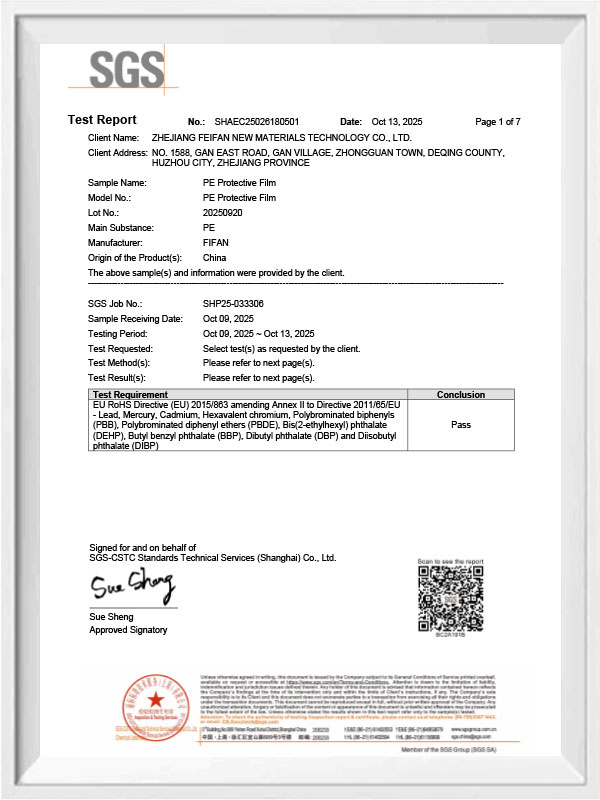
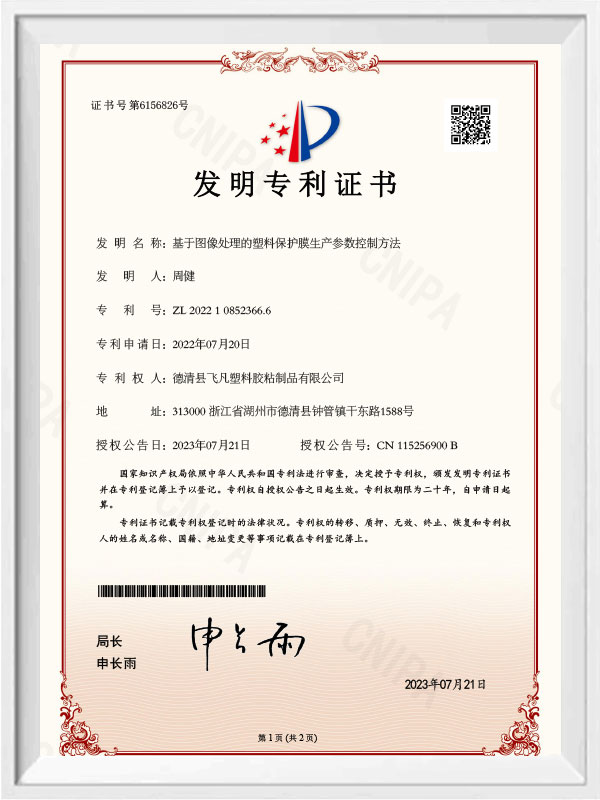
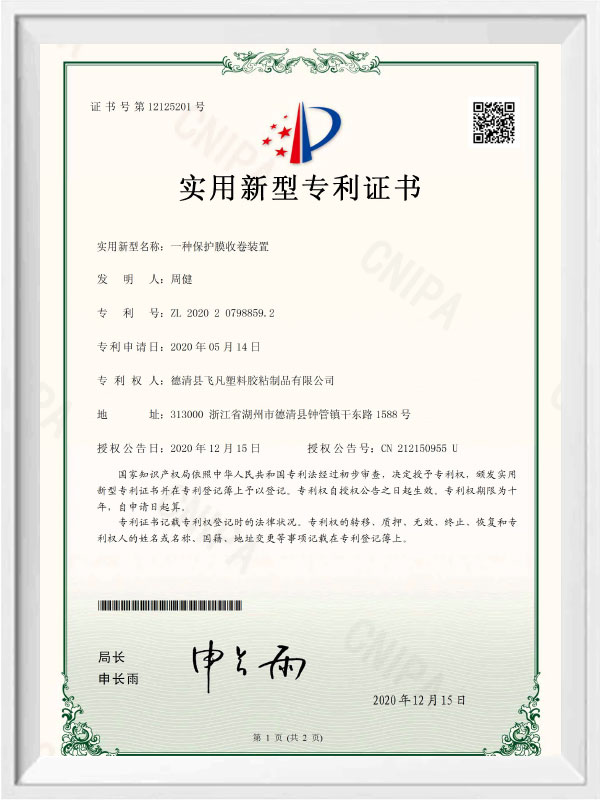
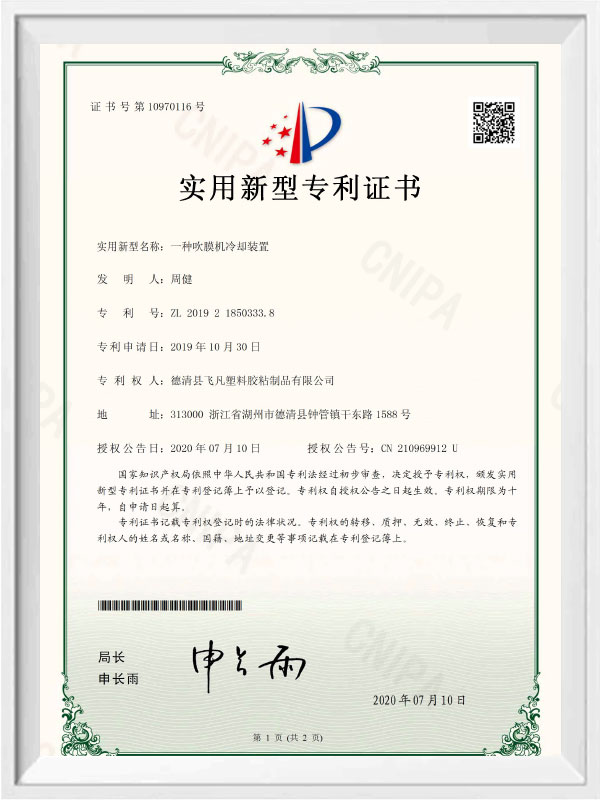
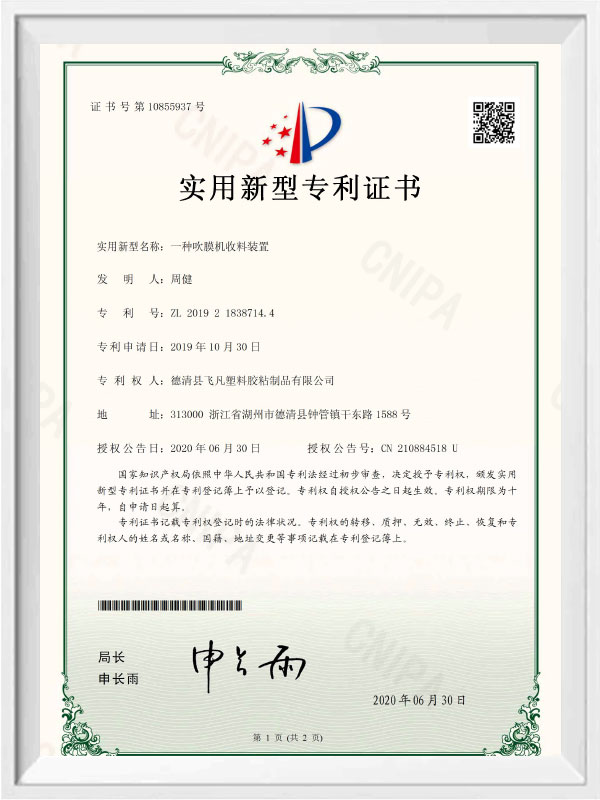
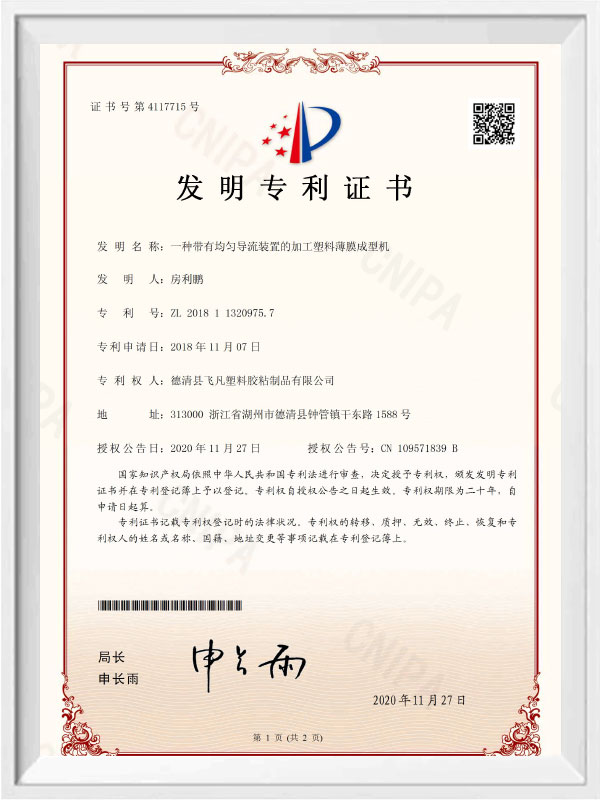
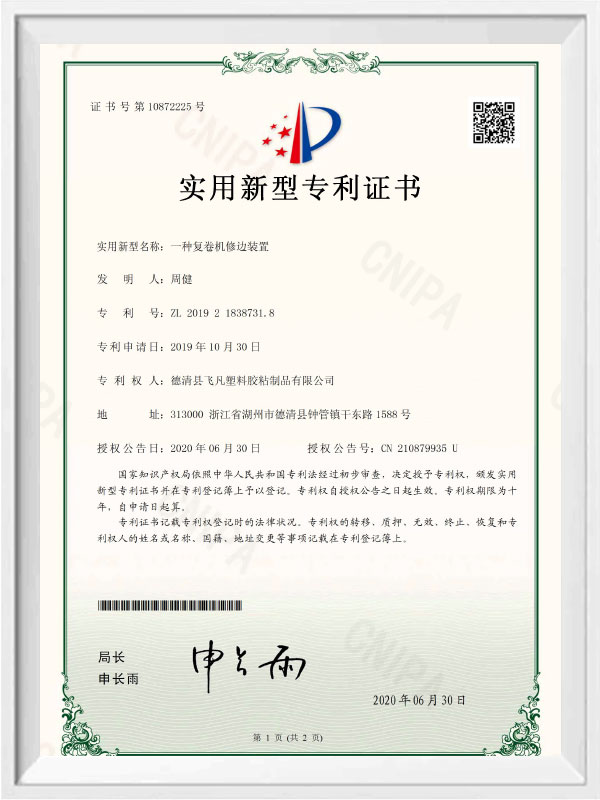
With over two decades of specialization in PE film and protective film for construction and appliance applications, Zhejiang Feifan New Material Technology Co., Ltd. implements rigorous quality control for UV-resistant and anti-aging PE protective films. The company's advanced centralized feeding system ensures precise blending of HALS, UV absorbers, and antioxidants into the masterbatch, while state-of-the-art coextrusion lines maintain consistent layer thickness and additive distribution. The company's municipal R&D center conducts comprehensive accelerated aging tests using QUV and xenon arc equipment to validate product performance against international standards. This commitment to process excellence has earned the company recognition as a National High-Tech Enterprise and a Provincial "Specialized and Innovative" SME, serving distinguished clients including Robam, Fotile, BYD, and Haier. With a portfolio of 2 invention patents and 15 utility model patents, the company continuously refines its anti-aging formulations and test methodologies to deliver reliable outdoor protection solutions.
FAQ
Q1: How does Zhejiang Feifan New Material Technology Co., Ltd. validate the UV resistance and anti-aging performance of its protective films?
Zhejiang Feifan New Material Technology Co., Ltd. validates UV resistance and anti-aging performance through comprehensive accelerated aging tests conducted in the company's municipal R&D center. The testing program includes QUV accelerated weathering according to ASTM G154 and ISO 4892-3 standards, xenon arc weathering per ASTM G155, heat aging per ASTM D573, and humidity resistance testing per ASTM D2247. Key performance indicators monitored include color change (ΔE), tensile strength retention, elongation retention, peel strength stability, and residue-free removal capability. With over 20 years of experience and multiple patents in anti-aging formulations, the company has established robust correlation between accelerated test results and real-world outdoor performance, enabling reliable prediction of service life for different application grades.
Q2: What are the critical factors that differentiate a high-performance UV-resistant PE protective film from a standard film for color coated steel plates?
The critical differentiating factors include the type and concentration of UV stabilization additives, the dispersion quality of these additives within the film matrix, and the overall film formulation design. High-performance UV-resistant films incorporate a synergistic combination of HALS (Hindered Amine Light Stabilizers) and UV absorbers (such as benzotriazoles or benzophenones) at optimized ratios, typically achieving UV transmission below 1% at 340 nm. In contrast, standard films lack these specialized additives or use them at insufficient concentrations, resulting in rapid yellowing, embrittlement, and loss of peel strength after as little as 3–6 months of outdoor exposure. Zhejiang Feifan New Material Technology Co., Ltd. has developed proprietary anti-aging formulations through its R&D programs, protected by 2 invention patents and 15 utility model patents, ensuring that the UV-resistant & anti-aging PE protective film products deliver consistent performance across extended outdoor service periods.
Q3: How should UV-resistant PE protective films be stored and handled to maintain their anti-aging performance before application?
To preserve the anti-aging performance of UV-resistant PE protective films, proper storage and handling practices are essential. Films should be stored in a cool, dry environment away from direct sunlight and UV sources, ideally at temperatures below 30°C and relative humidity below 70%. Rolls should be stored in their original packaging until ready for use, and should be kept away from ozone-generating equipment and chemical vapors that could accelerate degradation. The recommended shelf life for UV-stabilized films is typically 6–12 months under proper storage conditions. Zhejiang Feifan New Material Technology Co., Ltd. provides detailed storage and handling guidelines with each product shipment, drawing on over 20 years of industry experience serving customers such as BYD, Haier, and Robam, to help ensure that the protective films maintain their designed performance characteristics from production through application.

 English
 русский
 عربى
عربى