
- Product
-
Our Story
Why Choose Us?We are a national high-tech enterprise and a provincial "Specialized and Refined" SME, focusing on the R&D, production, and sales of PE protective film. As a leader in the industry, we are committed to serving global customers with innovative technology and have won wide recognition in the market.
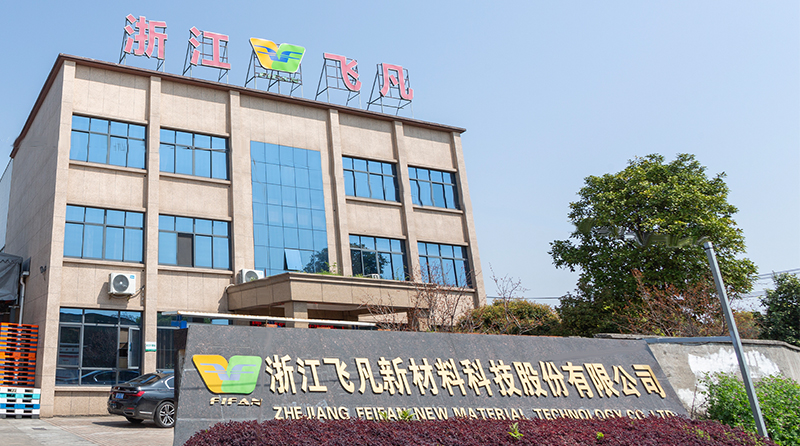 Coming From China, Marketing To The World.
 -
News
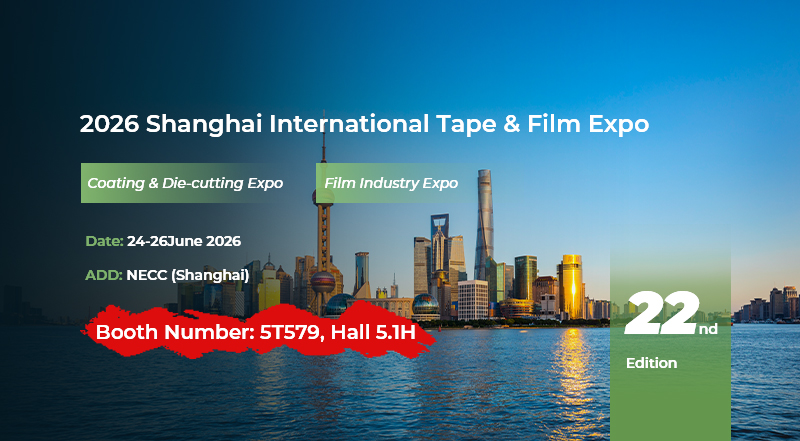 Feifan was invited to participate in the 2026 Shanghai International Tape and Film Exhibition
Dear Valued Customer / Partner, We are pleased to announce that our company will be exhibiting at APFE 2026 – the 22nd Shanghai International Adhesive Tape & Film Expo (Coating & Laminating E...
 English
 русский
 عربى
عربىHigh-Performance Anti-Static PE Protective Film Manufacturers: How to Choose
Content
- 1 Why Static Control Matters in Anti-Static PE Film
- 2 What Defines a High-Performance Anti-Static PE Protective Film
- 3 What to Verify in the Manufacturer's Process
- 4 Typical Applications and Product Selection
- 5 Procurement Risks and the Real Cost of a Low Price
- 6 A Shortlisting Checklist for Buyers
- 7 The Bottom Line
Choosing a supplier of high-performance anti-static PE protective film is a risk-management decision, not a price-per-square-meter comparison. Two rolls can look identical in a quotation and behave completely differently on a production line: one protects a polished surface for weeks and then peels off without residue, while the other attracts dust, builds up adhesion over time, or leaves marks that turn finished panels into rejects. The manufacturers worth qualifying are the ones that can document consistent static-dissipation performance, controlled adhesion over time, and contamination control at production scale, not just on a hand-cut sample.
That standard matters most where the protected surface is expensive and the film is removed only at final inspection. In those operations, film failure is not a material-cost problem; it becomes rework, delay, and customer rejection.
Why Static Control Matters in Anti-Static PE Film
Static charge develops on PE film surfaces constantly during unwinding, slitting, and laminating. Because the film is an insulator, charge accumulates until it finds a discharge path, and on a production floor that charge does three kinds of damage:
- It attracts airborne dust and fibers onto surfaces that must stay clean, such as PET decorative panels, polycarbonate sheets, and painted appliance panels.
- It interferes with automated handling, causing the film web to cling to rollers, misalign during lamination, or trap air pockets between film and substrate.
- On electronic-adjacent parts, a sudden discharge can damage sensitive components or create visible defects on high-gloss finishes.
The measurable specification is surface resistance, commonly between 109 and 1011 ohms per square for anti-static grades, with static decay from 5,000 V to below 100 V typically expected within two seconds. When a supplier provides these values on a datasheet and repeats them on every batch certificate, static control is an engineered property rather than a marketing claim.
What Defines a High-Performance Anti-Static PE Protective Film
Electrical performance that stays consistent through the roll
The real challenge is consistency. Some films use migratory additives that gradually bloom to the surface, so performance shifts as the roll ages or after the surface is wiped. Higher-performance constructions control static through polymer formulation or a dedicated coating layer, keeping surface resistance stable across the full roll width and from batch to batch. Buyers should ask for per-batch test data rather than a single laboratory value from a brochure.
Adhesion that balances protection with clean removal
A protective film must stay in place through cutting, bending, handling, and transport, and then release cleanly months later. Peel strength is usually specified in grams per millimeter or Newtons per 25 mm, depending on the region. Experienced suppliers formulate low-tack and medium-tack adhesives matched to the substrate and verify aged adhesion after 30, 60, or 90 days. Residue-free removal is non-negotiable for stainless steel, aluminum, and painted surfaces.
Clarity and contamination control
For transparent substrates and printed surfaces, film haze and clarity directly affect the cosmetic result. High-performance grades use optical-grade resin with high light transmission and low haze. Contamination is controlled upstream: a Class 10,000 cleanroom prevents particles from being embedded into the adhesive during coating.
For buyers who need a dedicated static-control construction, Feifan's high-performance anti-static PE protective film is a practical reference point, produced through a cleanroom-controlled process with batch-level quality checks.
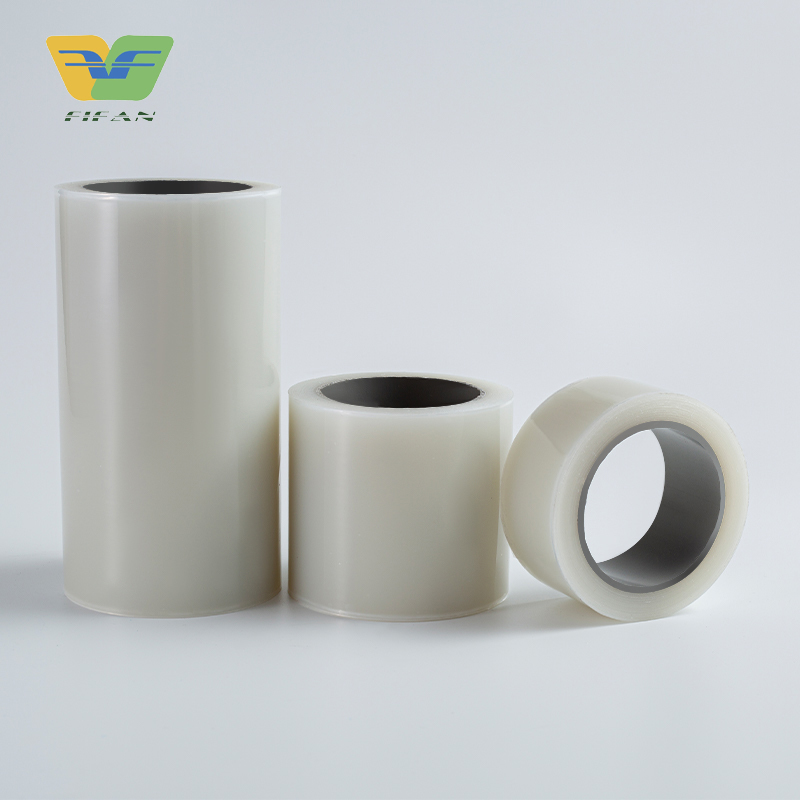 Custom High-Performance Anti-Static PE Protective Film ODM/OEM Suppliers, ExportZhejiang Feifan New Material Technology Co., Ltd. Is China Custom High-Performance Anti-Static PE Protective Film ODM/OEM Suppliers, Expo...View Product →
What to Verify in the Manufacturer's Process
In-house production from resin to finished roll
Surface protection quality is determined upstream, in blown film extrusion and coating, not at the slitting stage. Suppliers that control the entire chain, as Feifan does with in-house blown film, coating, slitting, and packaging, can trace defects to their source and keep parameters consistent between orders. Annual capacity of 8,000 tons of PE film and 50 million square meters of PE protective film also indicates the production stability that repeat buyers need.
Cleanroom, inspection, and documentation
Ask exactly how contamination is controlled and what is inspected before shipment. Generic assurances are not enough; look for concrete protocols such as raw-material inspection, in-process monitoring, 100% finished-goods inspection, and random sampling before dispatch. Documentation quality is also a signal. A manufacturer that publishes application-specific technical material, such as this heavy-duty anti-scratch technical guide for stainless steel, is more likely to give you usable data during qualification.
R&D depth for customization
Manufacturers differ most in their ability to adapt. Thickness, width, color, printed logos, and adhesion level are common adjustments, but the more capable suppliers can tune a film to a specific substrate, storage condition, or removal temperature. R&D capacity, including in-house laboratories, a dedicated engineering team, and an established patent portfolio, is a practical indicator of how quickly a supplier can solve a new problem. Feifan, a national high-tech enterprise with more than two decades in PE film, holds two invention patents and fifteen utility-model patents, and its materials have been qualified by major home-appliance and automotive manufacturers.
Typical Applications and Product Selection
PET decorative panels and wood veneer surfaces
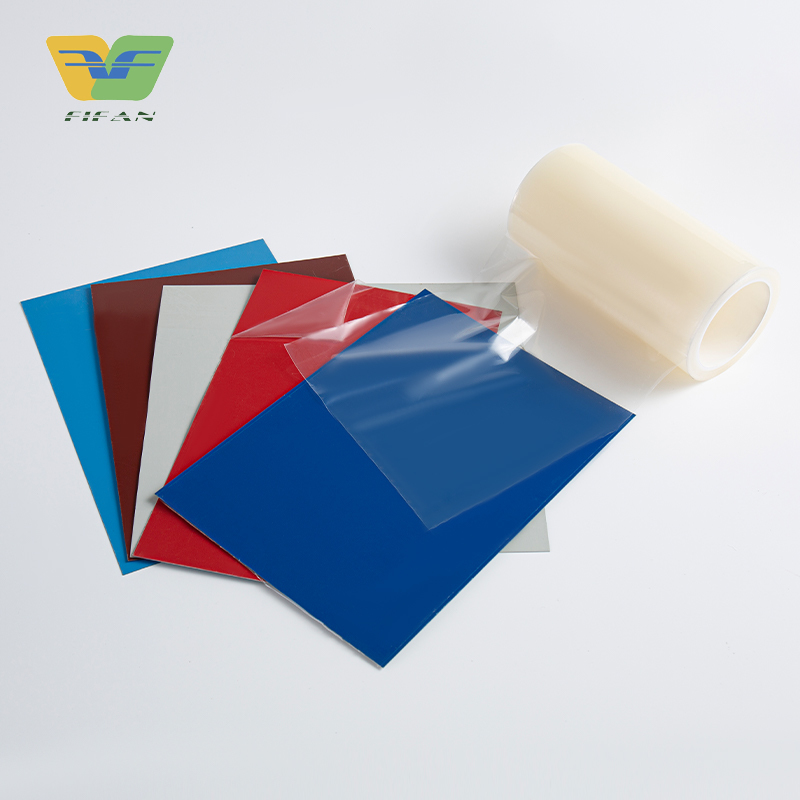
During hot pressing, sawing, and edge banding, PET decorative panels are exposed to dust and handling. An anti-static film keeps particles from being pulled onto the panel face, while the adhesive layer protects against scratches from jigs and transfer equipment. The anti-static PE protective film for PET decorative panels is designed for exactly this stage of the production cycle.
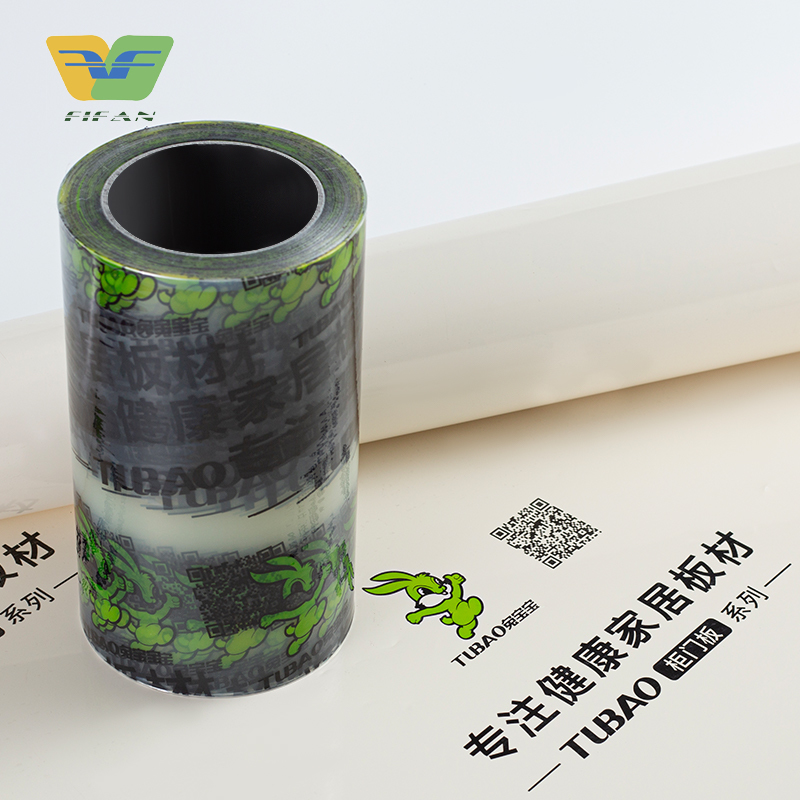 Custom Anti-Static PE Protective Film for PET Decorative Panels ODM/OEM SupplierZhejiang Feifan New Material Technology Co., Ltd. Is China Custom Anti-Static PE Protective Film for PET Decorative Panels ODM/OEM Suppli...View Product →
Home appliances and high-gloss components
Refrigerator doors, range hoods, and control panels are stamped, assembled, and shipped with the protective film still in place. The most common complaints are dust on the adhesive edge, fingerprints, and adhesive migration into the surface during storage. Films tuned for this environment, including Feifan's self-adhesive PE protective film for home appliances, are formulated to hold through fabrication and release without residue on painted and coated metal. The mechanism behind that performance is covered in this overview of how self-adhesive PE protective film protects industrial surfaces.
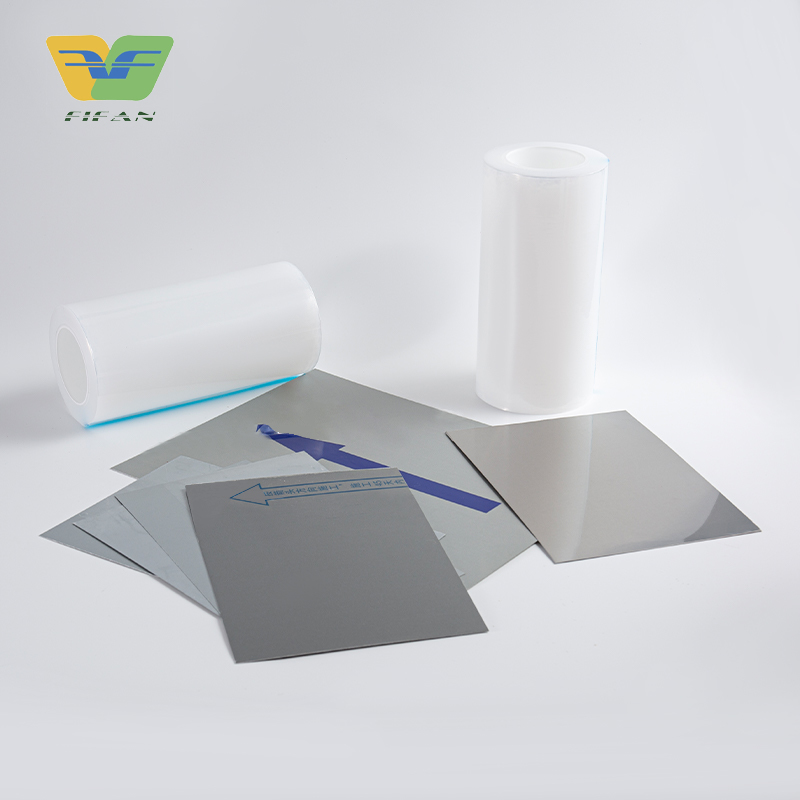 Custom Self-Adhesive PE Protective Film for Home Appliances ODM/OEM Suppliers, EZhejiang Feifan New Material Technology Co., Ltd. Is China Custom Self-Adhesive PE Protective Film for Home Appliances ODM/OEM Suppliers,...View Product →
Transparent plastics and electronic-adjacent parts
Polycarbonate sheets and similar transparent substrates expose every film defect: haze becomes visible, bubbles appear, and dust is obvious to the end customer. Static control matters more here because a charged film actively pulls dust onto the sheet. In assembly areas near electronic components, the same anti-static properties reduce the risk of discharge and particulate contamination.
Procurement Risks and the Real Cost of a Low Price
Most sourcing mistakes in anti-static PE protective film come from comparing only unit price. A cheaper film generates costs that rarely appear on the invoice: rejected panels, re-cleaning of adhesive residue, line stoppages to adjust film feeding, and rush reorders after a failed batch. Over a year, those costs usually exceed the saving per square meter.
Three practical risks deserve attention before an order is placed:
- Adhesion drift between batches, especially if the supplier changes adhesive suppliers without requalification.
- Delivered film that is not actually anti-static under your process conditions: verifying surface resistance on receipt is inexpensive, while discovering the problem on the line is not.
- Capacity constraints that force you to add a secondary supplier, whose film may behave differently on your equipment.
Buyers new to this category will find the guide to avoiding pitfalls when purchasing PE protective film a useful orientation before issuing a request for quotation.
A Shortlisting Checklist for Buyers
The table below summarizes the questions that separate technically credible manufacturers from resellers and low-cost producers.
| Evaluation area | What to ask | What to verify |
|---|---|---|
| Static performance | What is the surface resistance range and static decay time? | Batch-level test reports, not a single historical value |
| Adhesion | What is the peel strength and aged adhesion after 30/60/90 days? | Compatibility tests on your actual substrate |
| Contamination control | What is the cleanroom level in the coating area? | Class 10,000 or better, confirmed on site |
| Process control | Which production steps are performed in-house? | Blown film, coating, slitting, and packaging under one roof |
| Inspection | What is checked before shipment? | 100% finished-goods inspection and random outbound sampling |
| Documentation | Are datasheets and application guides available? | Application-specific parameters, not generic claims |
The Bottom Line
High-performance anti-static PE protective film is a functional material with measurable specifications, and the manufacturers that earn long-term business are those that prove those specifications consistently. Static control, cleanroom discipline, adhesion stability, and production transparency form the four pillars of a reliable supply relationship. When a manufacturer can show batch-level data, application-specific documentation, and in-house production control, the confidence you gain is worth more than a marginal price advantage.
Your email address will not be published. Required fields are marked *
-
-
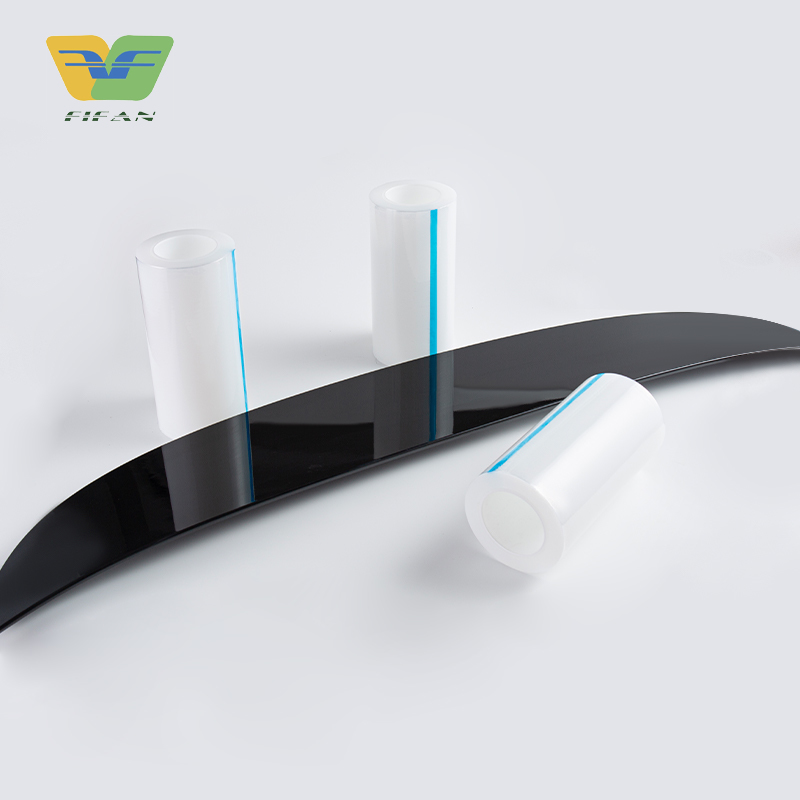
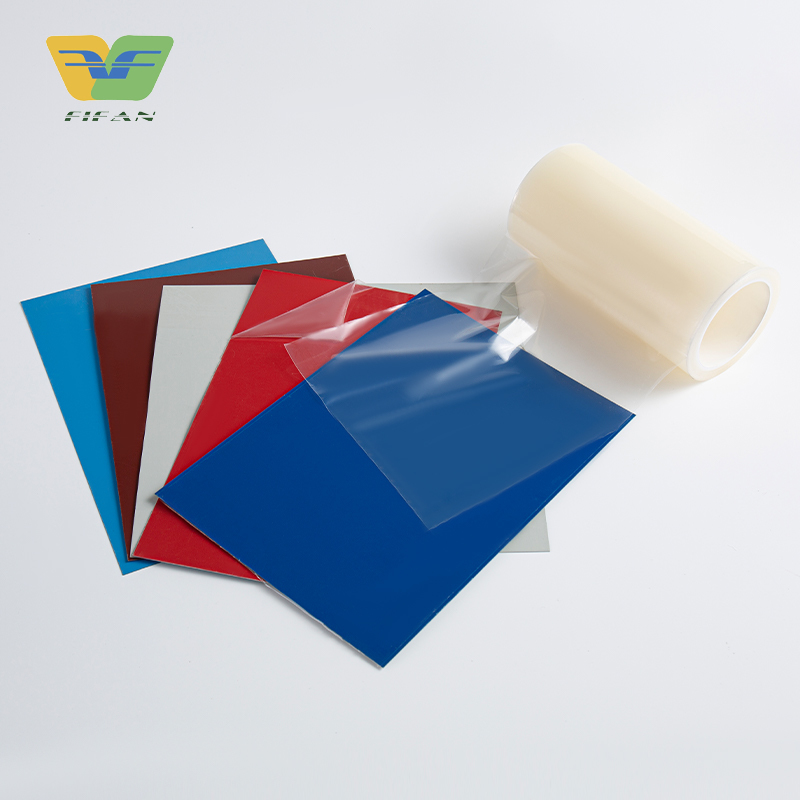
Construction Material PE Protective Film Anti-Static PE Protective Film for PET Decorative Panels View More
-
-
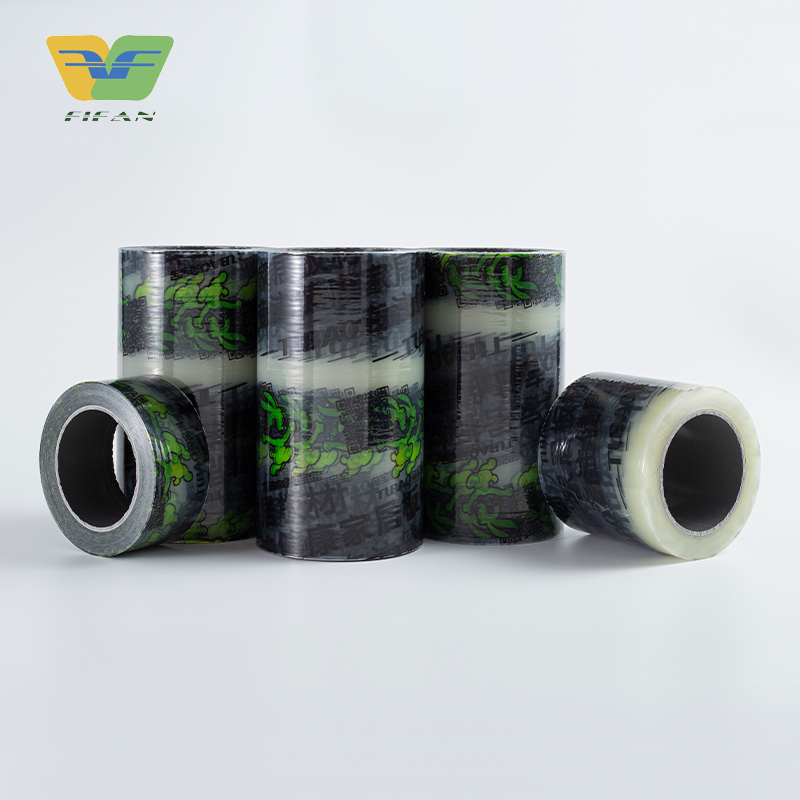
Construction Material PE Protective Film UV-Resistant & Anti-Aging PE Protective Film for Color Coated Steel Plates View More
-
-
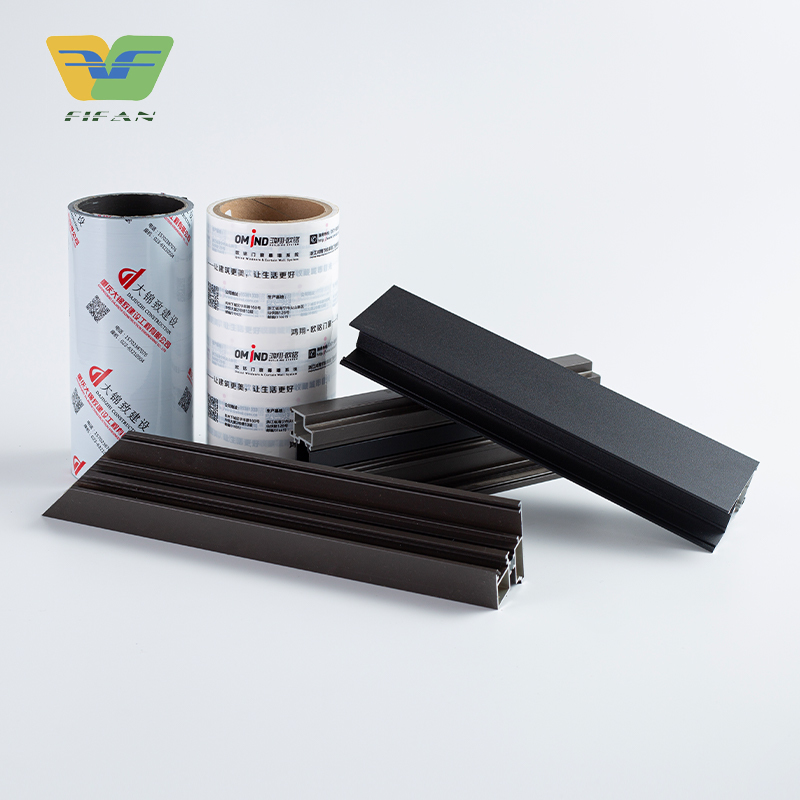
Construction Material PE Protective Film High-Tack PE Protection Film for Architectural Aluminum Panels View More

Address: No. 1588 Gan Dong Road, Zhongguan Town, Deqing County, Huzhou City, Zhejiang Province, China
TEL: +86-572-8498038 / +86-15067289913
E-mail: [email protected]
Mobile
WhatsApp

Copyright © Zhejiang Feifan New Material Technology Co., Ltd. All Rights Reserved
