
- Product
-
Our Story
Why Choose Us?We are a national high-tech enterprise and a provincial "Specialized and Refined" SME, focusing on the R&D, production, and sales of PE protective film. As a leader in the industry, we are committed to serving global customers with innovative technology and have won wide recognition in the market.
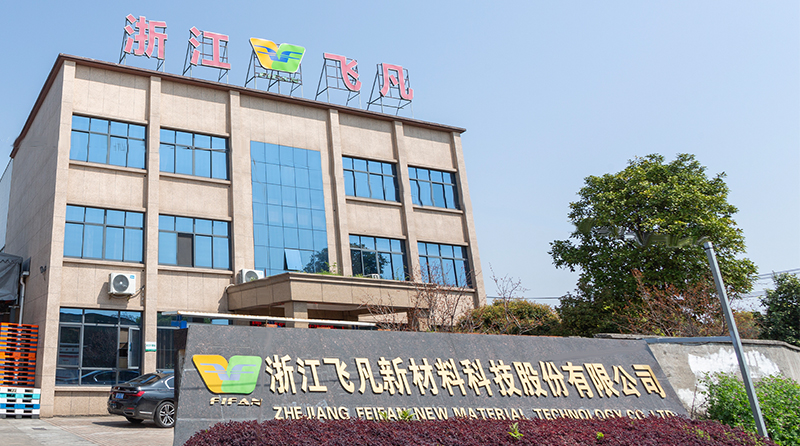 Coming From China, Marketing To The World.
 -
News
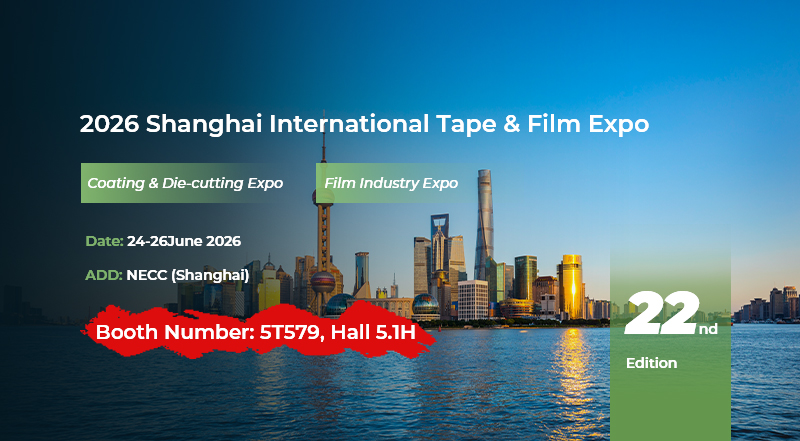 Feifan was invited to participate in the 2026 Shanghai International Tape and Film Exhibition
Dear Valued Customer / Partner, We are pleased to announce that our company will be exhibiting at APFE 2026 – the 22nd Shanghai International Adhesive Tape & Film Expo (Coating & Laminating E...
 English
 русский
 عربى
عربىPE Label Film Guide: How to Specify Polyethylene Labels for Industrial Surfaces
Content
- 1 01 What Is PE Label Film and Why It Matters
- 2 02 PE Label Film vs. PVC and Paper: A Practical Comparison
- 3 03 Core Specifications for Industrial PE Label Film
- 4 04 Customization: Colors, Printing, and Adhesive Options
- 5 05 How to Select the Right PE Label Film
- 6 06 Supplier Selection and Quality Control
- 7 PE Label Film FAQ
In a stainless steel processing plant, a labeling line stopped for forty minutes when PE labels lifted at the edges during a high-humidity shift. The labels were a generic polyethylene film with a rubber-based adhesive. The surface was brushed stainless steel, the storage room was humid, and the cutting process generated fine metal dust. The combination was a textbook failure. Across manufacturing, this pattern repeats: PE label film is selected too quickly and fails too quietly.
PE label film is the printed face stock used for product identification, asset marking, and protective surface labels. It is made from polyethylene, one of the most widely used plastics in the world, and finished with a print-receptive coating and a pressure-sensitive adhesive. The material is not a single product but a family of films whose properties change with thickness, density, adhesive chemistry, and surface treatment.
01 What Is PE Label Film and Why It Matters
PE label film is a polyethylene-based face stock that is printed, slit, and converted into self-adhesive labels for industrial product identification and surface protection. It differs from ordinary packaging PE film in one key aspect: it is engineered with a print-receptive surface, a controlled adhesive deposition, and a release liner that lets the label peel cleanly from the backing without curling or stretching.
The material itself is either low-density polyethylene (LDPE) or medium-density polyethylene (MDPE). Both are semi-crystalline thermoplastics whose molecular structure resists water, many solvents, and most industrial chemicals. This makes PE label film especially valuable in harsh environments where paper labels delaminate and PVC labels discolor.
Key properties that make PE label film useful:
- Moisture resistance: PE films absorb less than 0.01% water by weight.
- Chemical inertness: Resists oils, greases, diluted acids, and most cleaning agents.
- Flexibility: Conforms to curved surfaces without cracking or losing adhesion.
- Printability: Accepts flexo, gravure, and digital inks after corona treatment.
- Recyclability: Fits into the polyethylene recycling stream without separation.
02 PE Label Film vs. PVC and Paper: A Practical Comparison
For industrial surfaces that face moisture, chemicals, or outdoor exposure, PE label film outperforms PVC and paper label stock on most functional criteria. The table below compares the practical differences.
| Property | PE Label Film | PVC Label Film | Paper Label |
| Moisture resistance | Excellent | Good | Poor |
| Chemical resistance | Excellent | Good | Weak |
| Temperature range | -40C to 80C | -30C to 70C | 10C to 60C |
| Flexibility | High | Medium | Low |
| Printability | Requires corona treatment | Good | Excellent |
| Adhesive compatibility | Broad | Limited | Narrow |
| Recyclability | Easy | Difficult | Easy |
The most important takeaway: PE label film handles moisture and temperature swings better than PVC and paper, but it requires a corona treatment or a print primer to hold ink properly. If the label must be recycled, PE is the easier material in the polyethylene stream.
03 Core Specifications for Industrial PE Label Film
The critical PE label film specifications are film thickness, adhesive type, surface treatment, and optical properties. Getting these four parameters right determines whether the label survives the manufacturing environment.
- Film thickness: 50 to 120 micrometers is the typical range. Thinner films conform to curved surfaces but are harder to handle. Thicker films provide more stability and opacity.
- Adhesive type: Rubber-based adhesives give high initial tack and work well on textured surfaces. Acrylic adhesives offer better UV and chemical resistance but lower initial tack. Solvent-free adhesives reduce VOC emissions.
- Surface treatment: Corona treatment increases surface energy so inks and coatings adhere properly. Untreated PE film has a surface energy of approximately 31 dynes/cm and rejects most printing inks.
- Optical properties: Transparency, haze, and gloss matter when the label must cover barcodes or show the substrate beneath. A high-transparency PE label film is used for clean optical labels.
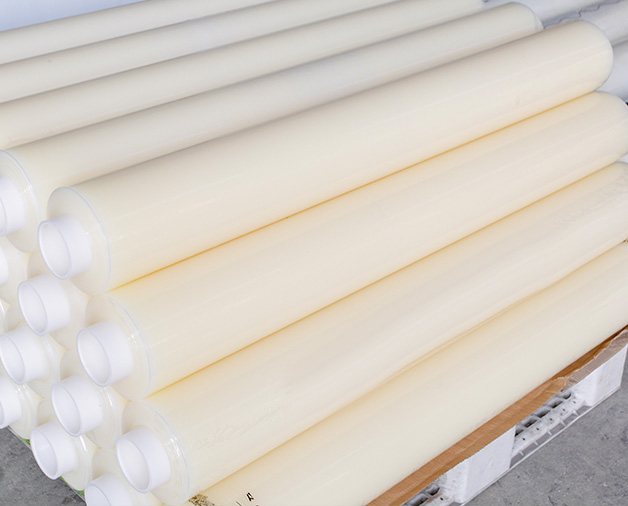
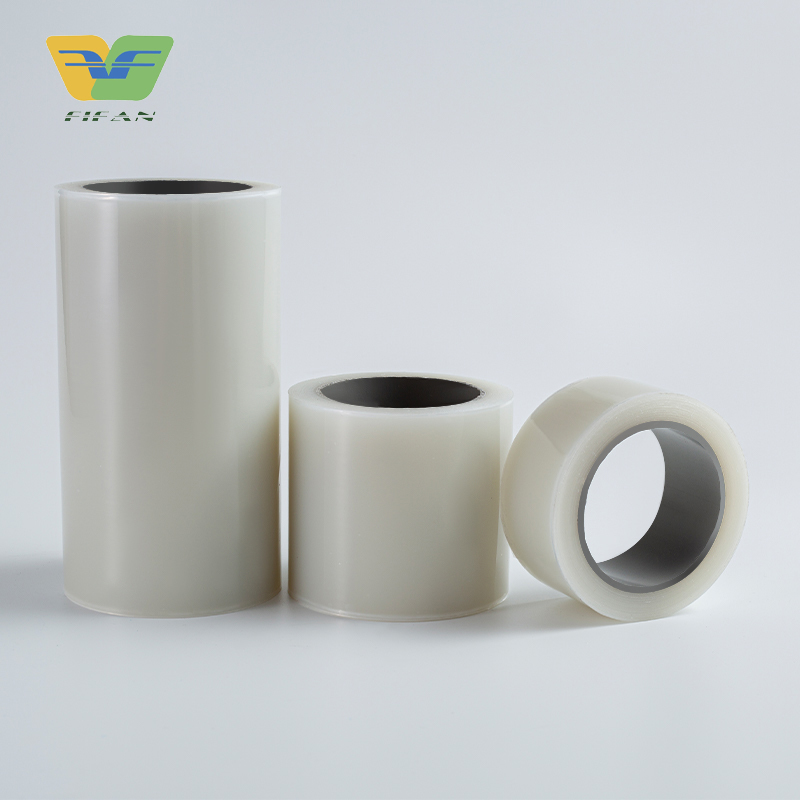 Anti-Static PE Protective Film for Sensitive Electronic ComponentsThis three-layer co-extruded PE film incorporates conductive or dissipative agents to provide stable surface resistivity, preventing electrostatic discharge and dust adsorption during printing, handling, or peeling of labels on PCBs and other sensitive devices.View Product →
For labels applied to sensitive electronic components, electrostatic discharge (ESD) can damage the device during printing, handling, or peeling. Antistatic PE label films dissipate static charges, making them suitable for printed circuit board labels, barcode tags on sensitive devices, and cleanroom applications.
04 Customization: Colors, Printing, and Adhesive Options
PE label film can be customized along three dimensions: color, printing method, and adhesive behavior. Customization is not just cosmetic - it affects the durability and the label's ability to carry required information.
- Color: White, black, transparent, and custom colors via masterbatch. A black PE label film is used for light-blocking applications. A milky white PE film offers higher opacity and a cleaner background for printed logos.
- Printing: Flexographic and gravure are the most common methods for volume label production. Screen printing works for smaller batches and thicker ink deposits. Digital printing is used for variable data and short runs.
- Adhesive behavior: High-tack adhesives bond quickly to textured surfaces. Low-tack adhesives allow repositioning and clean removal. The choice depends on the surface and the required peel strength.
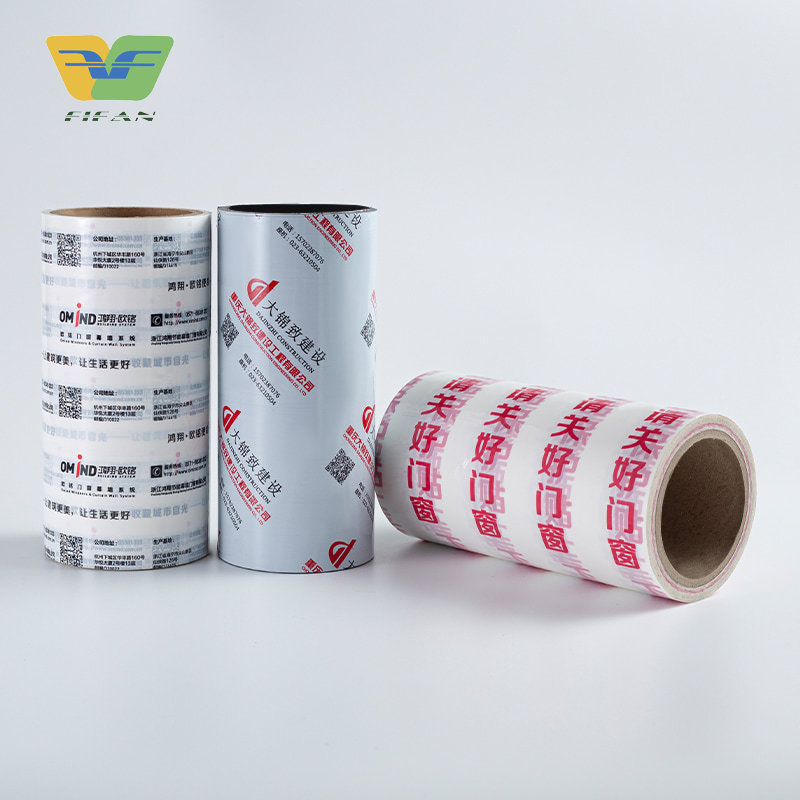 Custom Printed PE Protective Film with Branding and InstructionsThis film integrates logos, grading, or technical instructions directly onto the surface, enabling communication to fabricators while protecting the product. It supports customization in thickness, width, adhesion, and color to suit specific labeling needs.View Product →
Printed PE films are used for both protective and labeling purposes. They carry the logo, instructions, or part identification directly on the film surface, which saves a separate label application step.
When the label needs to remain visible for months or years, the film's resistance to yellowing becomes critical. A UV-stabilized PE film with a satin or matte finish can extend the label's legibility significantly compared to a standard glossy film.
05 How to Select the Right PE Label Film
The selection process starts with the application surface and the expected service life, not with the film itself. A PE label that works on a smooth polycarbonate panel will fail on a rough cast iron surface.
- Identify the surface material and its texture. Smooth surfaces like glass, polycarbonate, and polished metal allow lower tack adhesives. Rough surfaces like cast iron, textured concrete, or powder-coated finishes require higher tack.
- Determine the environment. Indoor dry environments allow simpler adhesive choices. Outdoor, humid, or chemical-exposed environments require UV-stabilized films and acrylic adhesives.
- Define the service duration. Short-term protection of days or weeks can use lower-cost rubber adhesives. Long-term asset marking of months or years needs acrylic systems that resist aging.
- Match the printing method. If you need barcode printing, choose a high-clarity PE label film with a white coating. If you need color branding, use a custom colored film.
- Run a prototype test. Apply the label to the actual surface, expose it to actual conditions, and check peel residue after the intended service period. This step is non-negotiable.
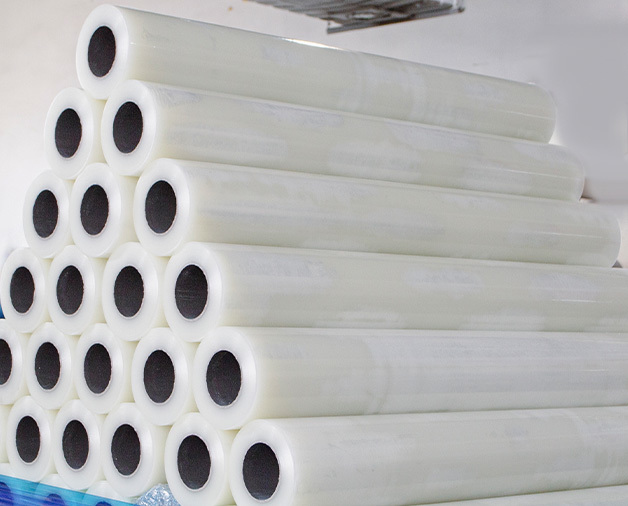
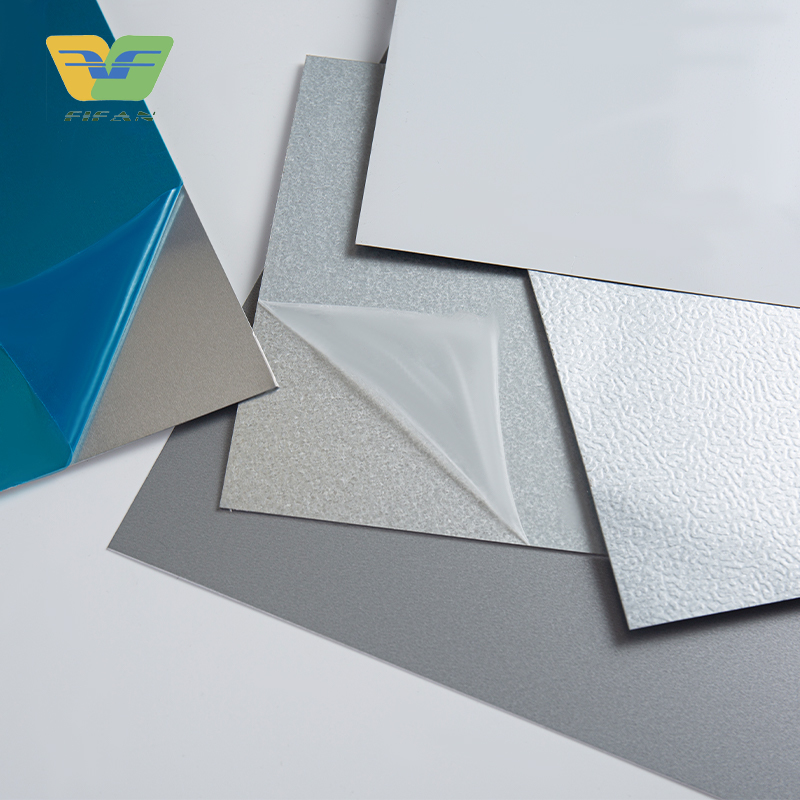 Glue-Less Self-Adhesive PE Protective Film for Metal SheetsA co-extruded self-adhesive film with a specialized tack-layer provides a secure, residue-free bond for metal surfaces. It protects brushed or polished finishes during processing and handling, eliminating adhesive residue and maintaining surface quality.View Product →
Metal sheets with brushed or polished finishes need a different adhesive than rough surfaces. Understanding how self-adhesive PE protective films protect industrial surfaces helps confirm the adhesive selection for metal-based applications.
06 Supplier Selection and Quality Control
A reliable PE label film supplier runs a controlled production environment and tests every batch against clear standards. Process control matters more than the raw polymer grade when film is made and converted in-house.
When evaluating a supplier, the first three questions should be about cleanroom conditions, inspection frequency, and capacity.
- Cleanroom conditions: A Class 10,000 cleanroom is a strong indicator that the supplier controls particle contamination. This matters for labels used in electronics, optics, and medical device manufacturing.
- Inspection process: The most reliable tests are raw material inspection, in-process monitoring, 100% finished goods inspection, and outgoing random sampling.
- Capacity: A supplier with an annual PE film capacity of 8,000 tons and PE protective film capacity of 50 million square meters can handle volume commitments without compromising consistency.
Before finalizing a supplier, it is worth reviewing the most common specification mismatches and adhesive failures in the PE film market. This guide to avoiding pitfalls when purchasing PE protective film covers the key risks and how to prevent them.
PE Label Film FAQ
What is a PE label?
A PE label is a self-adhesive label made from polyethylene film, typically low-density or medium-density polyethylene. It is used for product identification, asset marking, barcode labels, and protective surface labeling across industrial, automotive, and electronics applications.
How long can a PE label stay on a surface?
Depending on the adhesive and environmental conditions, a PE label can stay in place from a few days to several years. Rubber-based adhesives typically last weeks to months. UV-stabilized acrylic adhesives can perform for one to three years in outdoor conditions.
Can PE label film be printed in custom colors?
Yes. Custom colors are created by adding masterbatch pigments to the polyethylene resin before blowing the film. The film can then be printed using flexographic, gravure, screen, or digital methods, and the surface must be corona-treated to accept ink.
How do I remove adhesive residue after peeling a PE label?
Use a solvent appropriate for the substrate. Isopropyl alcohol or a citrus-based cleaner works on most metal and glass surfaces. For plastic substrates, use a mild soap solution or a designated adhesive remover. PE label films with acrylic adhesives tend to leave less residue than rubber-based systems.
Your email address will not be published. Required fields are marked *
-
-
-
-
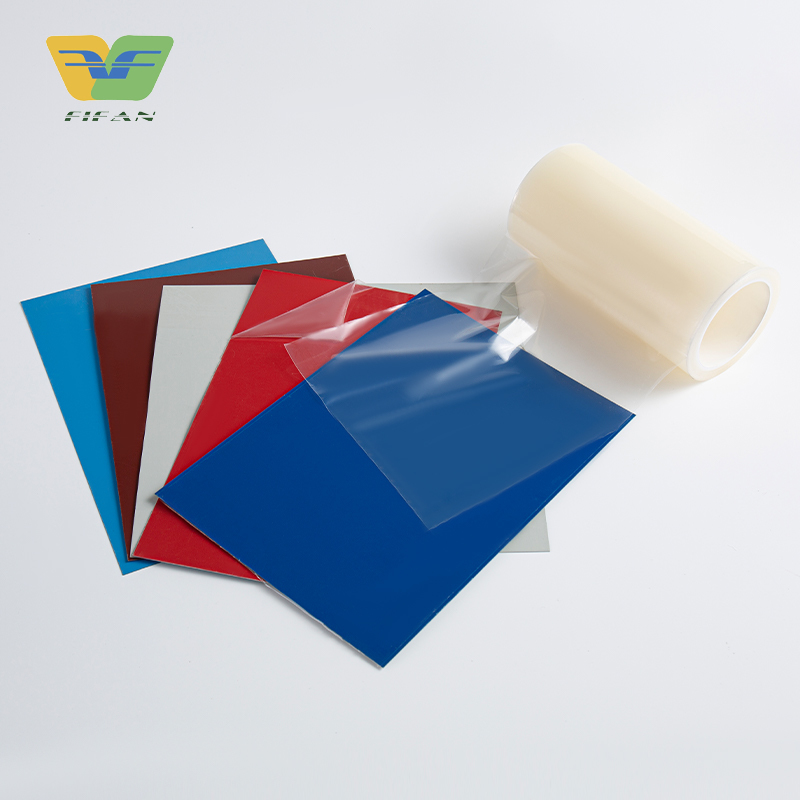
Construction Material PE Protective Film UV-Resistant & Anti-Aging PE Protective Film for Color Coated Steel Plates View More
-
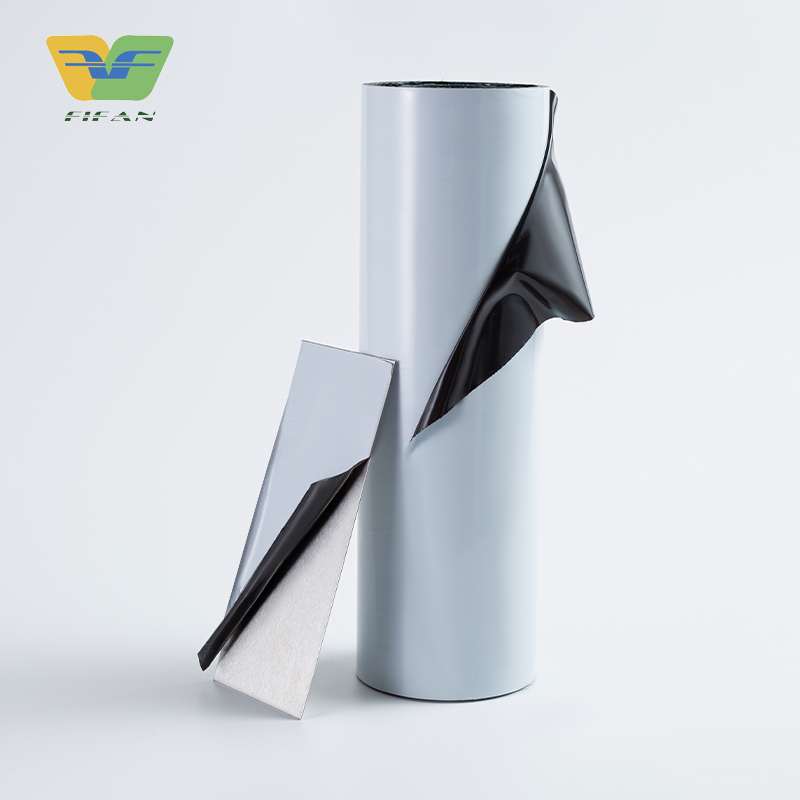
Construction Material PE Protective Film Heavy-Duty Anti-Scratch PE Protective Film for Stainless Steel View More
-

Address: No. 1588 Gan Dong Road, Zhongguan Town, Deqing County, Huzhou City, Zhejiang Province, China
TEL: +86-572-8498038 / +86-15067289913
E-mail: [email protected]
Mobile
WhatsApp

Copyright © Zhejiang Feifan New Material Technology Co., Ltd. All Rights Reserved
