
- Product
-
Our Story
Why Choose Us?We are a national high-tech enterprise and a provincial "Specialized and Refined" SME, focusing on the R&D, production, and sales of PE protective film. As a leader in the industry, we are committed to serving global customers with innovative technology and have won wide recognition in the market.
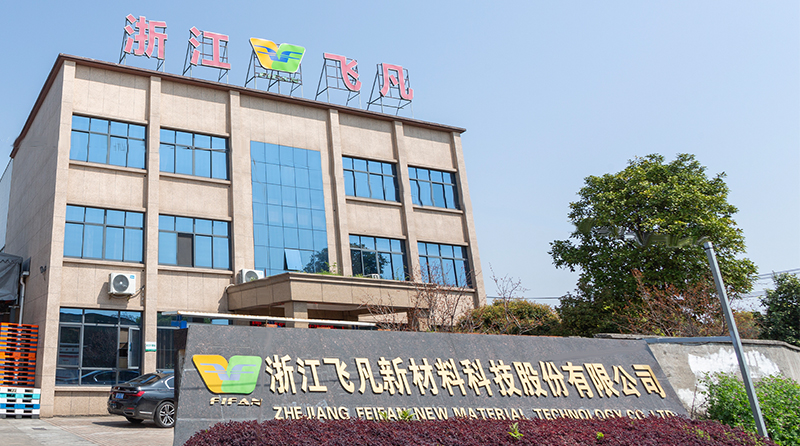 Coming From China, Marketing To The World.
-
News
 Feifan was invited to participate in the 2026 Shanghai International Tape and Film Exhibition
Dear Valued Customer / Partner, We are pleased to announce that our company will be exhibiting at APFE 2026 – the 22nd Shanghai International Adhesive Tape & Film Expo (Coating & Laminating E...
 English
 русский
 عربى
PE Protective Film for Marble: Spec Sheet, Residue Risk Guide & Supplier Tips
Content
- 1 What a Marble Manufacturer Needs From PE Protective Film (That Isn't Obvious)
- 2 How to Choose the Right PE Protective Film for Marble: The Specs That Matter
- 3 How PE Protective Film Fails on Marble, and What the Defect Pattern Tells You
- 4 How to Validate a Marble PE Protective Film Supplier Before You Order a Container
- 5 PE Protective Film for Marble: Frequently Asked Questions
What a Marble Manufacturer Needs From PE Protective Film (That Isn't Obvious)
Marble-grade film has one job that no one talks about in the sales call: protect the surface now, disappear cleanly later. The reason lies in the stone itself. Marble is calcium carbonate, a soft, porous, chemically reactive mineral. Aggressive tack, plasticizer migration, or a non-compatible adhesive can permanently etch the finish, and that is a rejection no buffing crew can fix.
Transport is the second pressure point. Slabs travel in A-frames, strapped under tension, sometimes 800 kilometers from the quarry to the fabricator. The film must survive friction without edge lifting, on a polished surface that is effectively a mirror.
Clarity matters too. A cloudy film hides surface defects, and the fabricator cannot inspect the polish through it. A high-transparency polyethylene layer lets the QC team see the face without peeling the film back, which preserves both the protection and the inspection routine.
How to Choose the Right PE Protective Film for Marble: The Specs That Matter
The spec sheet tells one story, the surface finish tells another. A polished marble needs a low-tack acrylic adhesive to avoid residue; a honed or tumbled surface needs more tack, because the rough texture will not hold a weak film. Start with the finish, then match the tack, then verify the film is UV stable if the slab will sit outside on site.
When you write the order, specify the adhesive system by name rather than by strength words. Ask for the peel strength range in g/25 mm, the residue limit in g/m2, and the UV ageing test result in the certificate of analysis. If the supplier responds with a vague "strong tack" description, keep looking.
| Surface finish | Recommended tack | Film thickness | Primary risk |
| Polished / honed | Low to medium, 80-160 g/25 mm | 50-65 micron | Adhesive residue and ghosting |
| Honed / brushed | Medium, 120-200 g/25 mm | 60-80 micron | Edge lift during cutting |
| Rough / tumbled | Medium to high, 180-240 g/25 mm | 70-90 micron | Poor contact on rough surface |
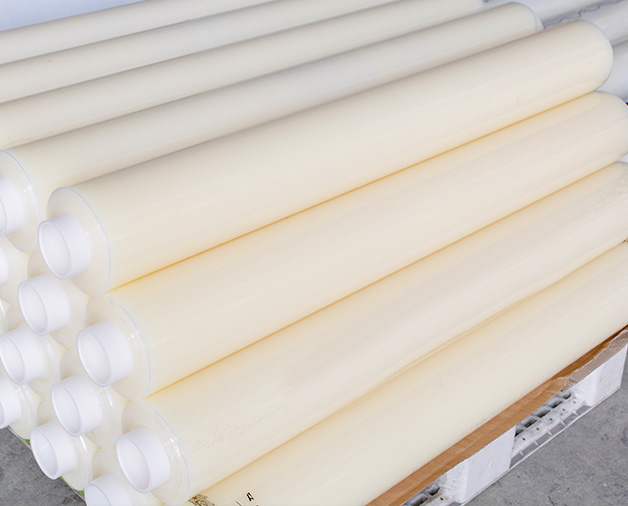
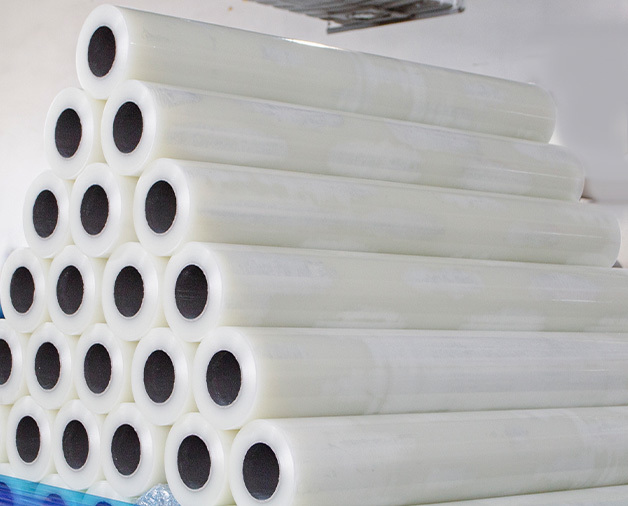
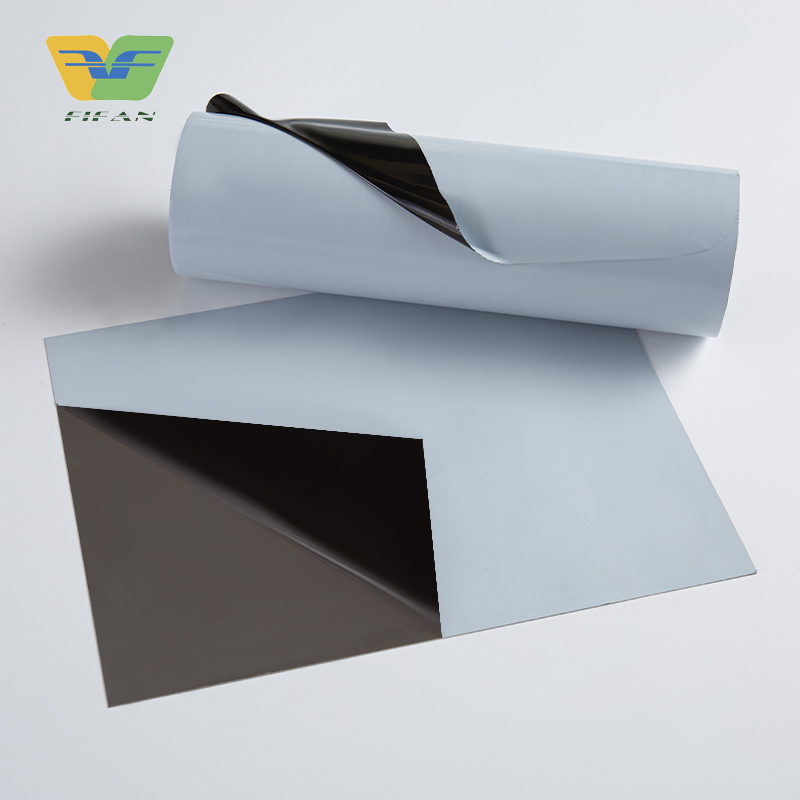
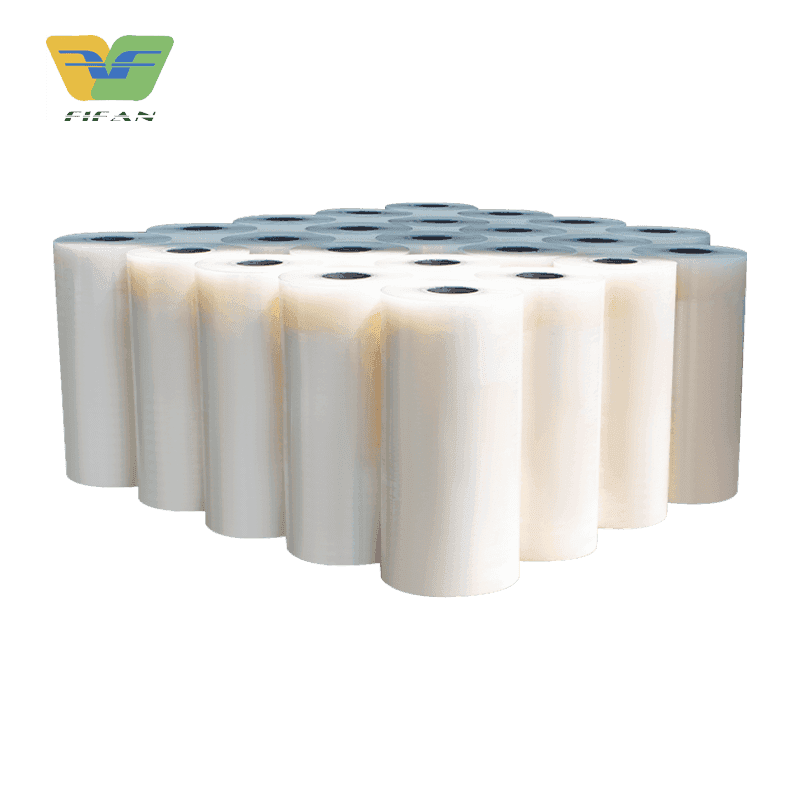 PE Protective Film for Marble and Stone SurfacesThis PE protective film safeguards polished marble and granite from scratches and stains during fabrication and installation. Its customizable adhesion and specs allow you to verify peel strength and residue limits as advised.View Product →
For a marble fabricator working across finishes, the cleanest approach is to keep two reel types in stock and test each against an offcut of the actual slab. Residue testing is not a lab luxury; it is a 30-second decision that protects a shipment worth thousands.
How PE Protective Film Fails on Marble, and What the Defect Pattern Tells You
Adhesive residue is the number one defect in marble film use, not scratching. The failure pattern is remarkably consistent, and once you see the distribution, the purchase decision becomes a specification decision rather than a price decision.
- 01 Adhesive transfer happens when tack exceeds 240 g/25 mm on a polished face; the adhesive physically separates and leaves a visible film path.
- 02 Ghosting from plasticizer migration appears as a dull, hazy band in the exact place the film rested, especially if the film contains a non-polymeric additive.
- 03 UV yellowing turns the adhesive and amber film when slabs stay outdoors for more than two weeks without a UV stabilizer package.
- 04 Edge lifting during wet cutting lets slurry enter the adhesive line, which then turns into hard particles that scratch the stone on removal.
- 05 Film tear and delamination show up when the film is too thin for the strap tension used in truck transport.
Once the defect pattern matches two or more of these five, treat the batch as non-conforming. Every roll used becomes potential rework, and rework on hardened stone is far more expensive than the film itself.
How to Validate a Marble PE Protective Film Supplier Before You Order a Container
Sample books are built to impress; quality lanes are built to be audited. A marble manufacturer should ask for the supplier's in-house process map before asking for the price list. In practice, the safest buy comes from a manufacturer that controls blown film, coating, slitting, and packing in one facility, because that is where batch-to-batch stability is decided.
- Recycled resins used without a documented viscosity curve
- No certificate of analysis per batch
- Coating thickness varies by more than 10% across the roll
- Supplier refuses a residue test on a calcite sample
- Class 10,000 cleanroom for coating and inspection
- 100% finished-product inspection plus random dispatch sampling
- UV ageing and peel-strength data shared with the quote
- Full in-house control from blown film to slitting, with 15 utility models behind the line
A supplier with in-house blown film and coating has a much shorter feedback loop. If a reel misbehaves, the process engineer can adjust the adhesive lay-down the same day.
If the supplier cannot show a documented peel test on your actual stone, treat the sample book as decoration. Many buyers discover this only after the first container; the purchasing pitfalls guide for PE protective film walks through the exact checks to run before placing a repeat order.
PE Protective Film for Marble: Frequently Asked Questions
Will PE protective film leave residue on polished marble?
If the film uses an acrylic adhesive, tack is kept below 240 g/25 mm, and the film is removed within the recommended dwell window, no visible residue should remain. Calcite is reactive, so always validate the adhesive against an offcut before applying to the full slab.
Can the same film be used for polished and honed marble?
Usually not. Polished slabs need lower tack to prevent residue; honed and tumbled surfaces need higher tack to hold on a rougher profile. This is why a single marble film SKU rarely works across a mixed production floor. Use the selection table above and test both reel types in your own line.
How long can PE protective film stay on a marble slab?
In a dry, indoor environment, most self-adhesive PE films hold between 30 and 60 days. Under direct sun and heat, a UV-stabilized film is mandatory, and dwell time should stay closer to the short end to reduce adhesive aging. High humidity and diurnal temperature changes accelerate adhesive creep.
What thickness is needed for marble protective film?
50 to 80 microns is the standard working range for processing protection. If the slab is transported with heavy straps or slings, use an 80 to 100 micron material to resist edge lift and puncture under tension.
Your email address will not be published. Required fields are marked *
-
-
-
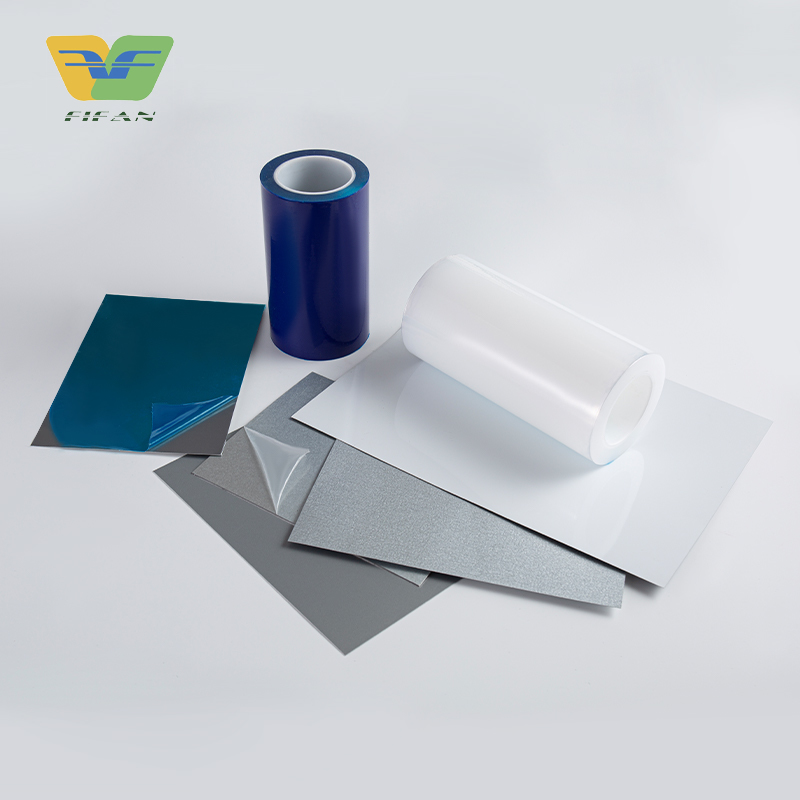
Self Adhesive PE Protective Film Glue-less Surface Self-Adhesive PE Protective Film for Metal Sheets & Plates View More
-
-
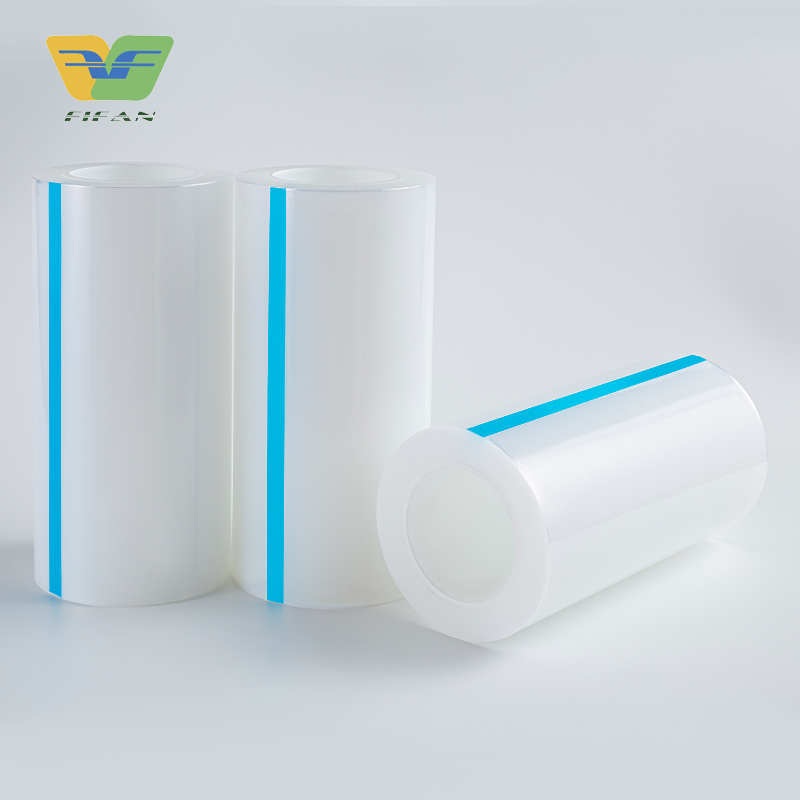
Self Adhesive PE Protective Film Self-Adhesive PE Protective Film for Polycarbonate (PC) Sheets View More
-
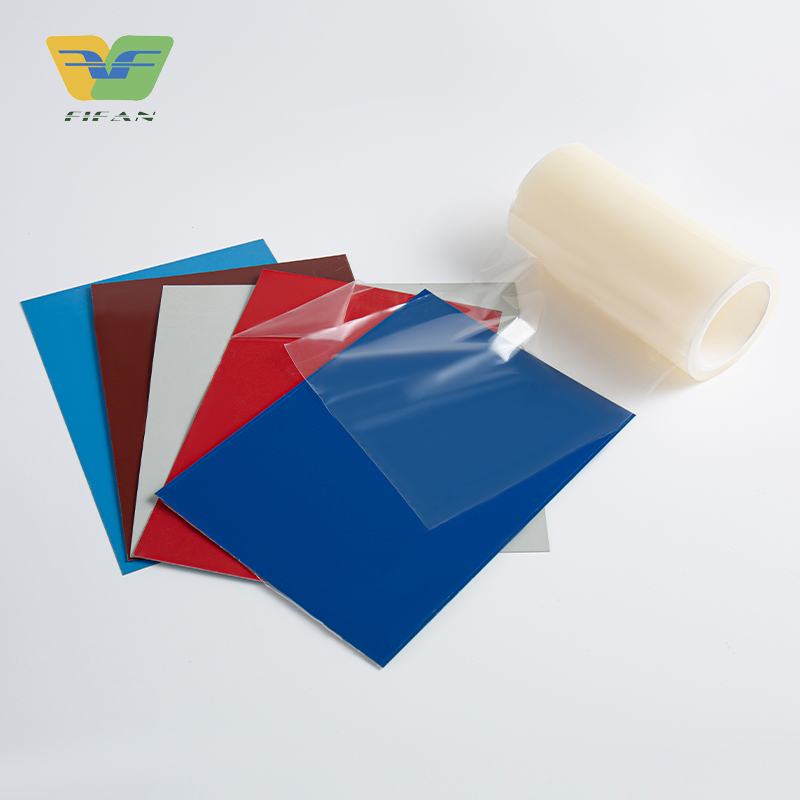
Construction Material PE Protective Film UV-Resistant & Anti-Aging PE Protective Film for Color Coated Steel Plates View More

Address: No. 1588 Gan Dong Road, Zhongguan Town, Deqing County, Huzhou City, Zhejiang Province, China
TEL: +86-572-8498038 / +86-15067289913
E-mail: [email protected]
Mobile
WhatsApp

Copyright © Zhejiang Feifan New Material Technology Co., Ltd. All Rights Reserved
