Why Does PE Protective Film Sometimes Leave Adhesive Residue on Marble and Stone Surfaces?
Adhesive residue on marble and stone surfaces occurs due to a combination of factors related to the stone's porosity, the adhesive chemistry, and application conditions. Natural stone is not a uniform surface — it contains microscopic pores, fissures, and mineral variations that interact with adhesives differently than metals or plastics.
Primary Causes of Adhesive Residue
- Adhesive Migration into Pores: Marble and stone are porous materials. Low-molecular-weight components in rubber-based adhesives can migrate into micro-pores over time. As the adhesive ages, the mobile fraction migrates deeper, and when the film is removed, the residual portion stays trapped in the stone, appearing as haze or discoloration.
- Plasticizer Migration from Film: Some PE films contain plasticizers to improve flexibility. These plasticizers can leach into stone surfaces, particularly under warm conditions or extended application periods, causing staining or a greasy residue pattern.
- UV Degradation of Adhesive: When stone panels are stored outdoors or in sunlit areas, UV radiation breaks down adhesive polymers. This degradation transforms the adhesive from a cohesive film into a sticky, fragmented residue that transfers to the stone surface during removal.
- Excessive Application Pressure: Heavy rolling or pressing during film application forces adhesive more deeply into stone pores, making complete removal difficult even with the correct adhesive system.
- Extended Application Time: The longer a protective film remains on stone, the greater the risk of adhesive bonding becoming permanent. Most stone applications should not exceed 3-6 months for safe removal.
- Incorrect Adhesive Selection: Using standard adhesives designed for smooth, non-porous surfaces (like stainless steel) on stone often leads to residue issues. Stone requires specifically formulated adhesives with low migration characteristics.
Residue Risk Comparison by Stone Type
- Polished Marble (low porosity): Moderate residue risk — adhesive has limited pore entry, but any residue is highly visible on glossy surfaces. Requires clean-removal acrylic adhesives.
- Honed Marble (medium porosity): Higher residue risk — increased surface roughness and open pores trap adhesive components. Rubber-based adhesives are not recommended.
- Travertine (high porosity): Highest residue risk — natural voids and channels readily absorb adhesive oils. Only low-tack, specially formulated adhesives should be used.
- Granite (low-to-medium porosity): Low-to-moderate residue risk — dense structure resists adhesive penetration, but mineral variations may affect adhesion uniformity.
- Limestone (medium-to-high porosity): High residue risk — soft, porous surface is susceptible to adhesive staining and residue.
Key Performance Parameters by Adhesive Type
- Rubber-based Adhesive: Migration rate: High | Residue risk: High | Maximum safe duration: 2-3 months | Temperature limit: 60°C | Suitable for: Dense granite (short-term)
- Acrylic-based Adhesive: Migration rate: Low | Residue risk: Low | Maximum safe duration: 6-9 months | Temperature limit: 80°C | Suitable for: Polished marble, honed marble, granite
- Low-Tack Specialty Adhesive: Migration rate: Very low | Residue risk: Very low | Maximum safe duration: 3-4 months | Temperature limit: 65°C | Suitable for: Travertine, limestone, all porous stones
- Water-based Adhesive: Migration rate: Minimal | Residue risk: Very low | Maximum safe duration: 2-3 months | Temperature limit: 50°C | Suitable for: All stone types (indoor use only)
How Zhejiang Feifan New Material Technology Co., Ltd. Prevents Residue Issues
At Zhejiang Feifan New Material Technology Co., Ltd., we have developed specialized adhesive formulations to address the unique challenges of marble and stone protection. Here's our approach:
1. Low-Migration Adhesive Chemistry
We use high-molecular-weight acrylic polymers that resist migration into stone pores. Unlike conventional rubber-based adhesives, our formulations maintain cohesive integrity over extended periods, ensuring the adhesive layer stays intact on the film — not on the stone — during removal. Our R&D team has developed proprietary cross-linking technology that reduces mobile components by up to 60% compared to standard adhesives.
2. Porosity-Tested Formulations
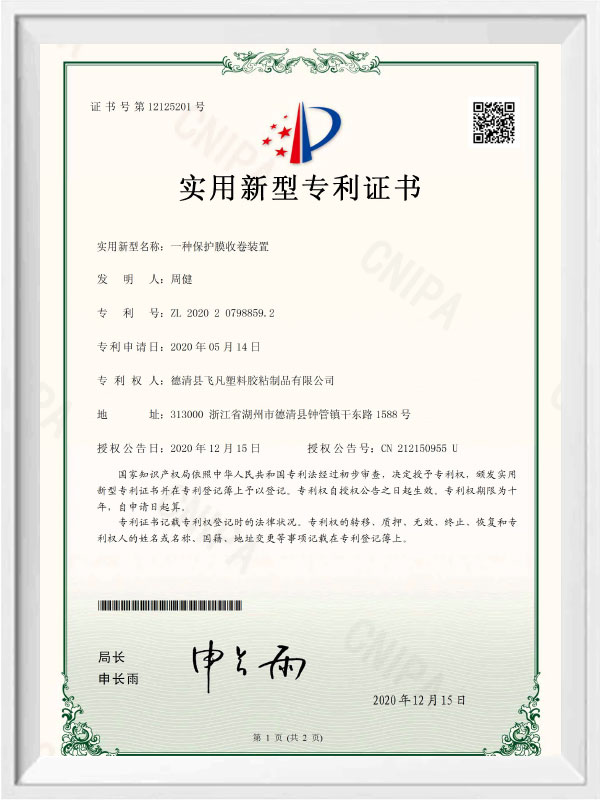
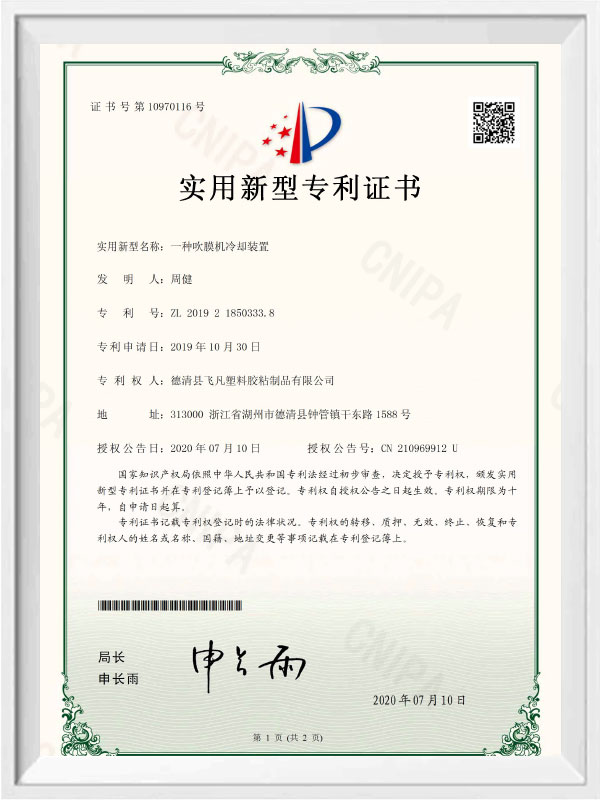
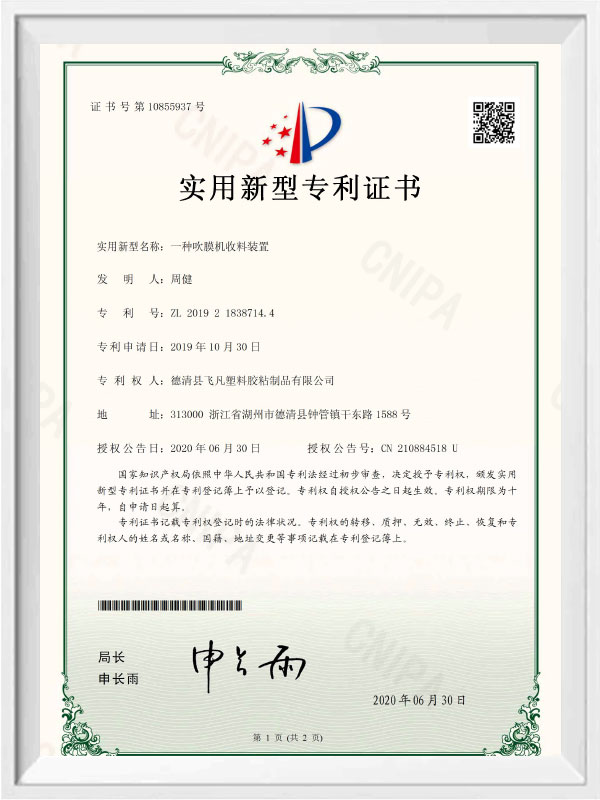
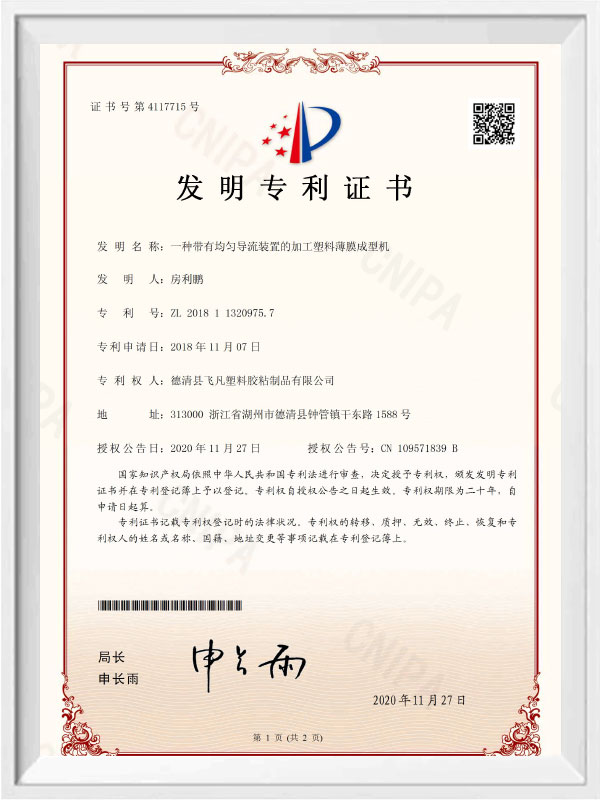
We test every adhesive formulation on six stone varieties (polished marble, honed marble, travertine, granite, limestone, and onyx) before market release. Our in-house municipal R&D center, holding 2 invention patents and 15 utility model patents, conducts accelerated aging tests to simulate real-world conditions — including UV exposure, temperature cycling, and high humidity — to predict residue risk accurately.
3. Precision Coating for Consistent Release
Our advanced coating equipment, integrated with a centralized feeding system, ensures adhesive thickness uniformity within ±3%. Inconsistent coating creates "hot spots" of excessive adhesion that are prone to residue. With full in-house process control — from blowing and coating to slitting and packaging — we guarantee reliable release performance across our annual production of 8,000 tons of PE film and 50 million square meters of PE protective film.
4. Surface-Specific Recommendations
We provide detailed guidance on which adhesive type to select for each stone category:
- Polished marble: Acrylic adhesive, 60 μm, low-to-medium tack (120-180 cN/20mm)
- Honed marble: Low-tack acrylic adhesive, 70 μm, low tack (100-150 cN/20mm)
- Travertine: Low-tack specialty adhesive, 80 μm, very low tack (80-120 cN/20mm) — requires immediate removal after construction
- Granite: Acrylic adhesive, 60 μm, medium tack (180-220 cN/20mm)
- Limestone: Low-tack acrylic adhesive, 75 μm, low tack (100-140 cN/20mm)
With over 20 years of expertise serving industries including appliances, stainless steel, aviation, and food packaging, Zhejiang Feifan New Material Technology Co., Ltd. is trusted by industry leaders Robam, Fotile, BYD, and Haier. Our National High-Tech Enterprise status and Provincial "Specialized and Innovative" SME certification reflect our commitment to quality and reliability in every product we deliver.
Discover our specialized stone protection solution: PE Protective Film for Marble & Stone.
Frequently Asked Questions
FAQ 1: How does Zhejiang Feifan New Material Technology Co., Ltd. test adhesive residue risk on different stone types?
At Zhejiang Feifan New Material Technology Co., Ltd., we conduct comprehensive residue testing using five standardized evaluation methods. First, we perform accelerated aging tests at 60°C and 90% humidity for up to 12 weeks to simulate long-term application. Second, we use UV chamber testing (500 hours) to evaluate degradation under sunlight. Third, we conduct contact angle measurement to assess adhesive-stone interaction at the microscopic level. Fourth, we perform peel force analysis at different removal speeds to determine clean release thresholds. Fifth, we validate all formulations on actual stone samples supplied by our customers — including polished marble, travertine, and limestone — to confirm zero residue before production. Our municipal R&D center documents every test result and continuously improves formulations based on field feedback from our customers in the construction and stone processing industries.
FAQ 2: Can PE protective film be safely applied to highly porous stones like travertine and limestone?
Yes, but with specific precautions. Zhejiang Feifan New Material Technology Co., Ltd. recommends using our low-tack specialty adhesives (80-120 cN/20mm) for highly porous stones. These adhesives are formulated with extremely low migration characteristics and minimal low-molecular-weight components. Key recommendations: apply the film only after the stone surface is completely dry and clean of dust; avoid heavy rolling pressure (use light hand application); limit the application period to 3-4 months maximum; and remove the film at an angle (180° peel) rather than pulling vertically. For travertine and limestone, we also suggest applying a sample patch to an inconspicuous area for 2 weeks to verify no adverse reaction before full application. Our PE Protective Film for Marble & Stone is specifically designed to address these challenges.
FAQ 3: What is the difference between standard PE protective film and stone-specific PE protective film offered by Zhejiang Feifan New Material Technology Co., Ltd.?
The key differences are in adhesive chemistry, migration control, and release characteristics. Standard PE films are designed for non-porous surfaces like stainless steel or aluminum, using rubber-based adhesives that provide strong initial tack but contain mobile components that can migrate into stone pores. Stone-specific films from Zhejiang Feifan New Material Technology Co., Ltd. use acrylic-based adhesives with cross-linked polymer structures that resist migration. Additionally, our stone films feature: lower initial tack to prevent deep penetration into pores; higher cohesive strength to ensure the adhesive stays with the film during removal; and UV stabilizers to prevent adhesive degradation during outdoor storage. We also adjust film thickness (60-80 μm for stone vs. 40-60 μm for standard applications) to provide better conformability on uneven stone surfaces. Our stone films are tested on six stone varieties and backed by over 20 years of formulation expertise. Contact our technical team to discuss your specific stone application.


 English
 русский
 عربى
عربى